Is PET Plastic Safe? The Science Behind Your Food Packaging
You’ve probably noticed the little triangle with a “1” on the bottom of your water bottle. That number means the container is made of PET — polyethylene terephthalate, the most widely used plastic in food and beverage packaging. If you’re reading this, you’ve probably asked yourself the same question: is this plastic actually safe?
The short answer is yes. PET is one of the most studied and tightly regulated food-contact materials on the planet, approved by the FDA, the European Food Safety Authority (EFSA), and Health Canada. But the real story is more interesting than a yes or no. It’s about chemistry, manufacturing standards, and a global regulatory system most people never see.
This article walks through exactly what PET is, what the science says about every major health concern, and — if you’re choosing packaging for a business — how to verify your supplier’s PET is genuinely food-safe.
What Is PET Plastic?
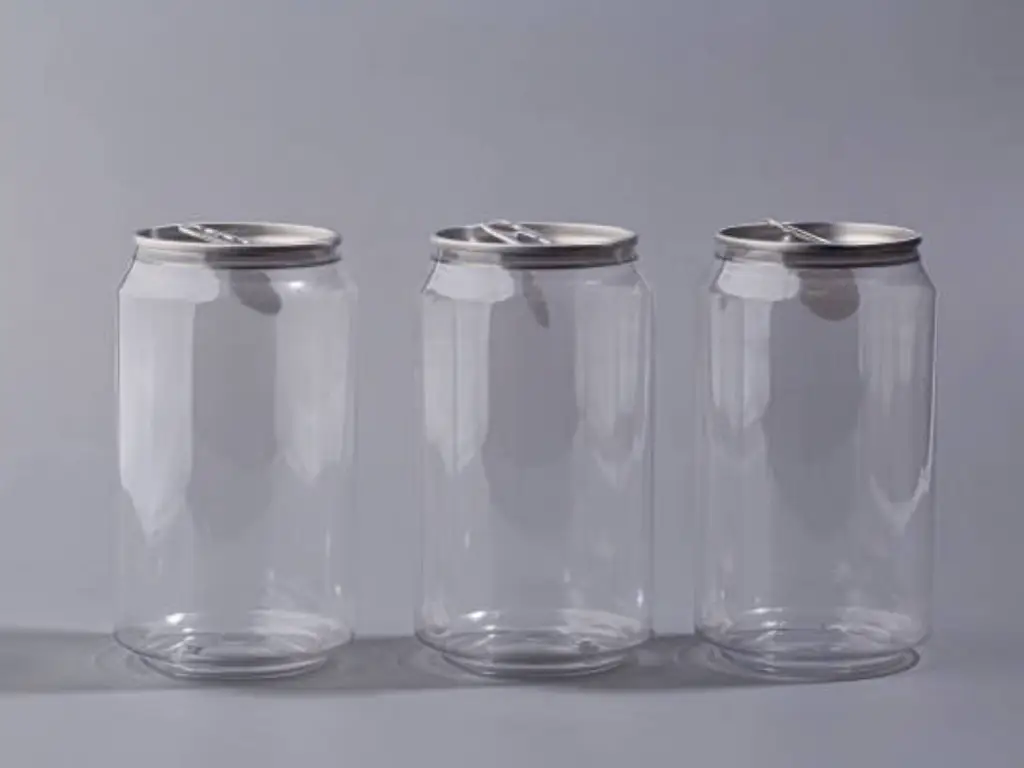
PET stands for polyethylene terephthalate. Chemically, it’s a polyester — the same polymer family as the fabric in your workout clothes. It’s made by combining two simple building blocks: purified terephthalic acid (PTA) and ethylene glycol (EG). Through a reaction called polycondensation, these monomers link into long, stable molecular chains that form a rigid, transparent, and remarkably inert material.
In everyday life, PET shows up in three places you’d recognize instantly: water and soda bottles, food jars for everything from peanut butter to pickles, and those clear plastic clamshell containers berries come in. It’s recycling code #1 — a number assigned back in 1988 by the SPI resin identification system, and still the most recycled plastic on Earth.
Here’s what matters most before we go any further: PET is not the plastic you’ve heard scary things about. BPA? That’s polycarbonate (#7). Phthalate plasticizers? That’s PVC (#3). PET is chemically different from both — and those differences are the foundation of its safety record.
What “Food-Safe” Actually Means for Plastic Packaging
When someone searches “is PET plastic safe,” the word “safe” usually carries emotional weight — it means “will this hurt me or my family?” But in food-contact science, safety has a precise, measurable definition.
Food-safe packaging does not mean the material transfers zero substances to the food inside it. That’s physically impossible — every packaging material, including glass and stainless steel, transfers trace amounts. What “safe” actually means is: the amount of any substance that migrates from the packaging into the food stays below a level that the best available science shows poses no health risk, even over a lifetime of exposure.
This threshold is called the Specific Migration Limit (SML), measured in milligrams of a substance per kilogram of food (mg/kg). Different substances have different SMLs based on their toxicological profile. The key principle is the same one that governs everything from tap water to food additives: toxicity is about the dose, not the mere presence of a substance.
Three agencies form the global backbone of PET safety regulation:
- FDA (United States) — under 21 CFR §177.1630, which sets extractives limits for PET based on food type and temperature conditions
- EFSA (European Union) — under Regulation (EU) No 10/2011, which establishes SMLs for every substance that may migrate from plastic food-contact materials
- Health Canada — under the Food and Drugs Act, Division 23, which aligns closely with FDA standards
These agencies work independently, using different scientific panels and methodologies. When all three reach the same conclusion about a material, that’s a strong signal.
The Science Behind PET Safety: Addressing Every Major Concern
PET’s safety comes from three layers of assurance: its chemistry (it simply doesn’t contain the substances people worry about), its physics (it’s biologically inert — it doesn’t react with food or drink), and its regulatory oversight (global agencies have independently verified its safety for over 40 years). Let’s address each concern individually, with the data.
Does PET Contain BPA?
No. Bisphenol-A (BPA) is not used in PET manufacturing — period.
BPA is a monomer used to make polycarbonate plastic (#7) and epoxy resin can linings. It serves as a building block in those materials — the chemical reaction literally requires it. PET’s polymerization is entirely different: it combines terephthalic acid (TPA) and ethylene glycol (EG) — no bisphenol compounds appear anywhere in the equation.
Recycled PET can sometimes contain traces of BPA from cross-contamination in the recycling stream — for example, if a polycarbonate bottle accidentally gets mixed into a PET recycling batch. But even in those cases, the amounts that could theoretically migrate into food are, according to the German Federal Institute for Risk Assessment (BfR), “far below the tolerable daily intake” — BfR’s TDI for BPA is 0.2 µg per kilogram of body weight per day, and measured migration from recycled PET is orders of magnitude below that threshold (BfR, FAQ on PET bottles).
Think of it this way: a cake recipe calls for flour, eggs, and sugar. If you’re making a flourless dessert, you don’t worry about gluten — the ingredient was never there to begin with. BPA was never an ingredient in PET.
The EU banned BPA in baby bottles in 2011 (Regulation 321/2011). That ban targeted polycarbonate plastic — the kind that actually contains BPA. It has nothing to do with PET, which never contained BPA in the first place.
Are There Phthalates in PET?
No. Phthalates (orthophthalates) are plasticizers — additives that make rigid plastics soft and flexible. They’re widely used in PVC (#3) to make products like vinyl flooring, shower curtains, and soft medical tubing.
PET doesn’t need plasticizers. At room temperature, PET is already well below its glass transition temperature (Tg) of about 70°C — meaning it’s naturally a rigid, glassy solid. Adding a plasticizer to PET would be like adding water to a rock: pointless, because the material doesn’t need to be softened.
The BfR is explicit on this point: “orthophthalates and other plasticisers are not used” in PET bottle manufacturing. Where traces have occasionally been detected, the concentrations are, in BfR’s words, “far too low to explain the measured oestrogenic activities” that some earlier studies attributed to PET — meaning whatever tiny amounts might be present are biologically insignificant (BfR, FAQ on PET bottles).
The phthalates people worry about — DEHP, DBP, BBP, DINP — are restricted under EU REACH Annex XVII and various global regulations. Those restrictions matter. They just don’t apply to PET, because PET doesn’t contain those substances.
What About Antimony in PET?
This is the concern with the most scientific substance behind it — and that’s exactly why it’s worth addressing directly rather than sweeping under the rug.
PET manufacturing uses antimony trioxide (Sb₂O₃) as a catalyst during the polycondensation reaction — typically at 150 to 300 milligrams per kilogram of PET resin. Antimony trioxide is classified by the International Agency for Research on Cancer (IARC) as Group 2B (“possibly carcinogenic to humans”), based on inhalation exposure in occupational settings. So it’s reasonable to ask: does any of this antimony end up in your drink?
The answer is yes, but in quantities dramatically below safety thresholds. The BfR measured antimony concentrations in mineral water stored in PET bottles and found levels up to approximately 2 micrograms per liter (µg/L). The EU’s legal migration limit for antimony from food-contact plastics — the SML in Regulation (EU) No 10/2011, Annex II — is 40 µg per kilogram of food. That means the worst measured real-world antimony level is about 20 times below the legal limit, which itself includes a substantial safety margin (Regulation (EU) No 10/2011, Annex II).
Key takeaway: measured antimony migration from PET bottles (2 µg/L) is approximately 20 times below the EU legal limit (40 µg/kg). The limit itself is set conservatively, with built-in safety margins.
Crucially, IARC’s Group 2B classification addresses occupational exposure to antimony trioxide dust — factory workers inhaling particles over years. This is a completely different exposure route and dose from consuming trace antimony in beverages. The two risk profiles are not interchangeable.
Some manufacturers in Japan and South Korea have already transitioned to titanium-based catalysts that eliminate antimony entirely from PET production. This is an ongoing industry improvement — but from a safety standpoint, current antimony-catalyzed PET already operates well within established limits.
Acetaldehyde: The Taste Issue, Not a Health Risk
Have you ever opened a bottle of water and noticed a faintly sweet, almost fruity taste? That’s acetaldehyde — a trace byproduct that forms during PET manufacturing and can slowly migrate into the contents during storage.
Acetaldehyde sounds alarming if you look up its IARC classification (also Group 2B, “possibly carcinogenic”). But again, classification is not the same as risk at real-world exposure levels. The EU migration limit for acetaldehyde from food-contact plastics is 6 milligrams per kilogram of food. Your nose can detect acetaldehyde at concentrations below 0.02 mg/L — that’s less than one three-hundredth of the legal limit. In other words, by the time you taste something, the amount is already far below any dose that would raise toxicological concern (BfR, FAQ on PET bottles).
The presence of acetaldehyde in bottled water is a quality defect — not a safety hazard. You don’t have to accept it as a consumer; you can return the product. But you also don’t need to worry about your health if you’ve been drinking it. Quality manufacturers address this through acetaldehyde-scavenging additives or by sourcing high-purity PET resin (such as CRCCHEM-grade material) that minimizes acetaldehyde generation at the raw material stage.
Microplastics and PET: What the Evidence Actually Shows
Microplastics are the most visible concern in public discussion right now — and for good reason. Research into the health effects of microplastic exposure is still developing, and it’s important to be honest about what we know and don’t know.
The FDA’s public position, stated in 2024, is that “current evidence does not demonstrate that microplastics or nanoplastics in food pose a human-health risk.” The World Health Organization reached a similar conclusion in its assessment of microplastics in drinking water, noting that while more research is needed, existing data does not support claims of harm at current exposure levels.
Quantitatively, the estimated average human ingestion of microplastics from all sources is about 184 nanograms per person per day — roughly 0.000000184 grams (Plastics Research Council). At that rate, it would take tens of thousands of years to accumulate the weight of a credit card. Whether that dose is clinically meaningful is the central question — and the current answer from global health authorities is that it does not appear to be.
One finding that challenges popular assumptions: a 2025 French study found more microplastic particles in water from glass bottles than from PET bottles. The source? Paint flaking from the metal caps, not the bottle material itself. This doesn’t exonerate PET — it highlights that microplastic release is a systems issue involving caps, seals, and handling, not a simple “glass = clean / plastic = dirty” binary (NAPCOR).
According to the UN Environment Programme, the dominant sources of microplastic pollution are tire abrasion, city dust, and road markings — packaging plastics represent a small fraction of total environmental microplastics. This broader context doesn’t dismiss the concern, but it does reframe it: if you’re worried about microplastic exposure, your car’s tires contribute far more than your water bottle.
Virgin PET vs Recycled PET: Does Recycling Change the Safety Equation?
Recycled PET (rPET) is increasingly common as brands pursue sustainability goals. It’s reasonable to wonder: does the recycling process introduce new risks?
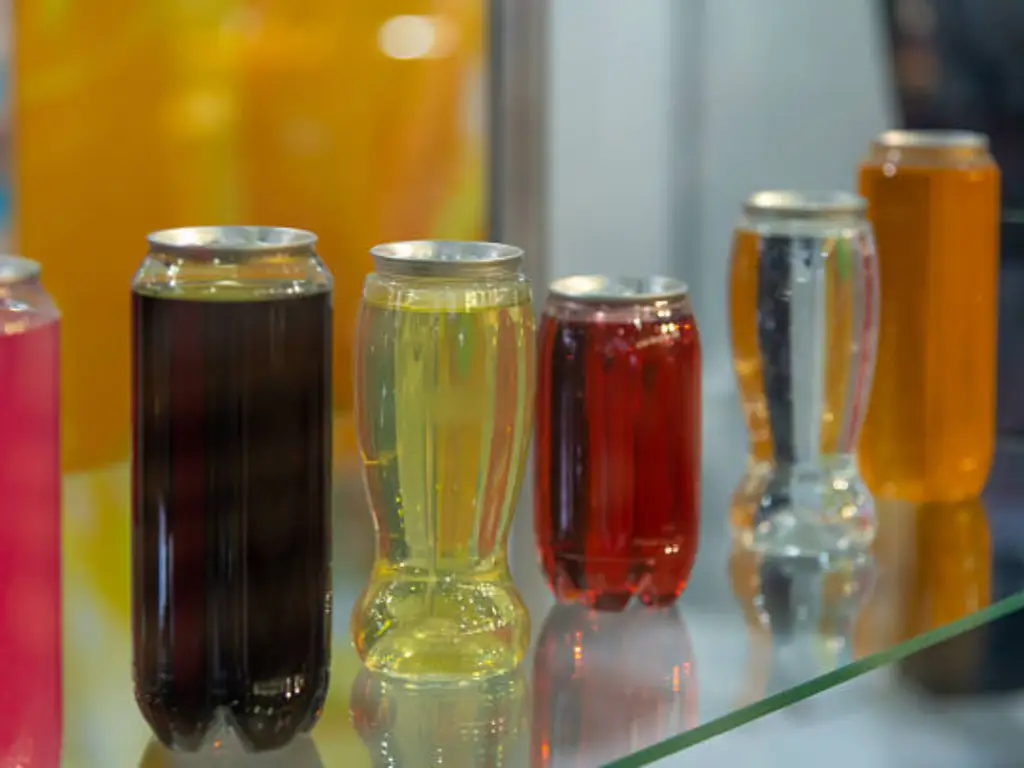
The answer depends on one variable: whether the recycling process has been validated by food safety regulators. Approved rPET is chemically and toxicologically equivalent to virgin PET. Unapproved rPET — from uncertified, undocumented sources — carries real risks.
How Virgin PET and rPET Are Made
Virgin PET starts with petrochemical-derived monomers — purified terephthalic acid and ethylene glycol — polymerized under tightly controlled conditions. The entire synthesis happens in a sealed reactor with known inputs. Safety comes from feedstock purity and process control.
rPET starts with post-consumer PET bottles. These are collected, sorted by polymer type and color, washed to remove labels and residues, ground into flakes, and then melted and re-extruded into pellets. The critical difference is the decontamination step: before re-pelletization, the flakes go through a high-temperature vacuum or inert-gas process designed to strip out any volatile contaminants that may have diffused into the plastic from the bottle’s original contents or from the recycling environment.
In well-regulated rPET, this decontamination process is so effective that the final material is chemically indistinguishable from virgin PET at the migration-testing level. In poorly regulated rPET, it’s not.
The Real Contamination Risks in Recycled PET
Three contamination pathways exist, and they’re all manageable — but only if the recycler actually manages them:
PVC cross-contamination. If a single PVC bottle (#3) enters a PET recycling batch, it can decompose at PET processing temperatures (~270°C), releasing hydrogen chloride that degrades the PET and can form chlorinated byproducts. One PVC bottle can ruin an entire batch. Professional food-grade recyclers use near-infrared (NIR) sorting to remove PVC before processing.
Non-food-grade PET inputs. A motor oil bottle, a detergent container, and a water bottle are all made of PET — but only the water-bottle-grade material is suitable for food-contact recycling. The EU requires that at least 95% of the input stream to a food-grade rPET process comes from food-contact PET. Unscrupulous recyclers cut costs by blending in cheaper non-food PET feedstock.
Non-intentionally added substances (NIAS). During repeated heating cycles, PET can generate trace degradation products that weren’t present in the virgin material. EU Regulation 10/2011 requires NIAS risk assessment for all food-contact plastics — but enforcement varies, and buyers should ask whether their supplier has performed GC-MS or LC-MS screening for unknown substances.
How Regulators Approve rPET for Food Contact
Given these risks, rPET isn’t simply assumed to be safe — it’s actively verified through some of the most stringent testing in the packaging industry.
Under EFSA’s framework, a recycler submits a detailed process dossier including challenge test data — the process is deliberately spiked with surrogate contaminants (chlorobenzene, toluene, phenylcyclohexane, and others) and must demonstrate at least 99.5% removal efficiency. Only after EFSA’s scientific panel issues a favorable opinion is the process listed in the EU Register. Since July 2023, Regulation (EU) 2022/1616 has required that all rPET sold in the EU market must come from an EFSA-authorized recycling process — no exceptions (EFSA, PET recycling process safety assessments).
The FDA takes a similar approach: recyclers submit challenge test data, the FDA reviews it, and if satisfied, issues a Letter of No Objection (LNO) specific to that process. These LNOs are public and searchable on the FDA website.
The bottom line: an rPET supplier whose recycling process appears on the EFSA Register or holds an FDA LNO has been independently verified to produce material as safe as virgin PET. A supplier who can’t provide either — move on.
How Global Regulators Verify PET Safety
PET isn’t safe because one company or one country says so. It’s safe because three continents’ worth of regulatory agencies — operating independently, using different scientific panels and methodologies — have spent decades examining the same material and arriving at the same conclusion.
| Regulatory Body | Jurisdiction | Core Regulation | What It Covers |
|---|---|---|---|
| FDA | United States | 21 CFR §177.1630 | Extractives limits for PET; rPET requires LNO |
| EFSA | European Union | Regulation (EU) No 10/2011 + 2022/1616 | SMLs for all migrating substances; rPET must come from EFSA-authorized processes |
| Health Canada | Canada | Food and Drugs Act, Division 23 | LONO for food-contact materials; standards aligned with FDA |
These agencies don’t coordinate their assessments. EFSA doesn’t ask the FDA what it thinks; Health Canada doesn’t defer to EFSA. When three independent scientific bodies examine the same evidence and reach the same conclusion, that’s about as close to a scientific consensus as regulatory science gets.
Behind the Label: What Makes a PET Factory Truly Food-Safe
Everything we’ve discussed so far answers the question “is PET safe as a material?” But here’s what almost no article on this topic tells you: a PET container is only as safe as the factory that made it. The same PET polymer, in the hands of two different manufacturers, can produce dramatically different safety outcomes.
If you’re choosing packaging for a food or beverage brand, the question isn’t just “is PET safe?” — it’s “how do I verify that my supplier’s PET is safe?” Here are four dimensions to check.
The Certifications That Actually Matter
Every supplier says they’re “food-grade.” Certifications separate claims from reality — but only if you know which certifications are substantive.
The strongest food-safety management certifications are those recognized by the Global Food Safety Initiative (GFSI): FSSC 22000 (currently Version 6.0, covering food packaging manufacturing) and BRCGS Packaging Materials (Issue 6, specific to packaging). These require annual third-party audits of the entire production system — not just the final product. A supplier’s FSSC 22000 certificate number can be verified on the FSSC website.
ISO 9001 is the baseline quality management standard — necessary but not sufficient on its own for food safety. At the product level, look for FDA facility registration (for U.S. market access), EU 10/2011 Declaration of Compliance (DoC) with batch traceability, and third-party testing reports from SGS, Bureau Veritas, or Intertek. A real SGS report has a report number you can verify online through the SGS Online Verifier.
Red flag: suppliers who say they’re “FDA approved.” The FDA registers facilities and issues Letters of No Objection for specific products or processes — it does not “approve” entire factories. Anyone using this language doesn’t understand the regulatory framework.
Material Traceability: “Virgin” Is Not Just a Marketing Word
“100% virgin PET” has become a marketing phrase. But not all virgin PET is equal.
The safest PET comes from named, traceable resin producers — companies like CRCCHEM, Indorama Ventures, or DAK Americas — whose polymerization processes are controlled to sub-percentage tolerances. These suppliers provide certificates of analysis (COA) with every resin batch: intrinsic viscosity, color values (L*/a*/b*), acetaldehyde content, and diethylene glycol levels — all indicators of polymerization quality. A manufacturer who uses branded resin and performs incoming quality control (IQC) on every shipment is operating at a fundamentally different safety tier than one who buys generic “PET chips” from an unnamed source.
As a buyer, you should ask three questions: Who is the resin supplier? Can you provide a batch-specific COA? Do you perform incoming inspection on raw materials? If the answers are vague or evasive, the material traceability chain is broken — and safety claims built on top of it are unreliable.
Inside a Food-Grade PET Factory: The Systems That Ensure Safety
Safety in PET manufacturing is designed into the production environment, not just tested into the final product. Four systems are the backbone of that design:
Cleanroom production. Food-grade PET containers should be manufactured in a controlled environment — typically GMP 100,000-class (ISO 14644-1 Class 8), with temperature maintained at 22±2°C and humidity at 45–55% RH. Humidity control matters because PET preforms absorb moisture from the air; excess moisture during processing increases acetaldehyde formation and reduces mechanical strength.
Full automation. From injection molding to blow molding to quality inspection to packing, the entire production line should run with robotic handling — no human hands touching the product. Every manual touch point is a contamination risk. Top-tier factories operate 14 injection and 14 blow-molding machines in fully automated, temperature-controlled workshops.
100% inline inspection. Sampling-based quality control (checking 1 in every 100 or 1,000 units) means 99% of products leave the factory uninspected. The gold standard is 100% inspection: every single container passes through vision systems (detecting neck defects and foreign particles), pressure testers (verifying seal integrity), and dimensional scanners (checking wall thickness to ±0.1 mm tolerance, vs. the industry average of ±0.2 mm or more).
Third-party batch testing. In-house COAs are necessary but not sufficient. Top manufacturers submit every production batch — or at minimum quarterly batches — to independent laboratories like SGS for full migration testing against EU 10/2011 or FDA standards. Quarterly testing versus the industry norm of annual testing means quality deviations are detected three quarters earlier.
Red Flags: When a PET Supplier Isn’t Really Food-Safe
If you’re sourcing PET packaging, these five red flags separate genuine food-grade suppliers from the rest:
A manufacturer that checks all the right boxes — FSSC 22000 and BRCGS certified, using 100% traceable virgin PET from a named supplier like CRCCHEM, operating in a GMP cleanroom with full automation and SGS quarterly testing — isn’t just saying they’re food-safe. They’ve built a production system where safety is the inevitable output. When evaluating suppliers, look for this combination of certifications, material transparency, and testing discipline. That’s the gap between a packaging partner and a packaging gamble.
Making Confident Choices: Your PET Safety Checklist
You started with a question: “is PET plastic safe?” Here’s what you now know.
PET is a biologically inert material. It contains no BPA and no phthalates. The antimony catalyst used in its production migrates at levels about 20 times below EU safety limits. The occasional sweet taste some people notice in bottled water is acetaldehyde — a quality nuisance, not a health threat. Three independent global regulatory agencies — the FDA, EFSA, and Health Canada — have spent decades studying PET and reached the same conclusion: it’s safe for food contact. Recycled PET, when sourced from EFSA- or FDA-validated processes, is chemically equivalent to virgin PET on every migration test that matters.
If you’re a brand owner, procurement manager, or entrepreneur choosing packaging: your supplier verification checklist is short but non-negotiable. Verify their FSSC 22000 or BRCGS certification online. Ask who supplies their PET resin — by name, not by country. Request a third-party migration test report with a verifiable report number. Confirm their production environment: cleanroom classification, automation level, inspection coverage. And check their testing frequency: once a year means you wait twelve months to catch a problem. Quarterly testing means you catch it in three. The packaging your customers trust is only as safe as the factory behind it. Now you know how to tell the difference.
References
- German Federal Institute for Risk Assessment (BfR). “Selected Questions and Answers on PET Bottles.” bfr.bund.de
- European Commission. “Regulation (EU) No 10/2011 — Annex II.” legislation.gov.uk
- NAPCOR. “What Science Tells Us About PET Plastic.” napcor.com
- NAPCOR. “Why PET Still Stands Out.” napcor.com
- FDA. “21 CFR §177.1630 — Polyethylene Phthalate Polymers.” customsmobile.com
- EFSA. “Safety Assessment — Starlinger viscotec deCON.” EFSA Journal, 2026. efsa.onlinelibrary.wiley.com
- Outstanding Pack. “About Us.” outstandingpack.com
- Outstanding Pack. “Contact.” outstandingpack.com