What Are Plastic Bottles Made Of? Materials, Manufacturing, and Safety Explained
The Short Answer — What Materials Go Into Plastic Bottles
The water bottle in your hand and the milk jug in your fridge start from the same family of materials — but their journey from raw material to finished container couldn’t be more different. Most plastic bottles are made from one of five primary polymers: PET (the clear workhorse behind water and soda bottles), HDPE (the stiff, opaque material of milk jugs), PP (the heat-resistant choice for hot-fill foods and medicine bottles), LDPE (the soft, squeezable plastic), and PC (polycarbonate, once common in reusable bottles, now largely replaced by safer alternatives). Each material earns its place based on a specific set of properties — clarity, strength, temperature tolerance, chemical resistance, and cost. Behind every bottle on a store shelf is a deliberate engineering decision about which plastic fits the product inside. In the sections that follow, we’ll break down each material, walk through the two-step manufacturing process that turns raw pellets into finished bottles, and answer the safety and environmental questions that matter most.
The Primary Plastic Types Used in Bottle Manufacturing
PET (Polyethylene Terephthalate) — The Water Bottle Standard
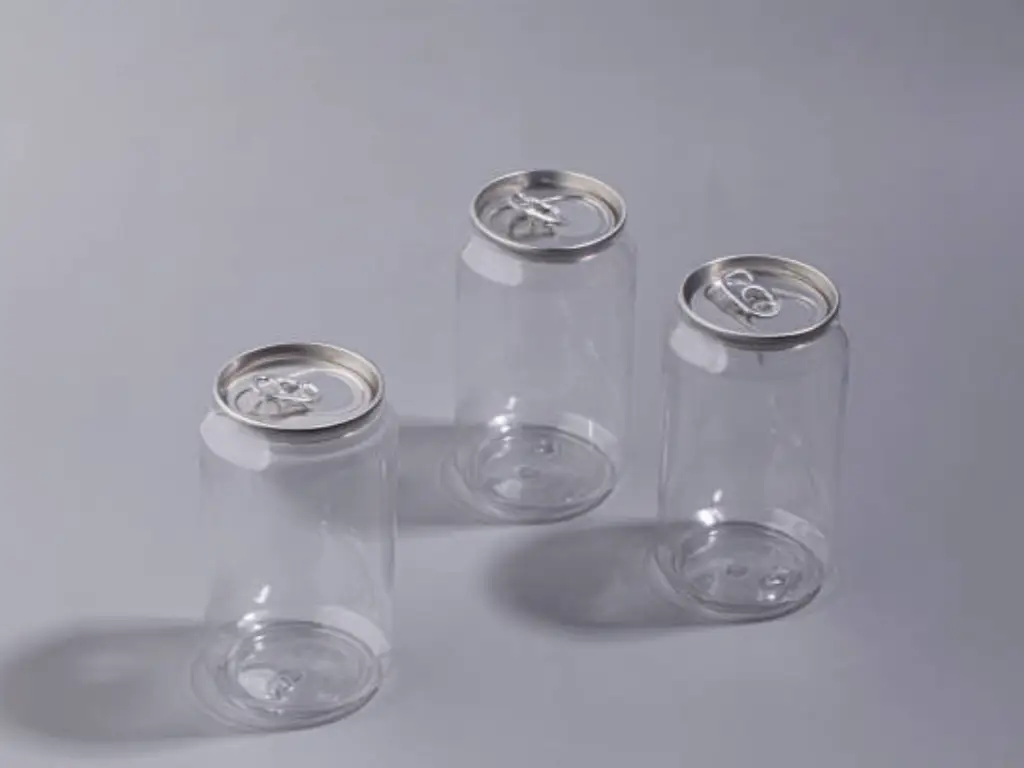
Polyethylene terephthalate — universally abbreviated as PET — dominates the global beverage bottle market, and for good reason. It is crystal-clear, lightweight, remarkably strong for its weight, and 100% recyclable. PET’s molecular structure delivers a combination that no other commodity plastic matches: high transparency that lets consumers see the product, a natural CO₂ barrier that keeps carbonated drinks fizzy, and enough tensile strength to survive the drop from a factory conveyor to a retail shelf. It is also inherently BPA-free — the chemical bisphenol-A is simply not used in PET production, which removes one of the most common consumer safety concerns from the equation.
PET bottles are everywhere: the 500ml water bottle on a convenience store shelf, the 2-liter soda bottle in a supermarket aisle, the cooking oil container in a kitchen cabinet. The material’s versatility extends beyond beverages — PET jars hold everything from peanut butter to protein powder. It is also the most recycled plastic on the planet, with collection and reprocessing infrastructure that far exceeds any other polymer (Greyparrot, 2025). When you hear about bottles being turned back into bottles in a closed-loop system, PET is the material that makes that possible.
HDPE (High-Density Polyethylene) — The Workhorse for Milk and Detergent
If PET is the transparent specialist, HDPE is the opaque generalist. High-density polyethylene produces a stiff, durable bottle with a characteristic slightly waxy feel. It is naturally translucent to opaque (colored variants are common — white for milk, orange for detergent), and it offers superior moisture-barrier performance. HDPE also resists a wider range of chemicals than PET, which is why it carries everything from bleach to shampoo without degrading.
The gallon milk jug is HDPE’s most recognizable form. Detergent bottles, shampoo containers, motor oil cans, and many pharmaceutical bottles also use HDPE. For food applications, HDPE performs particularly well in cold and ambient-temperature settings — think juice, yogurt drinks, and condiment bottles. Its higher stiffness-to-weight ratio means manufacturers can use less material per bottle, which reduces both raw-material cost and shipping weight.
PP (Polypropylene) — Heat-Resistant and Hot-Fill Ready
Polypropylene occupies a distinct niche: it handles heat that would warp PET or HDPE. With a melting point roughly 30–40°C higher than PET’s practical working range, PP is the default material for hot-fill applications — products that are bottled while warm (ketchup, syrup, certain sauces, and ready-to-drink teas) and for containers that might go into a microwave. PP bottles can be translucent or fully colored, and they offer excellent chemical resistance across a wide pH range.
PP is also the fastest-growing material in the tea and coffee takeaway segment — many reusable bubble-tea cups, coffee tumblers, and food-storage containers are made from PP. In pharmaceutical packaging, PP dominates the prescription bottle market because it meets stringent USP standards for drug-contact stability. The trade-off: PP is slightly less transparent than PET and generally costs a bit more per unit, but for hot-fill and chemical-resistance applications, it is often the only practical choice.
LDPE, PC, and Emerging Alternatives
Not every bottle fits neatly into the PET-HDPE-PP triad. LDPE (low-density polyethylene) produces soft, squeezable bottles — the kind used for honey, condiment dispensers, and laboratory wash bottles. Its flexibility comes from a branched molecular structure that prevents the tight crystalline packing of HDPE. LDPE is less common for high-volume beverage packaging but irreplaceable where squeezability matters.
Polycarbonate (PC) was once the standard for reusable water bottles and large water-cooler jugs — it is rigid, brilliantly clear, and virtually unbreakable. But PC is made with bisphenol-A (BPA), and a decade of consumer concern and regulatory scrutiny has dramatically reduced its use in food-contact bottles. Most major reusable-bottle brands have switched to Tritan (a BPA-free copolyester) or PP.
Then there are the newcomers. PLA (polylactic acid), a bioplastic derived from corn starch or sugarcane, is compostable under industrial conditions and increasingly used for cold-drink cups and short-shelf-life bottles. rPET — recycled PET that has been cleaned, ground, and re-pelletized — is mandated by law in a growing number of jurisdictions (the EU requires 25% recycled content in PET bottles as of 2025, rising to 30% by 2030) (EU Single-Use Plastics Directive, 2019). Each alternative comes with trade-offs: PLA can’t handle heat above ~40°C, and rPET requires sophisticated decontamination to achieve food-grade purity.
| Material | Resin Code | Key Properties | Common Bottle Uses | Recyclability |
|---|---|---|---|---|
| PET | #1 | Crystal-clear, strong, good CO₂ barrier, BPA-free | Water, soda, juice, cooking oil, nut butter jars | Widely recycled (most recycled plastic globally) |
| HDPE | #2 | Stiff, opaque, excellent moisture & chemical barrier | Milk jugs, detergent, shampoo, motor oil | Widely recycled |
| PP | #3 | Heat-resistant (hot-fill capable), chemical-resistant | Ketchup, syrup, medicine bottles, tea cups | Increasingly recycled |
| LDPE | #4 | Soft, flexible, squeezable | Honey bottles, condiment dispensers, lab bottles | Limited recycling (check local) |
| PC | #7 | Rigid, ultra-clear, BPA-containing | Legacy reusable bottles, water-cooler jugs (declining) | Not typically recycled |
| PLA | #7 | Bioplastic, industrially compostable | Cold-drink cups, short-life bottles | Compostable only (not recyclable) |
How Plastic Bottles Are Made — The Two-Step Manufacturing Journey
A plastic bottle doesn’t start as a bottle. It starts as a tiny pellet — smaller than a grain of rice — made of virgin PET, HDPE, or PP resin. The transformation from pellet to bottle happens in two precisely controlled stages: injection molding (which creates a “preform”) and stretch blow molding (which turns the preform into a finished bottle). This two-stage process, known as Injection Stretch Blow Molding (ISBM), is the dominant manufacturing method for high-quality beverage bottles worldwide (British Plastics Federation).
Understanding this two-step journey is the key to understanding why a plastic bottle performs the way it does — why it’s strong yet lightweight, why it holds carbonation, and why the neck threads are always perfectly formed. Each stage contributes something irreplaceable to the finished container.
Step 1 — From Raw Pellets to Preforms (Injection Molding)
Raw plastic pellets arrive at the factory in bulk — typically in 1,000 kg supersacks or silo trucks. Before anything else, the pellets must be dried. This step is especially critical for PET, which is hygroscopic: it absorbs moisture from the air, and even tiny amounts of water will react with the polymer at processing temperatures, breaking molecular chains and weakening the final bottle. Professional production dries PET pellets at 160–175°C for 4–6 hours, targeting a moisture content of ≤0.005% (50 parts per million).
The dried pellets are fed into a heated barrel where a rotating screw melts them at 260–280°C. The molten plastic is injected under high pressure into a precision-machined steel mold cavity shaped like a thick-walled test tube with a finished neck. This is the preform — and the neck geometry (threads, tamper ring, sealing surface) is fully formed at this stage and will not change. The preform body is short and thick-walled because it will be stretched to several times its length in the next step.
Weight control at the preform stage is one of the key differentiators between professional and low-end manufacturing. A tolerance of ±1.2 grams on a preform that weighs 20–40 grams may sound generous, but in high-speed production — where 14 injection machines might each cycle every 15–20 seconds — maintaining that window across millions of units requires precise temperature control, consistent raw-material quality, and automated robotic handling throughout. Once cooled and ejected, preforms either proceed directly to blowing (in a one-step integrated machine) or are stored for later use (in the two-step process common for high-volume beverage bottle production).
Step 2 — From Preforms to Bottles (Stretch Blow Molding)
The preform is reheated in an infrared oven to a carefully controlled temperature zone — for PET, roughly 100–110°C, just above the material’s glass transition point where it becomes pliable without melting. The temperature profile must be uniform; any hot or cold spots will produce uneven wall thickness in the finished bottle.
Inside the blow-molding station, the conditioned preform is clamped at the neck inside a cooled metal mold shaped like the final bottle. Two things happen simultaneously: a stretch rod descends through the neck and pushes the preform downward, elongating it to the full height of the mold cavity (axial stretch). At the same time, high-pressure air — up to 40 bar (approximately 580 psi) — inflates the softened preform outward against the mold walls (radial expansion). This biaxial orientation — stretching the polymer molecules in both the lengthwise and circumferential directions — is what gives PET bottles their remarkable strength-to-weight ratio. The molecular alignment increases tensile strength, improves gas-barrier performance, and enhances clarity, all while reducing material usage.
After a brief cooling period against the chilled mold walls, the mold opens and the finished bottle is ejected. In a modern high-speed line, this entire cycle — reheat, stretch, blow, cool, eject — takes only a few seconds per bottle. The same basic process works for any bottle shape; the mold cavity is simply machined to the desired contour.
Quality Control — What Happens Before a Bottle Ships
Professional bottle production doesn’t end at ejection. Every bottle passes through a quality-control gauntlet before it leaves the factory. Visual inspection comes first: in a well-run facility, 100% of bottles are checked for surface defects — bubbles, black specks, oil stains, deformation — that indicate a process problem upstream. Dimensional checks follow on a sampling basis in the quality lab: height, diameter, neck-finish tolerances, and wall thickness at multiple measurement points. Seal-integrity testing confirms that the bottle neck and closure form a leak-proof interface under pressure. Drop testing — typically from 1.8 meters with the bottle filled with its intended product — simulates real-world handling.
The best manufacturers target a finished-product yield of 99.8% or above and submit batch samples to independent third-party laboratories (such as SGS or IPTC) on a quarterly basis for full chemical and microbiological analysis. Quarterly testing — rather than the industry-default annual schedule — is one of the practical signals that separates a quality-focused supplier from a price-only operation.
Are Plastic Bottles Safe? Understanding Food-Grade Standards
“Are plastic bottles safe?” is the question that sits behind most searches about what bottles are made of — and it deserves a straight answer. The short version: yes, plastic bottles manufactured under recognized food-grade standards are safe for their intended use. The long version involves understanding what “food-grade” actually means, how it’s verified, and what happens when corners are cut.
In the United States, the FDA regulates plastic food-contact materials under Title 21 of the Code of Federal Regulations (CFR) Part 177, which specifies exactly which polymers, additives, and colorants may contact food — and under what conditions of temperature, food type, and contact duration (FDA 21 CFR Part 177). In the European Union, Regulation EU 10/2011 serves the same function, with detailed migration limits for every permitted substance. Internationally recognized management-system certifications — ISO 9001 (quality management), FSSC 22000 (food safety systems), and BRCGS (British Retail Consortium Global Standard for packaging) — provide additional layers of verification that a manufacturer’s processes consistently produce safe products.
The word “consistently” is the key. A single bottle that passes a lab test proves nothing about the million bottles produced before and after it. That’s why serious manufacturers combine finished-product testing with process-level certifications that auditors verify on-site.
The Role of Virgin vs. Recycled Material
Raw-material quality is the foundation of bottle safety. Virgin PET produced by major chemical companies — such as China Resources Chemical, one of Asia’s largest PET resin suppliers — undergoes rigorous purity testing at the production stage. Each batch is analyzed for intrinsic viscosity (a measure of polymer chain length that correlates with strength), color consistency, and contaminant levels before it ever reaches a bottle factory. Reputable bottle manufacturers then perform their own incoming-material inspection before the resin enters production.
Recycled PET (rPET) offers clear environmental benefits — it reduces virgin-resin consumption and diverts waste from landfills — but requires a more complex safety chain. Post-consumer PET must be sorted, washed, ground into flake, and decontaminated through a process validated to remove potential chemical migrants from the bottle’s previous life. In the US, the FDA issues a Letter of No Objection (LNO) for each specific recycling process that demonstrates adequate decontamination; in the EU, the European Food Safety Authority (EFSA) performs a parallel evaluation. Without this validation, recycled content cannot legally contact food.
Certification Marks That Matter
When you see a certification mark on a bottle or a supplier’s website, what does it actually mean? Here is a plain-language decoder for the most common marks in plastic bottle manufacturing:
FDA compliance means the material formulation (polymer + additives) falls within a category listed in 21 CFR Part 177 and has been tested for migration under the intended conditions of use. It is not a “seal of approval” on a finished product — it is a regulatory status that the manufacturer must maintain through ongoing compliance. EU 10/2011 is the European equivalent, with specific migration limits measured in mg of substance per kg of food simulant. SGS testing means an independent global laboratory has analyzed samples for specific substances (heavy metals, BPA, phthalates, etc.) and issued a test report. The scope of the report matters — “SGS tested” without specifying what was tested for is a half-claim. ISO 9001 certifies that the manufacturer has a documented quality management system — it verifies process consistency, not product safety directly. FSSC 22000 and BRCGS are food-safety-specific certifications that include hazard analysis, traceability, and facility hygiene requirements — they carry more weight for food-contact packaging than a generic ISO 9001.
The frequency of third-party testing also matters. A manufacturer that submits samples quarterly to an independent lab is operating at a different level of diligence than one that tests annually — and in a market where a single contamination incident can destroy a brand, that difference is far from academic.
The Environmental Picture — Recycling and Sustainability
Plastic bottles sit at the center of one of the most visible environmental debates of our time, and the facts are more nuanced than either side’s slogans suggest. Roughly 14% of global PET plastic is currently recycled — a number that is simultaneously sobering (most plastic is not recycled) and encouraging (PET has the highest recycling rate of any plastic, and the infrastructure is accelerating) (Greyparrot, 2025).
The recycling process itself is straightforward in concept: collected bottles are sorted by polymer type (near-infrared optical sorters separate PET from HDPE from PP at high speed), washed to remove labels and residues, ground into flake, and either re-pelletized into rPET resin for new bottles or processed into fiber for textiles. Bottle-to-bottle recycling — where a used water bottle becomes a new water bottle — represents the highest-value pathway and is the target of most regulatory mandates.
The real bottlenecks in the recycling system are collection and sorting, not reprocessing technology. Deposit-return schemes (the “bottle bill” model used in 10 US states and much of Europe) routinely achieve collection rates above 80%, compared to roughly 30% for curbside-only systems. The difference is behavioral, not technical: when a bottle carries a visible deposit value, consumers treat it as a resource rather than waste.
PLA bioplastics offer an alternative narrative — bottles made from plants, compostable at end of life — but the reality is more constrained. PLA requires industrial composting conditions (58°C, controlled humidity, specific microbial environments) to degrade within a reasonable timeframe. In a backyard compost pile or a landfill, PLA behaves much like conventional plastic. For most applications, a well-designed PET bottle with guaranteed collection and reprocessing into rPET delivers a better net environmental outcome than a PLA bottle that ends up in general waste.
The honest summary: a PET bottle that enters a functioning collection-and-reprocessing system and becomes a new bottle is one of the more environmentally defensible packaging choices available. The same PET bottle in a country without collection infrastructure is a missed opportunity. The material is not the problem; the system around it is.
Choosing the Right Bottle Material for Your Product
If you’re a business owner, a product developer, or a startup founder evaluating packaging for the first time, the material landscape can look overwhelming. The good news is that the decision tree is logical once you know the right questions to ask.
Start with your product. Is it carbonated? You need PET. Is it hot-filled (above ~70°C at the filling line)? You need PP — PET and HDPE will deform. Is it a dry powder (protein, spice, milk powder)? HDPE jars with an aluminum-foil induction seal provide the best moisture barrier at the lowest cost. Is transparency essential for consumer appeal? PET is the default; PP can work in translucent applications but won’t match PET’s clarity.
Then consider your supply chain. Will the bottles travel through hot containers across the equator? PP’s heat tolerance becomes critical. Will they sit on a shelf for 12 months? You need a supplier who can demonstrate shelf-life stability through seal-integrity and migration testing over that duration. Do you need custom tooling for a unique shape? Ask about the mold-cost split and minimum order quantity — professional manufacturers typically share mold costs with the client and can produce light-customization samples within 48 hours.
Finally, verify the certifications. At minimum for food-contact applications, the supplier should hold ISO 9001, FSSC 22000 or BRCGS, and material-specific compliance documentation (FDA 21 CFR or EU 10/2011 as applicable to your market). Ask for the certificate numbers and verify them on the issuing body’s database. Ask about third-party testing frequency — quarterly is the gold standard, annual is the baseline. And ask about raw-material sourcing: whether the resin is 100% virgin from a named supplier with traceability, or contains recycled content with the corresponding regulatory clearance.
The decisions you make at the packaging stage — material, supplier, certification level — become part of your own brand’s quality story. And when a customer someday searches “what are plastic bottles made of,” they should find the same confidence in the answer that you had when you chose the bottle.
For those evaluating packaging suppliers, the raw-material quality, certification portfolio, and production consistency of a manufacturer like Outstanding Pack — whose product catalog and full specifications are available at outstandingpack.com — offer a practical reference point for what a professionally certified PET bottle supply chain looks like.
- Greyparrot. “Recycling in 2025: What We Learned from 52 Billion Waste Items.” 2025. https://www.greyparrot.ai/resources/blog/2025-unwrapped
- British Plastics Federation. “Injection Stretch Blow Moulding.” https://www.bpf.co.uk/plastipedia/processes/injection_stretch_blow_moulding.aspx
- FDA. “21 CFR Part 177 — Indirect Food Additives: Polymers.” https://www.accessdata.fda.gov/scripts/cdrh/cfdocs/cfcr/cfrsearch.cfm?cfrpart=177
- European Commission. “Regulation (EU) No 10/2011 on Plastic Materials and Articles Intended to Come into Contact with Food.” 2011. https://eur-lex.europa.eu/
- Outstanding Pack. “Product Catalog.” https://www.outstandingpack.com/products/
- Outstanding Pack. “Contact Page.” https://www.outstandingpack.com/contact/
- Outstanding Pack (Homepage). https://www.outstandingpack.com/