Ask ten production managers what the “best can sealing machine” is, and you will get ten different answers — and they will all be right, for their own lines.
A high-speed rotary sealer that prints money for a beverage factory becomes a costly anchor for a craft food startup running 500 cans a day. A $300 manual unit that launches a home-based jam business turns into the bottleneck that nearly kills it, six months later, when a regional retailer triples the order.
The best machine is not a model number. It is the intersection of your production volume, your container specifications, your target market certifications, and your budget — and missing any one of those coordinates means paying for the mistake in downtime, rejected batches, or a machine that sits idle while you scramble for a replacement.
This guide walks through every decision that matters. You will get the three machine types mapped to real production scales (not abstract categories), the technical factors that separate a decade-long workhorse from a liability, a supplier vetting framework based on metrics you can actually verify, and the traps that have cost other buyers months of lost production. By the end, you will know exactly which questions to ask — and which answers walk away from.
1. Understanding Can Sealing Machine Types: Manual, Semi-Automatic, and Fully Automatic
Every can sealing machine on the market belongs to one of three tiers. The dividing line is simple — how much human involvement the cycle requires — but that single variable cascades into speed, cost, seal consistency, and where each tier actually makes economic sense.
1.1 Manual Can Sealers — The Low-Risk Entry Point for Startups and Small Batches
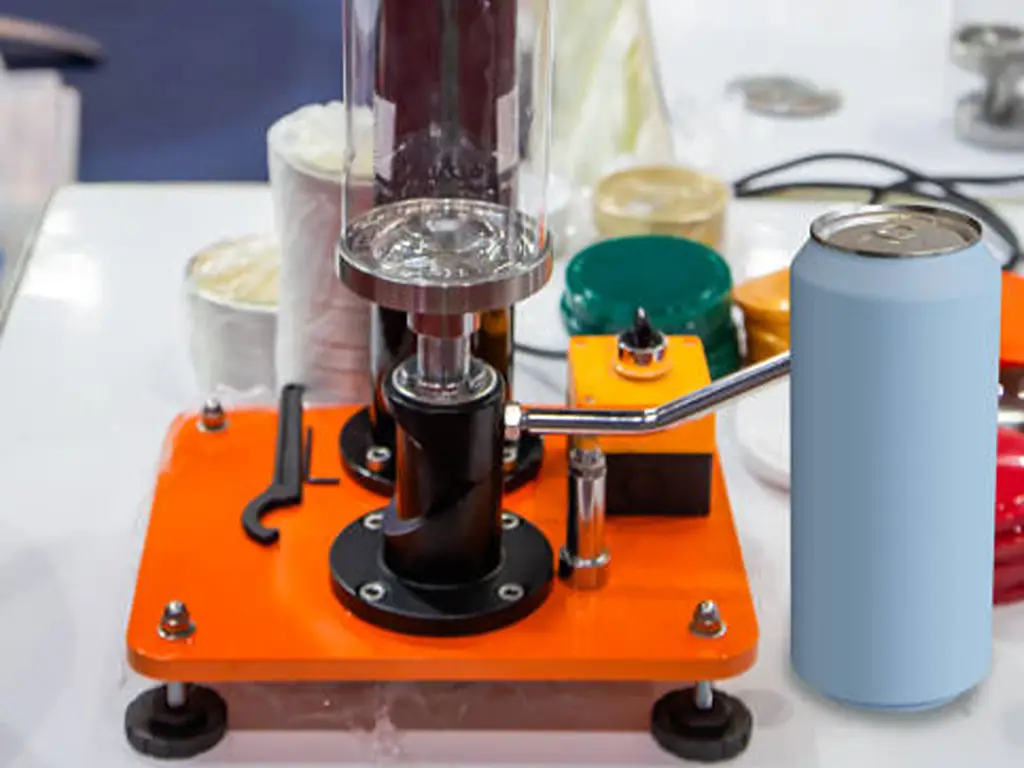
Manual can sealers are mechanically straightforward: the operator places each filled can onto a chuck, activates the seaming rollers by hand lever or foot pedal, and controls every stage of the cycle. Speeds run 7 to 10 cans per minute — roughly 400 to 600 cans per hour. Prices sit between $100 and $500 for bench-top units, making them the lowest-barrier way to start sealing.
These machines earn their keep in operations producing fewer than 1,000 cans per day: market-testing runs, R&D labs, home-based food businesses, and craft producers proving a concept before committing capital. The cost is so low that the machine pays for itself in the first production run.
The trade-off is seal consistency. Because the operator controls roller pressure, dwell time, and can rotation manually, results vary with skill, fatigue, and even the time of day. For shelf-stable products where a single compromised seal means a spoiled unit and a lost customer, this variance is the hidden cost of the low sticker price. But for short runs and proof-of-concept batches, nothing beats the simplicity and zero power requirements.
1.2 Semi-Automatic Machines — The Capacity Sweet Spot for Growing Businesses
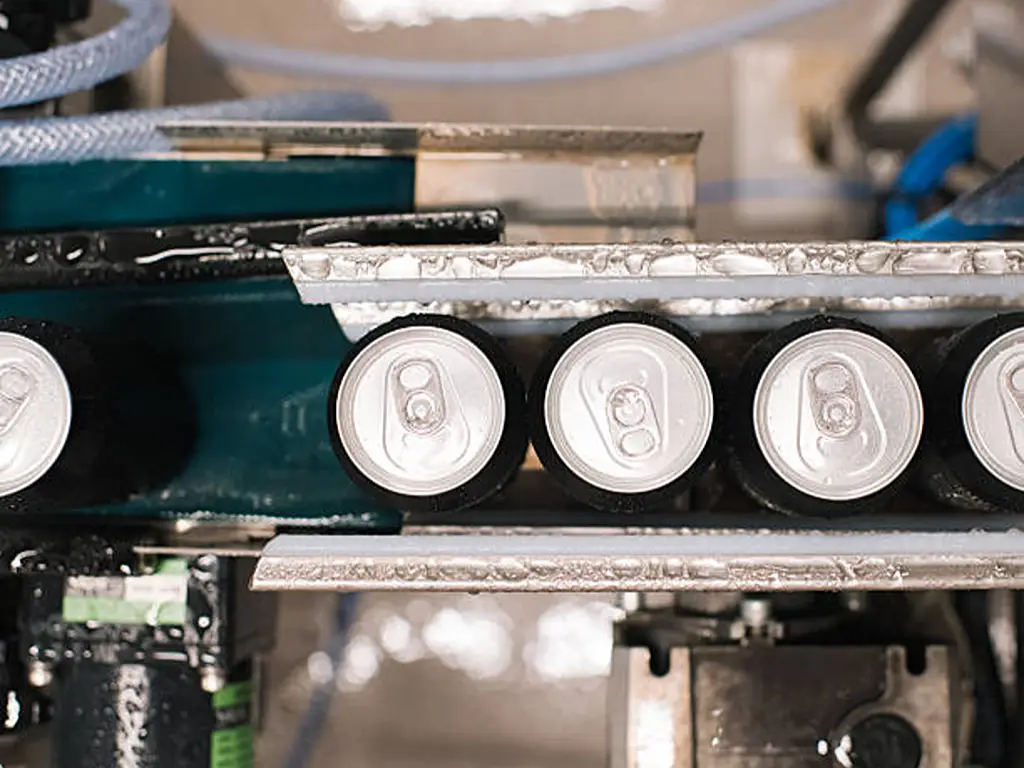
Semi-automatic sealers split the work at its most logical seam: the operator loads filled cans and initiates the cycle, and the machine executes the sealing operation with controlled, repeatable pressure, speed, and rotation. Output climbs to 15 to 30 cans per minute — 900 to 1,800 per hour — and seal consistency jumps because mechanical parameters are dialed in once and reproduced thousands of times.
This tier costs between $1,800 and $5,000 and handles daily volumes of 1,000 to 10,000 cans comfortably. The underrated advantage is flexibility. Most semi-automatic machines accept a wide range of can diameters and heights with quick manual adjustments — swap a chuck and tweak the height setting, and you have switched from a 250ml juice can to a 500ml nut jar in minutes. For mid-size food producers, regional beverage brands, and contract packagers running varied formats across multiple SKUs, one semi-automatic unit often replaces what would otherwise require two or three dedicated machines.
1.3 Fully Automatic and Rotary Sealers — Industrial Throughput Without the Labor Bill
Fully automatic inline sealers reduce the operator’s role to one task: keeping the lid magazine full. Cans feed in on a powered conveyor, the machine positions each lid, executes the seal, and ejects the finished unit — all without human intervention. Speeds start at 80 cans per minute on compact inline models and reach over 1,500 cans per minute on multi-head rotary systems.
The price ladder reflects the engineering depth. Entry-level automatic inline units begin around $8,000. Mid-range systems with programmable logic controllers and touchscreen interfaces run $15,000 to $30,000. High-speed rotary lines with vacuum or Modified Atmosphere Packaging (MAP) capability — the kind installed in major beverage plants and industrial canneries — reach $95,000 and beyond.
If your operation runs 10,000 or more cans per day, the math tilts decisively toward automatic. The labor savings alone — one operator overseeing a line that would require four to six people on semi-automatic units — typically recovers the capital difference within 18 to 24 months. For food and beverage products specifically, vacuum-capable automatic sealers add a second return: removing oxygen from the headspace before sealing slows oxidation, preserves color and nutrient content, and inhibits aerobic bacterial growth. That extended shelf life translates directly into wider distribution reach and fewer returns. If you package wet products — fruit, vegetables, meat, dairy-based drinks — treat vacuum or MAP compatibility as a hard requirement, not a negotiable feature.
| Type | Speed | Price Range (USD) | Best For | Key Trade-Off |
|---|---|---|---|---|
| Manual | 7–10 cans/min | $100–$500 | Startups, labs, <1,000 cans/day | Operator-dependent seal consistency |
| Semi-Automatic | 15–30 cans/min | $1,800–$5,000 | Growing businesses, 1K–10K cans/day | Operator still needed for can loading |
| Fully Automatic Inline | 80–400 cans/min | $8,000–$30,000 | Mid-to-large production, 10K+ cans/day | Higher upfront cost, moderate flexibility |
| Rotary High-Speed | 400–1,500+ cans/min | $30,000–$95,000+ | Industrial canneries, enterprise | Best for round cans only, significant floor space |
2. Key Factors to Evaluate Before Buying a Can Sealing Machine
Knowing which tier fits your scale narrows the field. The next layer of due diligence is harder: does this specific machine handle your exact containers, meet your target market’s legal requirements, and produce seals that survive real-world distribution?
2.1 Production Volume and Speed Requirements
Match the machine’s rated speed to your actual peak output — not your average day, not your five-year projection, but the worst-case week when every line is running and a major customer just doubled the order. A semi-automatic unit rated at 20 cans per minute sounds adequate for a 5,000-can daily target until you account for changeovers between SKUs, operator breaks, and the uncomfortable reality that rated speeds are measured under ideal factory conditions, not your production floor at 3 PM on a Friday.
Build in a minimum 20% headroom above your peak requirement. The more expensive mistake is under-buying: a manual sealer that becomes the bottleneck six months in forces an emergency capital expense and production disruption at exactly the moment you can least afford either. A $30,000 automatic line sitting at 30% utilization burns cash through depreciation and floor space. But a machine running at 105% of its rated capacity burns through operator patience and delivery promises faster. Right-size to your actual demand, then add buffer — not aspiration.
2.2 Can Size, Shape, and Material Compatibility
The best sealer for round aluminum cans is useless if half your product line ships in rectangular PET jars. Rotary sealers are optimized for round, symmetrical containers; if your portfolio includes oval, rectangular, or irregular shapes, you need a non-rotary sealer — the type where the can remains stationary while the seaming wheels orbit around it.
Verify three dimensions against your entire current SKU list and any planned additions for the next two years: the machine’s minimum and maximum can diameter (standard models handle 45mm to 85mm, with custom tooling extending the range), its height adjustment range, and its material compatibility. The machine must handle your substrate — tinplate, aluminum, PET plastic, composite — and your specific lid format: easy-open pull-tab, roll-on, foil membrane, or screw cap. Adjustable tooling (quick-change chucks, interchangeable roller sets, variable height settings) is what turns format switching from a half-day teardown into a five-minute adjustment.
2.3 Certifications That Matter: CE, FDA, ISO, and More
Certifications are not wall decorations. They are market access permits, and the wrong gap can lock you out of an entire continent. CE marking on your sealing machine is a legal requirement for exporting to the European Union — not a nice-to-have, but a prerequisite for clearing customs. For the United States, FDA compliance on all food-contact surfaces is the baseline expectation from distributors, retailers, and increasingly from end consumers who read labels.
ISO 9001 certification signals something operationally specific: the manufacturer operates under a documented, audited quality management system. This correlates with production batch consistency, material traceability, and a structured corrective-action process when something deviates — all of which flow downstream to the machines they build.
For food and beverage producers, the certification stack extends to the container side. FSSC 22000 and BRCGS certify that the packaging supply chain meets Global Food Safety Initiative (GFSI) standards. A sealing machine from a supplier whose own operations carry these certifications — and who understands what they require from the equipment they ship — eliminates months of compliance friction when you enter a regulated market.
Request digital copies of every certificate before committing to a purchase order — and verify the certificate number with the issuing body. An uncertified machine might save 10–15% on the upfront price, but one distributor audit that flags the gap can pull your entire product line off the shelf. The compliance risk dwarfs the purchase savings every time.
2.4 Sealing Quality, Vacuum Capability, and Shelf-Life Impact
A can sealer’s job sounds binary — lid on, seal formed, done. But the margin between a hermetic seal and a micro-leak is measured in tenths of a millimeter. Inconsistent roller pressure, worn chucks, or speed mis-synchronization produce seams that pass a casual visual inspection but fail under the pressure differentials, temperature swings, and vibration of real-world logistics.
Validate seal quality with three tests before accepting a machine: pressure testing (submerge the pressurized sealed can and watch for bubble streams), vacuum decay testing (measure the vacuum loss curve over 24–72 hours in a calibrated chamber), and burst testing (pressurize to failure to establish the safety margin). For products with a shelf-life claim printed on the label, these tests are the data that backs the date — skip them, and you are making a promise your packaging cannot keep.
Vacuum sealing and MAP capabilities deserve a hard look for any product sensitive to oxygen. Removing ambient air before sealing slows enzymatic browning in fruits, preserves fatty acid stability in nuts and meats, and prevents color fade in beverages. Confirm the machine supports vacuum or gas-flush cycles upfront; retrofitting this capability later almost always means buying a new machine, not upgrading the one you have.
3. How to Evaluate Can Sealing Machine Suppliers
A spec sheet gets you to a shortlist. Supplier due diligence gets you to a decision — and the gap between those two steps is where most costly mistakes happen.
3.1 What to Look for in a Reliable Manufacturer
Factory transparency separates serious manufacturers from trading companies with a website. A supplier willing to host third-party audits (SGS, Bureau Veritas, TÜV), provide a live video walkthrough of the production floor, and share real-time order tracking is operating at a fundamentally different level of accountability than one who sends only a brochure and a proforma invoice. If geography allows, visit the factory. If not, a scheduled live video tour with the production manager is a reasonable substitute — and a supplier who refuses it is sending a signal you should not ignore.
Start with the numbers you can verify independently. On-time delivery rate should sit at 97% or above: anything lower, and your production schedule is hostage to someone else’s bottleneck. Reorder rate reveals whether buyers return after the first transaction — a rate above 20% indicates genuine satisfaction, not successful sales persuasion. Response time is the canary in the coal mine for after-sales support: a supplier who replies to a technical question in 2 to 4 hours versus 48 hours is the difference between a one-shift delay you barely notice and a three-day line stoppage that cascades into missed shipments.
China’s manufacturing hubs — Guangdong, Zhejiang, and Fujian provinces — collectively supply the majority of the world’s can sealing equipment, but the quality range within those provinces is the entire spectrum. Some suppliers are assembly shops with a trade license, a rented warehouse, and a parts catalog. Others are vertically integrated manufacturers running in-house injection molding, CNC machining, and electrical assembly under one roof. The difference surfaces in lead time accuracy, customization capability, and whether spare parts arrive in days or months.
Consider Outstanding Pack, a Foshan-based manufacturer that integrates can sealing machine production with its own PET container manufacturing — a combination that means the machines are designed and tested against the actual containers they will seal in production, not a generic test can. The company holds ISO 9001, FSSC 22000, BRCGS, and CE certifications; runs SGS third-party testing quarterly (where most competitors test annually); and performs over 20 quality checks per production batch. On the service side, light-customization samples ship within 48 hours — the industry average is 4 days — and standard bulk orders turn around in 3 to 5 days, backed by a daily per-line capacity of 50,000 units. Whether or not Outstanding appears on your final shortlist, these are the benchmarks a serious supplier should clear: verifiable certifications with issuing-body confirmation, response and turnaround times faster than the industry norm, and production depth deep enough to absorb your peak volume without subcontracting to unknown third parties.
3.2 After-Sales Support, Warranty, and Long-Term Partnership
A sealing machine purchase is the start of an operational dependency. Before signing, clarify what the warranty actually covers: parts only, or parts and labor? What is the duration — 12 months is standard, 24 months indicates the manufacturer trusts its own build quality? Most critically, where are spare parts stocked? A $50 roller set shipped from a domestic warehouse arrives in two days; the same part shipped from an overseas factory with customs clearance might take two weeks, and during those two weeks your line is down.
Training format determines how fast your operators reach productive speed. Some suppliers provide comprehensive operation video guides covering common adjustments — seal pressure tuning, lid alignment, chuck replacement — that let your team handle routine maintenance without external support. Others offer on-site installation and operator training, usually at additional cost but worth it for complex automatic lines. At minimum, the documentation package should enable your line operators to perform routine adjustments and diagnose common issues without placing a support call.
One operational detail that separates experienced exporters from newcomers: packaging for ocean freight. Sealing machines traveling by sea need wooden crate packaging with internal moisture barriers — salt spray, container condensation, and port handling are not theoretical risks. If your supplier proposes shipping a machine in a cardboard box with foam inserts, factor the cost of arrival damage into your total cost calculation. It will not be zero.
Supplier Vetting Scorecard
4. Common Mistakes to Avoid When Buying a Can Sealing Machine
4.1 Prioritizing Price Over Total Cost of Ownership
The cheapest quote rarely produces the cheapest operation. A $300 manual sealer that generates inconsistent seals costs you in product returns, wasted inventory, and the kind of brand damage that customer reviews make permanently visible. A machine without domestically stocked spare parts turns a $50 roller replacement into a three-week production shutdown — and the cost of three weeks of lost output dwarfs any upfront savings.
Calculate total cost over a minimum three-year horizon: purchase price + shipping and import duties + installation and commissioning + estimated annual maintenance (parts and labor) + spare parts inventory + energy consumption + operator training. The machine with the higher sticker price wins on this math far more often than the sales brochure suggests.
4.2 Ignoring Can Compatibility and Future Scalability
A sealer purchased for a single SKU becomes obsolete the moment you launch a second product in a different can format — and that moment arrives faster than most buyers expect. If your product roadmap includes additional sizes, materials, or lid types, verify that the machine supports them directly, or at minimum that the manufacturer offers modular upgrades (additional seaming heads, interchangeable tooling sets) rather than requiring a full replacement. The premium for future-proofing at purchase is a line item; the cost of rebuilding your packaging line later is a capital project.
5. Making the Right Choice: A Practical Decision Framework
5.1 Matching Machine Type to Your Production Stage
Strip away the marketing language, and the decision tree is refreshingly clear:
Manual Sealer
Semi-Automatic
Automatic Inline
Rotary + Vacuum/MAP
The upgrade trigger is almost always pain: the manual sealer becomes the bottleneck that makes your fulfillment team dread large orders; the semi-automatic cannot hit the volumes a new retail contract demands; a distributor audit requires a certification your current machine’s manufacturer cannot provide. The businesses that navigate these transitions smoothly are the ones that see the trigger approaching six months before it arrives — and budget for the upgrade while the current line is still running, not after it has already failed to keep up.
5.2 Final Checklist Before You Commit
- Confirmed can diameter, height, material, and lid type against the machine’s technical spec sheet
- Verified every required certification (CE, FDA, ISO 9001) — digital copies received and certificate numbers validated with the issuing body
- Tested the machine with your actual filled containers and product — not the supplier’s pre-selected demo samples
- Checked verified on-time delivery rate (target e97%) and reorder rate from independent buyer data
- Confirmed warranty scope: duration, parts coverage, labor coverage, spare parts stocking location and lead time
- Reviewed after-sales support package: training format, technical response time commitment, issue escalation process
- Calculated full three-year total cost of ownership — not just the purchase price line
- Validated export packaging method and shipping route for your delivery destination
The best can sealing machine is not the one with the highest speed rating or the lowest price. It is the one that fits your production today, adapts to where your product line is headed, and is backed by a supplier who answers the phone when something goes wrong. Invest the due diligence up front — the machine will pay it back in throughput, consistency, and the quiet confidence of a packaging line that simply works.
If you are comparing suppliers and want to evaluate one that integrates container manufacturing with sealing equipment — from PET preforms to finished cans to the machines that seal them — Outstanding Pack’s product catalog and certification documentation are available at outstandingpack.com/can-sealing-machine. Request a consultation to discuss your can specifications, volume requirements, and certification needs directly with their technical team.
Find the Right Can Sealing Machine for Your Production Line
Tell us your can specs, target volume, and certification requirements. Our technical team responds within 48 hours.
Get a Custom Recommendation