If you are searching “can sealing machine price,” you are past the “what is a can sealer” stage. You already know you need one. What you need now is a real answer — not just a price range, but the full picture: what different machines cost, why the numbers swing so wide, and what you will actually pay to get a working machine on your factory floor.
This guide lays out machine types with real price brackets, the five factors that drive cost differences, the hidden expenses most supplier quotes leave out, and — the part most guides miss — why buying your machine and your packaging from two separate sources costs more than you think.
Types of Can Sealing Machines — And What They Actually Cost
“Can sealing machine” is not one product. It covers three distinct automation levels, each with its own price logic and sweet-spot use case.
| Machine Type | Price Range (USD) | Speed | Best For |
|---|---|---|---|
| Manual / Tabletop | $100–$500 | 5–20 cans/min, ~300–600 cans/day | Craft breweries, lab testing, startups with <500 cans/day |
| Semi-Automatic | $500–$6,000 | 15–30 cans/min, ~500–1,800 cans/hour | Growing SMEs, regional food/beverage producers — the “sweet spot” for most commercial buyers |
| Fully Automatic Inline / Rotary | $5,000–$50,000+ | 20–2,500+ cans/min, up to 150,000 cans/hour | Large factories, high-volume canneries, 5,000+ cans/day production lines |
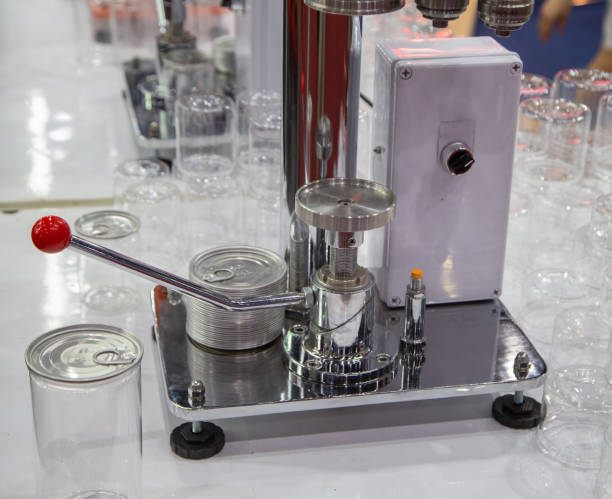
Manual machines are powered hand tools. You load each can and lid by hand, trigger the sealing cycle, then swap in the next can. They cost $100 to $500, depending on build quality and brand. If your daily output stays under 500 cans, this is all you need.
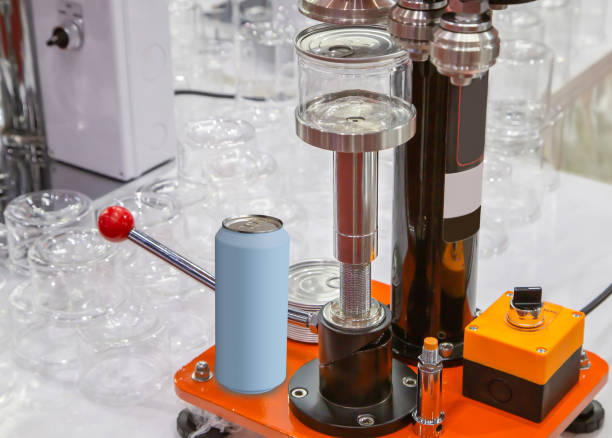
Semi-automatic sealers occupy the broadest price band — roughly $500 to $6,000. You still load the can and lid by hand, but the sealing cycle is motor-driven and highly consistent. At the low end ($500–$2,000), you get basic electric models with single-size tooling. Between $2,000 and $6,000, you enter PLC-controlled machines with adjustable chucks, digital counters, and stainless-steel bodies. Most small-to-medium food and beverage producers find their best return in this category.
Fully automatic systems start around $5,000 for compact inline machines and climb past $50,000 for multi-head rotary sealers that push 150,000 cans per hour. These are capital investments for continuous production lines. The price jump from semi-auto to full-auto is the single largest cost cliff in this market — and it only makes financial sense when your daily volume stays above 5,000 cans, day in and day out.
What Drives the Price — 5 Factors That Separate a $500 Machine from a $50,000 One
If you have browsed Alibaba or spoken to a few suppliers, you have seen prices all over the map. Five variables explain the spread. Here they are, ranked by how hard they hit the final number.
1. Automation Level (The Biggest Lever)
Automation dominates the price. A manual machine has one moving part — a motor-driven seaming roll. A semi-automatic adds a PLC controller, sensors, and usually a pneumatic clamping system, multiplying the component count three to five times. A fully automatic rotary sealer adds conveyor integration, multi-head synchronization, can-feeding mechanisms, and sometimes vacuum or nitrogen-flush subsystems — 10 to 20 times the engineering complexity of a manual unit. Each jump roughly triples to quintuples the cost.
2. Speed and Throughput (Cans Per Hour)
Speed is priced by the can. As a rough rule, every additional 1,000 cans per hour of rated capacity adds about $2,000 to $5,000 to the machine price. A compact automatic doing 2,000 CPH might cost $8,000. A multi-head rotary at 10,000 CPH from the same manufacturer could run $30,000 or more. The relationship is not linear — there are step changes at certain throughput thresholds where the engineering architecture must fundamentally change.
3. Material and Sanitation Grade
The metal your machine is built from matters more than most first-time buyers realize. Carbon steel frames with aluminum contact parts are cheapest — and the most likely to corrode in a humid production environment. Stainless steel 304 (SS304) is the baseline for food-grade use and adds 20–30% to the base price versus carbon steel. Stainless steel 316 (SS316), required for pharmaceutical and high-acid food applications, pushes that premium to 30–50% over SS304. If your product is acidic, salty, or headed to a regulated market, do not cheap out on material grade — replacement costs will wipe out any upfront savings.
4. Certifications
CE marking — mandatory for machinery sold into the European Economic Area — adds $500 to $2,000 in compliance and testing costs per model. Machines headed to the North American food-contact market may need FDA-compliant materials documentation, which tacks on another 10–15% to component costs. If you export to multiple regulated markets, certification overhead compounds. It is not optional — customs clearance in the EU and North America depends on it.
5. Can Compatibility and Customization
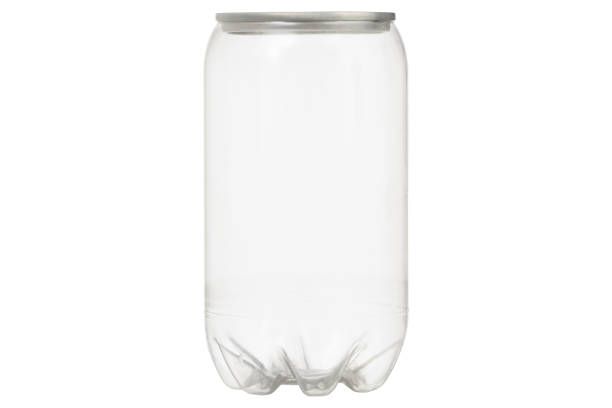
A machine tooled for a single can diameter and height is the cheapest configuration. Every additional can size you want the machine to handle needs either adjustable tooling (moderate cost) or interchangeable chucks and seaming rolls ($500–$1,500 per additional format). If you need a non-standard neck finish or an unusual can material — PET plastic rather than traditional tinplate, for example — confirm the supplier has tested the machine with your specific can and lid combination before you pay. Compatibility problems found after delivery are expensive to fix.
Bottom line: For most small-to-medium food and beverage operations, the optimal setup is a semi-automatic machine in SS304, CE-certified, compatible with two to three can sizes — typically $2,000 to $5,000 FOB.
The Real Cost of a Can Sealing Machine — Beyond the Price Tag
A $3,500 machine on a supplier’s Alibaba page does not cost $3,500 by the time it is running on your factory floor. The gap between FOB price and landed, operational cost is real — and it catches buyers off guard more often than any other surprise in this purchase.
Freight
Ocean freight for a single semi-automatic machine (0.5–1.5 CBM crated) from a major Chinese port like Guangzhou or Shenzhen to the US West Coast runs roughly $300–$600 via LCL consolidation. To the East Coast or Europe, expect $500–$1,200. Air freight cuts transit time from 25–40 days to 5–7 days but multiplies the cost three to five times — budget $800–$2,500 for a single machine. If you also order packaging containers (cans, lids) from the same supplier, consolidating everything into one shipment cuts your per-unit freight cost by 15–30% versus shipping machine and packaging separately.
Duties and Customs Clearance
Can sealing machines fall under HTSUS heading 8422.30 (machinery for filling, closing, sealing, or labeling) in the United States, with a general duty rate of 0% to 3.5%, depending on the specific subheading. But machinery imported from China may face additional Section 301 tariffs, which can add 25% to the dutiable value. Always confirm the exact HTS classification and current duty rate with your customs broker before finalizing a purchase order. Broker charges, bond fees, and potential inspection costs add $200–$500 to the landed cost of a single machine.
Installation and Training
If the supplier sends a technician for on-site installation and operator training, budget $500–$2,000 plus travel. Many buyers install the machine themselves using the supplier’s video guides and remote support — this skips the cost but requires some mechanical aptitude on your team. Ask upfront whether installation support is included in the quote or charged separately.
Spare Parts and Consumables
Seaming rolls and chucks wear out. A set of seaming rolls lasts 500,000 to 2,000,000 can cycles before replacement, depending on can material — tinplate wears rolls faster than aluminum, which wears faster than PET. A replacement roll set costs $50–$300. Budget at least one spare roll set and one spare chuck in your initial order. The $150–$500 you spend now saves a production stoppage later.
A Real-World Example
Here is how the numbers stack up for a typical purchase: one semi-automatic can sealer, SS304 construction, CE-certified, shipped from Guangdong to the US East Coast.
| Cost Item | Low Estimate | High Estimate |
|---|---|---|
| Machine (FOB) | $3,500 | $5,000 |
| Ocean Freight (LCL) | $500 | $1,000 |
| Customs Duties (est. 3% + Section 301) | $980 | $1,400 |
| Broker & Clearance Fees | $200 | $400 |
| Spare Parts (1 roll set + 1 chuck) | $150 | $350 |
| Total Landed Cost | $5,330 | $8,150 |
A $3,500 machine becomes $5,300 to $8,200 by the time it runs in a US facility. This is not an argument against importing — Chinese manufacturers still deliver compelling value at these landed prices, often 40–60% below equivalent European or North American machines. It is an argument for budgeting honestly.
Many first-time buyers don’t realize that ordering your can sealing machine AND your packaging containers from the same supplier lets you consolidate freight, simplify customs paperwork, and eliminate the common headache of “the machine arrived but the cans don’t fit.” Some packaging manufacturers — particularly those who produce both sealing equipment and PET cans — offer integrated quotes that bundle machine, packaging, and shipping into a single purchase order.
typical landed range
How to Get the Best Value — The Case for Integrated Sourcing
If you take away one lesson from this guide, make it this: the true cost of a can sealing machine is not just the machine. It is the machine plus the packaging you run through it, plus the logistics of getting both to your door. Viewed that way, how you source matters as much as what you buy.
The Hidden Cost of Split Sourcing — A Real-World Comparison
Picture this: you are launching a canned cold-brew coffee line. You need one semi-automatic sealer and an initial order of 50,000 PET cans with easy-open lids. Two sourcing approaches, two very different outcomes.
Scenario A: Split sourcing. Machine from Supplier A ($3,500 FOB, $600 freight to Los Angeles). 50,000 PET cans and lids from Supplier B — a packaging-only manufacturer ($0.12 per can = $6,000, plus $1,200 LCL freight). Two purchase orders, two shipments, two sets of customs paperwork, two suppliers to coordinate. Total landed cost: roughly $11,300. And — this is the part that stings — no single supplier has verified that the cans actually fit the machine’s chuck profile.
Scenario B: Integrated sourcing. Machine and packaging from a single supplier who makes both. Machine: $3,500. Cans: $0.11 per unit at 50,000 pieces = $5,500 (volume pricing kicks in when bundling). Consolidated freight for both items: $1,400. One purchase order, one customs entry, one supplier. Total landed cost: roughly $10,400. The supplier bench-tests your specific can and lid on the machine before shipping.
The integrated approach saves about $900 on an ~$11,000 order — roughly 8% — before you even account for the time saved and the compatibility risk removed. At 100,000 cans, the freight consolidation advantage alone can exceed $1,500.
This is not an argument against specialist machine manufacturers. If you need a $50,000 high-speed rotary sealer for a 100,000-can-per-day line, buy from a dedicated machinery company. But for most buyers — semi-automatic lines, under 10,000 cans per day — the integrated model deserves a hard look.
What to Look for in a Machine + Packaging Supplier
If integrated sourcing fits your situation, here are five criteria to evaluate potential suppliers:
One manufacturer that runs the integrated model is OUTSTANDING, a packaging producer in Foshan, China. They make both can sealing machines and PET packaging containers in-house. Their sealing machines carry CE certification, and their packaging materials hold FDA, EU 10/2011, ISO 9001, FSSC 22000, and BRCGS certifications — covering the major regulatory requirements for North American and European markets. Because they produce both the machine and the cans, they pre-test can-to-chuck compatibility before shipping, which removes one of the most common procurement headaches in this category. Their full product range is at outstandingpack.com.
If you are comparing suppliers, start by asking for a combined quote: machine, initial packaging order, and freight to your nearest port. That number is your real baseline — and the only number that matters for comparison shopping.
References
- PMMI. “Packaging Machinery Sales Projected to Grow to New Highs Through 2027.” 2024. pmmi.org
- PMMI. “2025 Packaging State of the Industry.” 2025. labelandnarrowweb.com
- Packaging Technology Today. “Forecast Calls for Rising Packaging Machinery Sales.” 2024. packagingtechtoday.com
- OUTSTANDING. Official Website. outstandingpack.com
- OUTSTANDING. About Us. outstandingpack.com
- OUTSTANDING. Product Catalog. outstandingpack.com
- OUTSTANDING. Contact Page. outstandingpack.com