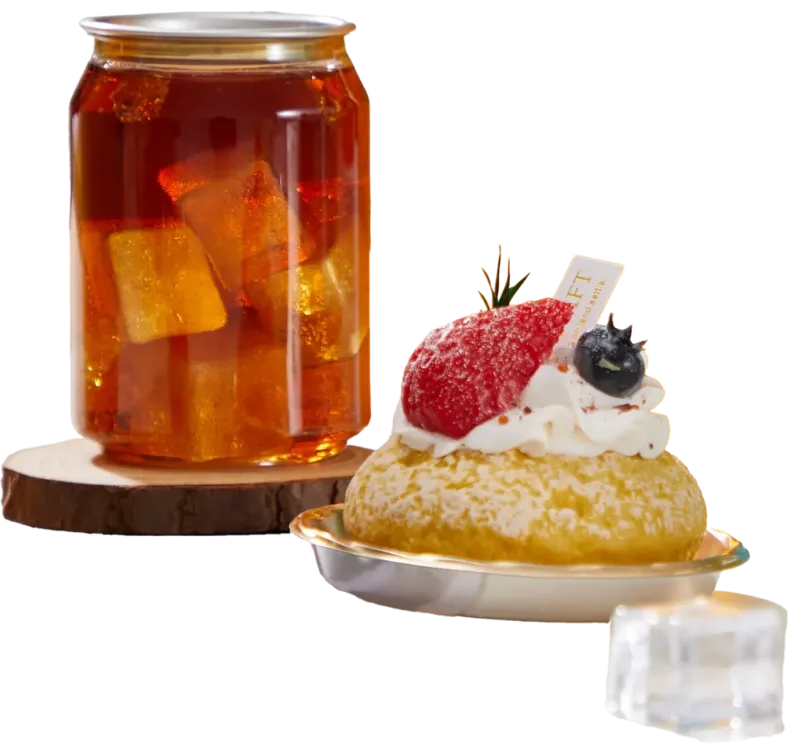
If you run a coffee shop, a bubble tea chain, or any business that serves drinks, you have probably asked yourself the same question at 2 a.m. while staring at a supplier catalog: What size cup should I actually order?
The question sounds simple. It is not. Plastic cup sizes span from 1-ounce medicine cups to 32-ounce party behemoths. Each size band has its own economics, its own customer psychology, and its own operational implications. Pick wrong, and you are either leaving money on the table or staring at a storeroom full of cups nobody wants.
This guide is the reference you need. It covers the full size spectrum with exact oz and ml equivalents, breaks down which sizes work for which businesses, and — most importantly — gives you a decision framework so you are not guessing.
The Complete Plastic Cup Size Chart: Oz & ML at a Glance
Before diving into any specific size, you need the full map. The table below covers the entire plastic cup spectrum — from a 1 oz sampling cup to a 32 oz fountain drink. It is the quick-reference tool you will come back to.
| Size (oz) | Size (ml) | Typical Rim Diameter | Common Drink Types | Best For (Business Type) |
|---|---|---|---|---|
| 1 oz | 30 ml | 50–55 mm | Sauce samples, medicine dosing | Pharmacies, labs, condiment stations |
| 2 oz | 60 ml | 55–62 mm | Condiments, tasting samples | Supermarkets, food expos, catering |
| 3–4 oz | 89–118 ml | 62–70 mm | Espresso, jello shots, dessert cups | Coffee shops, event caterers, bakeries |
| 5–7 oz | 148–207 ml | 70–80 mm | Juice shots, kids’ drinks, water cups | Fast food, school cafeterias, sampling events |
| 8–9 oz | 237–270 ml | 74–80 mm | Iced coffee (small), water stations, juice | Fast food, budget cafés, office pantries |
| 10 oz | 296 ml | 90–95 mm | Premium iced lattes, small smoothies | Specialty coffee shops, juice bars |
| 12 oz | 355 ml | 90–95 mm | Standard iced coffee, fountain sodas, beer | Coffee shops, restaurants, bars — the most popular size |
| 14 oz | 414 ml | 90–95 mm | Milkshakes, fruit juices, iced cappuccinos | Diners, juice bars, dessert shops |
| 16 oz | 473 ml | 95–98 mm | Iced coffee (large), bubble tea, smoothies | Coffee shops, bubble tea chains — the industry standard |
| 20 oz | 591 ml | 95–98 mm | Large iced coffee, slushies, milkshakes | Quick-service restaurants, movie theaters |
| 24 oz | 710 ml | 98 mm | Fruit teas, cheese foam drinks, cold brew | Bubble tea shops, specialty tea chains |
| 32 oz | 946 ml | 98 mm | Extra-large sodas, party drinks, promotions | Convenience stores, sports venues, events |
Three things to notice immediately. First, the 10–16 oz band dominates global foodservice — it covers roughly 80% of all drink-serving scenarios. Second, rim diameter is not proportional to capacity: 12 oz and 16 oz cups often share the same 95 mm rim, which means they can share lids. That is a procurement detail that saves real money. Third, the jump from 16 oz to 20 oz is larger in consumer perception than the jump from 20 oz to 24 oz — a psychological quirk that matters when you design a size-upgrade pricing ladder.
For context, Starbucks labels these same volumes as Tall (12 oz), Grande (16 oz), and Venti (20 oz for cold drinks). Your shop does not need to mirror those labels, but understanding the mental anchor your customers bring to the counter gives you an edge when pricing.
Small Sizes (1–9 oz): Sampling, Tasting & Portion Control
Most purchasing conversations skip straight to 12 oz and 16 oz. That is natural — those are the volume movers. But the small-size segment deserves attention, not because it drives revenue, but because it controls cost and enables marketing that the big cups cannot.
The 1–2 oz range is the domain of the portion cup. These are the translucent thimbles you see at Costco sample stations, supermarket deli counters, and pharmacy dosing counters. Their walls are thin — typically 0.2–0.3 mm — because they are designed for one squeeze and one use. The industry term is “portion cup,” and they are distinct from “soufflé cups,” which share the same size band but use slightly thicker walls for desserts and baked goods. If you run a food expo booth or a chain of ice cream shops doing free tastings, your annual order volume of 1 oz cups might exceed your 12 oz order. It is worth negotiating with your supplier accordingly.
Move up to 3–5 oz, and you enter the espresso and tasting zone. An espresso shot is 1 oz. Served over ice in a 4 oz cup with room for a splash of milk, it becomes a precisely portioned premium experience — and a cup that costs pennies makes the $4 price tag feel justified. The same size works for jello shots at a catering event or a gelato sample at a food hall.
The 7–9 oz band is the budget operator’s secret weapon. A 9 oz cup uses roughly 25% less material than a 12 oz cup, costs proportionally less, and — here is the interesting part — most consumers cannot reliably tell the difference between a 9 oz pour and a 12 oz pour when both are filled with ice and a drink. The just-noticeable difference for cup volume, in practice, is around 3–4 oz. That means a fast-food chain serving 500 drinks a day can save thousands of dollars a year by defaulting to 9 oz instead of 12 oz, with near-zero customer complaint risk. This is not theory. It is how high-volume foodservice operators think about cup sizing: not as a product feature, but as a cost-control lever.
Medium Sizes (10–16 oz): The Industry Workhorse Range
If small cups control costs and large cups drive perception, the medium band is where the actual business lives. The 10–16 oz range covers coffee shops, juice bars, casual dining, and the entire bubble tea industry. It is the range where most procurement budgets are concentrated — and where the most consequential sizing decisions happen.
The 10 oz cup occupies an interesting niche. It is 17% smaller than a 12 oz cup in liquid capacity, but the perceived difference is minimal. For a specialty coffee shop serving a $6 single-origin iced pour-over, a 10 oz cup signals restraint and quality. It tells the customer: this is not a gas station fountain drink. For a juice bar, a 10 oz cold-pressed juice at $8 reads as premium, where the same juice in a 16 oz cup might read as diluted or overpriced. The cup size itself is part of the pricing architecture.
At 12 oz, you are at the most popular cup size in global foodservice. It is the default “small” at McDonald’s, the “Tall” at Starbucks, and the standard fountain drink at countless independent restaurants. The rim diameter of 90–95 mm gives it broad lid compatibility. It holds enough liquid to feel like a real drink, but not so much that ice dilution becomes a problem before the customer finishes. For an operator, 12 oz is the safe choice — it is rarely wrong, even if it is not always optimal.
The 16 oz cup is where the industry converges. It is the standard bubble tea cup, the “Grande” at Starbucks, the default medium at most quick-service chains, and the workhorse of smoothie bars worldwide. Its 95–98 mm rim fits standard sealing machines — a critical detail for bubble tea operators, because a sealing film that does not match the rim diameter means leaking cups and angry delivery customers. The 16 oz cup’s dominance is not accidental: it holds enough volume for toppings (boba, jelly, cheese foam) while remaining comfortable to hold, and its surface area is large enough for branded printing that turns every cup into a walking advertisement.
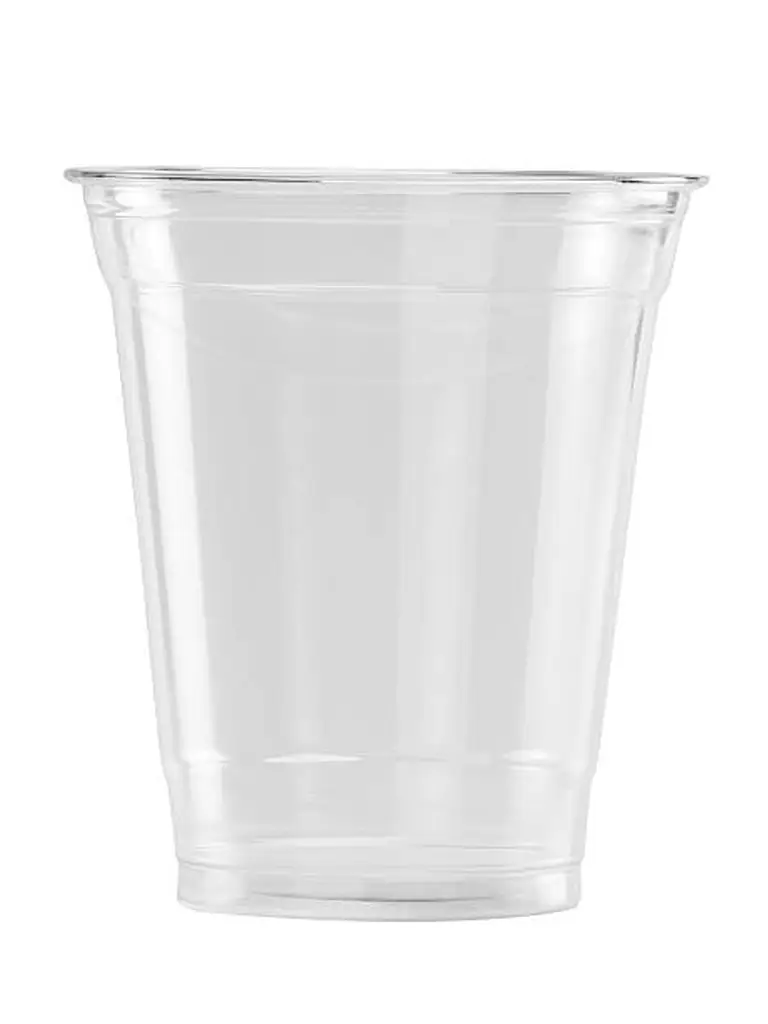
Large Sizes (20–32+ oz): Value Perception & Specialty Drinks
Large cups are not just bigger containers. They are pricing tools, marketing assets, and — in some markets — cultural expectations.
The 20 oz cup is the classic upsell vehicle. Starbucks’ Venti cold cup holds 20 oz. The marginal liquid cost to go from 16 oz to 20 oz is small — roughly 25–33% more beverage — but the price increase at the register can be 40–50%. The customer perceives a meaningful size jump, and the operator captures higher absolute margin on every upsold drink. This is the math that makes large cups a profit center, not a cost center.
At 24 oz, you are in bubble tea and specialty tea territory. This size is driven by a functional requirement: fruit teas with multiple toppings (pearls, aloe, jelly, cheese foam) need physical space. A 16 oz cup simply cannot hold 14 oz of liquid plus a generous scoop of boba plus a cheese foam cap. The 24 oz cup, with its nearly universal 98 mm rim diameter, solves this. It is also the size where Instagram matters — a 24 oz cup with visible layers of fruit, tea, and foam photographs better than any smaller format, and in the tea shop business, a photo shared is a customer acquired.
The 32 oz cup sits at the extreme end of the spectrum. Its material cost is roughly 2.5–3× that of a 12 oz cup, but its selling price can be 4–5× higher in a convenience store or sports venue. These cups are impulse purchases — the “mega gulp” at a gas station, the shareable fountain drink at a movie theater, the promotional giveaway at a summer event. They do not make sense as a default option for most businesses, but as a limited-time upsell or a seasonal promotion, they capture attention and drive transaction value.
Before stocking large cups, check one thing: your sealing machine’s maximum cup height. Most standard sealers handle cups up to 150 mm tall. A 32 oz cup can exceed that, and a sealing machine that cannot close on your largest cup creates a bottleneck you do not want during a lunch rush.
12 oz vs 16 oz: The Critical Size Decision for F&B Operators
The 12 oz versus 16 oz decision is the single most common sizing debate among F&B operators — and not because one is “better.” It is because these two sizes sit on opposite sides of a set of trade-offs that define your cost structure, your customer experience, and your operational workflow. The right answer depends entirely on which trade-offs your business can afford to make.
Cost per Cup: Ingredient Spend, Waste Control & Margin Math
The direct cost difference between a 12 oz cup and a 16 oz cup is not just the 4 oz of extra liquid. Ice complicates the equation. A typical iced drink is 30–40% ice by volume. A 12 oz cup holds roughly 7–8 oz of actual liquid; a 16 oz cup holds roughly 10–12 oz. That means the effective ingredient cost increase when switching from 12 oz to 16 oz is closer to 40–50%, not the 33% the raw numbers suggest.
On the cup itself, 12 oz cups typically ship at 2,000 pieces per case, while 16 oz cups ship at 1,000–2,000 per case depending on the manufacturer. For a small shop with limited storage, the 12 oz format stores more servings per square foot of shelf space.
However, 16 oz cups command higher absolute margin per unit sold. A coffee shop selling 200 drinks per day that switches its default size from 12 oz to 16 oz will see a raw ingredient cost increase — but if the price per drink rises by $0.75–$1.00, the net monthly margin gain can reach four figures. The math is shop-specific, but the principle is universal: larger cups trade higher COGS for higher absolute gross profit.
| Cost Factor | 12 oz Cup | 16 oz Cup | Difference |
|---|---|---|---|
| Liquid volume (without ice) | 7–8 oz | 10–12 oz | +40–50% ingredient cost |
| Cups per case | 2,000 pcs | 1,000–2,000 pcs | More storage space needed |
| Typical per-cup material cost (bulk PET) | $0.04–0.07 | $0.06–0.10 | +50% cup cost |
| Typical sell price (iced latte) | $4.50 | $5.25–$5.50 | +$0.75–$1.00 |
| Daily margin impact (200 drinks) | Baseline | +$80–$120/day estimated |
Consumer Psychology: How Cup Size Shapes Value Perception
Humans are bad at estimating volume. We judge cup size visually — by height more than by diameter — and we anchor our price expectations to the container we see. A 16 oz cup, being visibly taller than a 12 oz (typically 126–138 mm vs. 95–120 mm), creates a higher price ceiling in the customer’s mind before they even look at the menu.
There is a specific psychological mechanism at work here. The jump from 10 oz to 12 oz is barely perceptible — roughly a 20% volume increase spread across a small height difference. But the jump from 12 oz to 16 oz is a clear, visible step up. In behavioral terms, the 16 oz passes the “just-noticeable difference” threshold where consumers feel they are getting meaningfully more, and their willingness to pay increases disproportionately to the actual cost increase.
There is also a subtler effect: the same 12 oz of liquid served in a 16 oz cup looks more satisfying than 12 oz served in a 12 oz cup. The customer sees headroom, not under-filling. For an operator, this means a 16 oz cup can deliver a 12 oz pour that feels generous — while a 12 oz cup delivering a 12 oz pour feels merely adequate.
Operational Fit: Storage, Lid Compatibility & Workflow Efficiency
The operational dimension is where theoretical sizing decisions collide with physical reality. A 12 oz cup and a 16 oz cup from the same manufacturer often share the same rim diameter — typically 95 mm. When they do, lids, sealing film, and cup dispensers are interchangeable across both sizes. This is the ideal scenario: two sizes, one lid SKU, one sealing machine setting.
When they do not share a rim — for example, a 12 oz cup with a 90 mm rim and a 16 oz cup with a 95 mm rim — you now have two lid SKUs, two sealing film widths, and potentially two dispenser sizes. For a single-location shop, that is manageable. For a chain with 50 locations, it is a procurement headache that multiplies storage, ordering complexity, and the risk of a location running out of the wrong lid on a Saturday.
The cup height difference also matters. Most countertop cup dispensers are adjustable, but not infinitely so. If your dispenser is set for 120 mm-tall cups, switching to 138 mm-tall 16 oz cups may require a dispenser swap or at least a recalibration. And if you use an automatic sealing machine — standard equipment in any bubble tea shop — confirm the maximum cup height before ordering. A sealing machine rated for cups up to 150 mm will handle most 16 oz cups but may struggle with some 20 oz or 24 oz models, depending on the manufacturer.
- Lower per-unit cost, 2,000 pcs/case
- Fits cafés: iced lattes, cold brew, kids’ drinks
- Tighter storage, simpler lid inventory
- Higher absolute margin per drink sold
- Industry standard: bubble tea, smoothies, iced coffee
- Larger branding surface, better upsell perception
How to Choose the Right Cup Size for Your Business
Every business has a different answer to the cup-size question. The right choice depends on three variables: what you serve, who your customers are, and how your business makes money. Below, we break down the optimal sizing strategy for four common F&B business types.
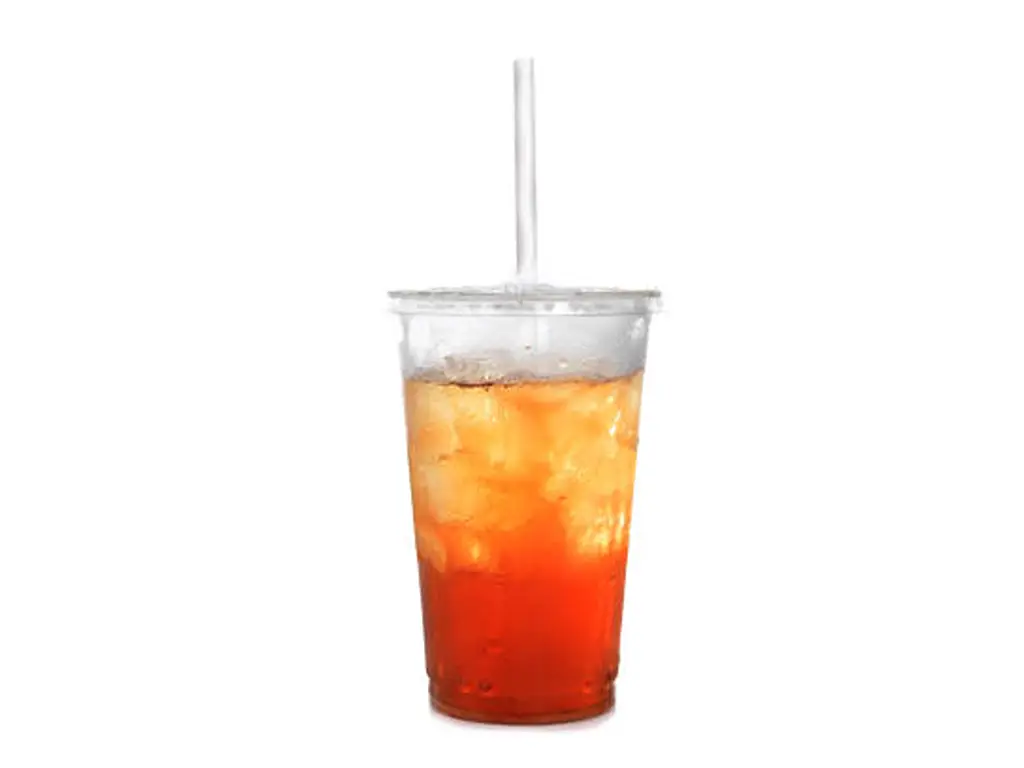
Coffee Shop & Café: Precision Sizing for Iced Beverages
A coffee shop’s cup-size logic is built around the espresso shot. One standard shot is 1 oz (30 ml). Served over ice with milk, it balances best in 8–12 oz of total liquid. Push beyond 16 oz, and you need a second shot to maintain flavor intensity — which doubles your coffee cost for that drink.
For most independent cafés, the optimal lineup is three sizes: 10 oz (kids’ drinks, cortado-style iced beverages, premium small pours), 12 oz (the standard iced latte and cold brew workhorse), and 16 oz (the “large” option for high-volume iced coffee drinkers). If you want to simplify to two sizes, drop the 10 oz and keep 12 oz + 16 oz.
An often-overlooked advantage of PET cups in a café setting is visual: clear plastic showcases the layers of an iced latte or the deep amber of a cold brew. In an era where a significant share of café traffic comes from customers who discovered the shop on social media, the cup itself is a marketing surface. A transparent 12 oz cup with a sharp brand logo printed on it works harder than any sidewalk sign.
Bubble Tea & Milk Tea Shop: The ML-First Sizing Playbook
Bubble tea sizing follows its own logic, and the first thing to understand is that the industry thinks in milliliters, not ounces. The global standard sizes are 500 ml (≈16 oz) and 700 ml (≈24 oz). If you are opening a bubble tea shop and your supplier talks in ounces while your recipes are in milliliters, you have already found a reason to switch suppliers.
The 16 oz / 500 ml cup is the default for classic milk teas. It holds enough liquid after accounting for ice (typically 20–30% of volume) and toppings (boba, jelly, pudding) that the drink tastes balanced from the first sip to the last. The 24 oz / 700 ml cup is for fruit teas and cheese foam drinks — beverages where the toppings themselves take up 15–25% of the cup volume and need the extra headroom.
The non-negotiable constraint in bubble tea is the sealing machine. Most sealing films are manufactured for 95 mm rims. If your cups deviate from this diameter, you need custom film — which increases per-unit cost and locks you into a single supplier. The industry standard setup is a 95 mm rim for 500 ml cups and a 98 mm rim for 700 ml cups, with both using PP (polypropylene) rather than PET, because PP tolerates the heat of the sealing process (120–160°C) better than PET does.
North American bubble tea culture is in the middle of a structural shift. Five years ago, most shops carried a single 16 oz cup and called it a day. Today, the two-size model — 16 oz for classic milk teas, 24 oz for fruit teas and cheese foam drinks — is rapidly becoming the norm, pulled by the popularity of fruit teas and a growing customer expectation that any serious tea shop should offer a visible size upgrade. North American bubble tea shop revenue grew at roughly 9.1% annually from 2019 to 2024 (Grand View Research), and the shops capturing that growth are overwhelmingly the ones running a dual-size menu with clear upgrade pricing.
Fast Food, Restaurant & Catering: Volume Efficiency & Standardization
For a fast-food chain or a full-service restaurant, beverages are typically meal components, not standalone profit centers. The cup-sizing objective flips: instead of maximizing perceived value per drink, the goal is standardizing across the menu to minimize SKU count and per-unit cost.
The standard fast-food lineup is three sizes — 12 oz (small), 16 oz (medium), and 21–22 oz (large) — though the labels vary by chain. McDonald’s in most markets defaults to 12 oz as the “small” soft drink option. What matters more than the exact volumes is that all three sizes share the same lid diameter, allowing a single lid SKU to serve the entire drink menu.
For catering and event supply, the logic is even simpler: stock two sizes. A 7–9 oz cup handles water, juice, and soft drinks for seated events. A 12–16 oz cup covers beer, mixed drinks, and self-serve stations. Going beyond two sizes in a catering context adds inventory complexity without any meaningful improvement to guest experience. The per-cup cost in bulk catering quantities can drop as low as $0.02–0.05 per piece, making the case price — not the unit price — the number that matters in your P&L.
Event & Catering Supply: Bulk Purchasing for One-Time Use
Event planners and catering directors operate under a fundamentally different constraint from retail F&B operators: the cups only need to work once. There is no repeat customer judging the cup quality, no brand loyalty built through the drinking experience. The optimization is pure — lowest cost per unit that meets the functional requirement.
For a music festival serving 10,000 attendees, the math is straightforward. Assume two drinks per person: 20,000 cups. Stock two sizes — 9 oz for water and soft drinks, 16 oz for beer — and you cover virtually every scenario. Stock four sizes, and you double your ordering complexity, your storage footprint, and your waste, for a customer experience improvement that is effectively zero.
If you operate in Europe, one regulation worth knowing: the EU Single-Use Plastics Directive already requires PET beverage bottles to contain at least 25% recycled content, with the bar rising to 30% for all plastic bottles by 2030 (EU Directive 2019/904). The directive’s sharpest teeth are aimed at bottles, not cups — but the direction of travel is unmistakable. European buyers increasingly default to rPET and PLA cups, and any operator signing a multi-year supply contract should build material transition timelines into the agreement now, not when a rushed switch eats into margins.
Whatever your business type, one reality cuts across all of them: reading a cup size chart is the easy part. Finding a supplier who can execute across the full size range — consistent quality, flexible minimums, short lead times — is where most operators hit a wall. Many manufacturers either lock you into a narrow size band or demand order volumes that only work for chains with warehouse space to burn. Outstanding Pack, a PET packaging manufacturer with 17 years of production behind them, produces disposable cups from 250 ml to 1,000 ml (~8.5–33.8 oz), with customization covering shape, logo, color, cap type, and material — and minimums start at 1,000 units for light customization, with samples shipped in 48 hours. If you are still comparing sizes and want to validate your options in hand, request free samples through their contact page.
Plastic Cup Sizes Around the World: Regional Market Preferences
Cup size preference is not universal. It is shaped by dining culture, consumer psychology, and — increasingly — by regulation. If your business operates across borders or sources cups from overseas suppliers, understanding these regional differences prevents expensive mismatches.
| Region | Preferred Sizes | Dominant Material | Key Market Insight | Example Chains / Usage |
|---|---|---|---|---|
| North America | 16–32 oz | PET, PP | Large-portion culture; 16 oz is the default cold drink, 24 oz is growing fast (bubble tea influence) | Starbucks Venti 20 oz, McDonald’s large 21–22 oz, bubble tea shops increasingly dual-size 16+24 oz |
| Europe | 12–16 oz | rPET, PLA (growing) | Conservative portion sizes; EU Single-Use Plastics Directive driving rPET adoption; environmental claims must be verifiable | Costa 12–16 oz, independent cafés default to 12 oz for iced drinks |
| Southeast Asia | 16–24 oz (500–700 ml) | PP, PET | Bubble tea capital of the world; ml is the native unit; sealing machine compatibility is the binding constraint | Chatime, Gong Cha, KOI — 500 ml standard, 700 ml large |
| Middle East | 12–20 oz | PET, PP | Halal certification requirements for food-contact materials; GSO (Gulf Standardization Organization) standards apply | Local juice bars and café chains; 12 oz juice, 16 oz soft drinks dominate |
The practical takeaway: if you are a multi-market operator, you cannot copy-paste your cup-size strategy from one region to another. A bubble tea chain expanding from Taiwan to Texas needs to add a 32 oz option that does not exist in its home market. A European café chain sourcing cups from an Asian manufacturer needs to verify rPET content percentages against EU regulatory thresholds — not just take the spec sheet at face value.
Key Takeaways
- Learn the chart, then forget it. The size chart is your reference tool. The real decision is about which size band matches your business model — and that depends on your product type, your customer profile, and your margin structure, not on what the chart says is “standard.”
- 12 oz vs 16 oz is not a toss-up. It is a decision about cost structure versus perceived value, and the right answer changes depending on whether you run a high-volume fast-food counter or a premium specialty café. Run the math for your specific numbers.
- Rim diameter is the hidden variable. Cups of different capacities that share the same rim diameter share lids, sealing film, and dispensers. When sourcing, ask for rim diameter before you ask for price per case.
- Your market dictates your sizes. North America consumers expect 16 oz as a default. European consumers are comfortable with 12 oz. Southeast Asian tea drinkers think in milliliters. Match your cup lineup to your market, not to a generic industry recommendation.
- Get samples before you commit. A spec sheet cannot tell you how a cup feels in a customer’s hand, whether it fits your cup dispensers, or if the lid actually seals. The best operators test with physical samples — and the best suppliers ship them for free.
References
- Grand View Research. “North America Bubble Tea Market Size & Outlook, 2033.” grandviewresearch.com
- European Union. “Directive (EU) 2019/904 on the Reduction of the Impact of Certain Plastic Products on the Environment.” eur-lex.europa.eu