
The UK Bubble Tea Market Is Booming — Here’s What That Means for Franchise Buyers
For anyone watching the high street, the evidence is impossible to miss: what was once a niche drink confined to Chinatown and university towns is now a mainstream category, with dedicated bubble tea shops competing for footfall alongside Costa and Pret.
The core customer base is Gen Z and younger Millennials, aged 16 to 30, spending £4 to £6 per visit and returning two to three times a month. This is not a passing trend. It is an established consumption habit with repeat-purchase economics that most food-and-beverage categories would envy.
For franchise buyers, the timing matters. Gong cha signed a deal in March 2025 to open 225 new stores across the UK and Ireland, with a long-term target of 500 (British Franchise Association, 2025). Major brands are still placing heavy bets on UK expansion — which means there are territories and catchment areas still up for grabs. But the window will not stay open forever. As the British Franchise Association’s industry data consistently shows, the strongest franchisee returns go to those who enter a category before the land-grab phase ends, not after.
Top Bubble Tea Franchises in the UK at a Glance
The UK now hosts a crowded field of franchise brands spanning every price point from £16,000 to nearly £400,000. The table below lays out how the major players compare on the numbers that matter most.
| Brand | UK Locations | Min. Investment | Franchise Fee | Royalty | Standout Feature |
|---|---|---|---|---|---|
| Mooboo | 100+ | £16,000–£80,000 | None | 1–6% of monthly revenue | UK’s largest network; no upfront franchise fee |
| Bubbleology | 70+ (international) | from £36,000 | Not disclosed | 5% | Pioneer brand with “bubble lab” experiential concept |
| Chatime | 1,300+ globally | from £37,000 | Not disclosed | 5% | Globally recognised Taiwanese brand; extensive menu |
| CUPP | Bristol, Cardiff, London, Reading | from £80,000 | £17,000 + VAT | Not disclosed | 82% gross margin projection; £150K projected first-year turnover |
| Tea House Boba | Belfast (expanding) | £47,000–£96,000 | £15,000–£20,000 | 3% | Lowest royalty rate; three format options (Kiosk, Counter, Café) |
| Bubble CiTea | 40+ | £100,000–£140,000 + VAT | £15,000 | Not disclosed | BFA-accredited; Disney & KitKat brand collaborations; ~2M social followers |
| T4 | UK-wide | £100,001–£250,000 | Not disclosed | Not disclosed | 10+ years in UK; owns tea farms & factories |
| Happy Lemon | 1,500+ globally | £233,000–£385,000 | Not disclosed | 7% | Premium positioning; highest investment tier |
If your budget sits at the entry level (£16,000–£50,000), Mooboo and Chatime offer the most accessible on-ramps, with Mooboo’s zero-franchise-fee model particularly attractive for first-time owners. At the mid-range (£80,000–£150,000), CUPP and Bubble CiTea deliver more turnkey packages with stronger brand marketing support. At the top end, T4 and Happy Lemon demand serious capital but offer vertically integrated supply chains — T4 even owns its tea farms.
What You’ll Actually Pay: Breaking Down Bubble Tea Franchise Costs
The headline franchise fee is only the beginning. In practice, your total investment splits into two categories: the money you spend before opening day, and the money that leaves your account every month after. Understanding both is the difference between a franchise that generates wealth and one that just generates turnover.

Startup Costs: Franchise Fees, Fit-Out, and What’s Included
The £16,000-to-£385,000 range is real, but what each tier actually delivers varies dramatically. At the entry level — Mooboo, Chatime, Bubbleology — your investment typically covers brand licensing, initial training, and an operations manual. Shop fit-out, equipment, and opening stock are usually extra, which can easily add £20,000 to £40,000 to your actual outlay.
In the mid-range, the package expands significantly. Tea House Boba publicly breaks down its costs — rare transparency in the franchise world — with a Kiosk format at £47,000–£59,000, a Shop Counter at £58,000–£71,000, and a Full Asian Café at £75,000–£96,000, all including franchise fee, fit-out, equipment, working capital, and launch stock. Bubble CiTea’s turnkey store package at approximately £140,000 plus VAT includes location scouting, store design, recruitment support, and marketing launch — but you will still need £70,000 to £80,000 in liquid capital to qualify.
At the premium tier, T4 and Happy Lemon offer near-complete turnkey solutions, but the price of entry is steep. For context, starting an independent bubble tea shop — no franchise fees, no royalties — costs approximately £25,800 to £43,200 plus rent, covering equipment (£12,000–£18,000), shop setup (£8,000–£15,000), licences (£600–£900), and working capital (£5,000–£9,000) (Aimia Foods, 2025).
Before you sign anything, ask every franchisor the same question: “What is not included in the initial investment figure?” Common hidden costs include the shop deposit (three to six months’ rent upfront), staff recruitment and pre-opening training, launch marketing, and enough working capital to cover your first month’s operating expenses before revenue stabilises.
Royalties, Marketing Fees, and Hidden Ongoing Costs
Once you are open, the meter keeps running. Royalty fees across UK bubble tea franchises range from Tea House Boba’s 3% — the lowest in the market — to Happy Lemon’s 7%. Mooboo uses a tiered structure of 1% to 6% based on monthly revenue, which rewards higher-volume operators.
Crunch the numbers: on annual revenue of £150,000, a 5% royalty costs you £7,500 a year. A 3% royalty costs £4,500. That £3,000 annual difference compounds to £15,000 over a five-year franchise term — enough to fund a shop refresh or a second location’s deposit.
Beyond royalties, most franchisors charge a marketing levy of 1% to 3% of revenue. Ask whether this funds national brand advertising — billboards, digital campaigns, brand collaborations like Bubble CiTea’s Disney partnership — or whether you will still need to spend your own money on local social media ads and leafleting. The answer changes your real marketing cost materially.
Then there is the question that separates profitable franchisees from struggling ones: does the franchisor mandate that you buy packaging, ingredients, and equipment exclusively from their approved suppliers? If so, ask what the mark-up is. A 10% supply chain mark-up on £30,000 of annual purchases costs you an extra £3,000 — invisible in the franchise agreement, very visible in your bank account. Combined with a 5% royalty, your effective franchise cost is closer to 7% of revenue.
Beyond the Franchise Fee: The Operational Costs No One Talks About
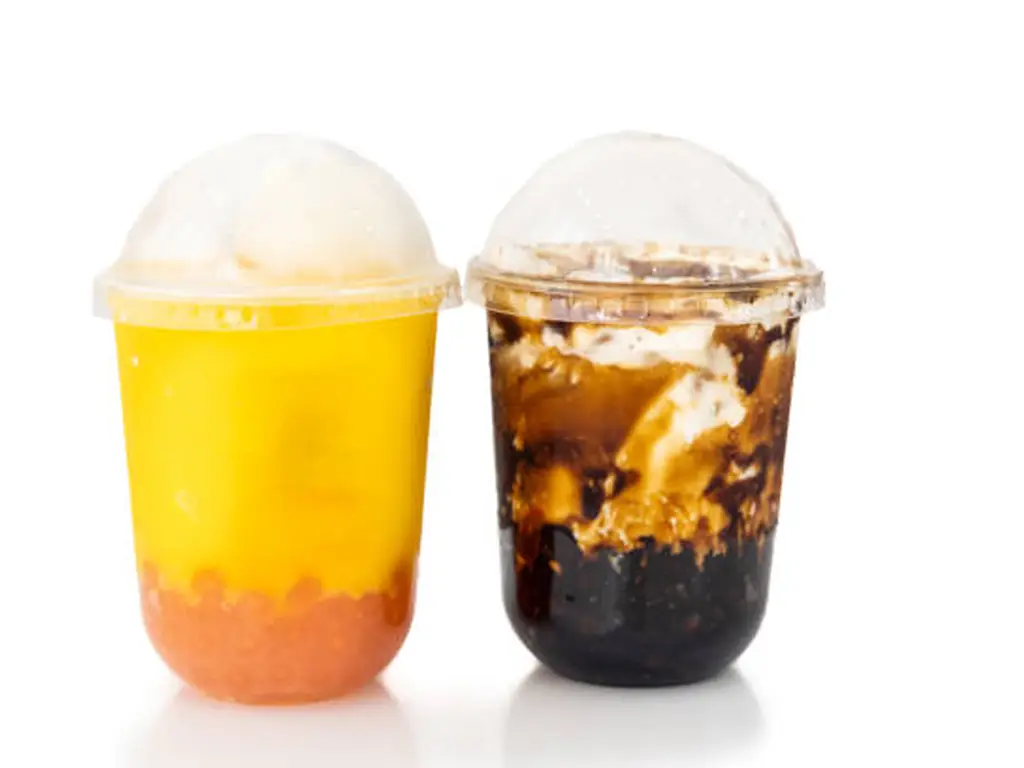
Every franchise comparison article will tell you who the biggest brands are and what they charge. Almost none will tell you what happens after you sign — the day-to-day operational reality of running a bubble tea shop. Yet this is where profit margins are won or lost. Each drink you sell passes through a cup, a lid or sealing film, a straw, and a carrier bag. Those consumables account for 8% to 12% of your selling price — and the choices you make about them ripple through both your costs and your brand.
The Packaging & Supply Chain Every Franchisee Needs to Plan For
Most first-time franchise buyers direct 100% of their attention to brand reputation and location. Packaging and consumables are an afterthought — until the first supply order lands and the numbers hit the P&L.
What you need, regardless of which franchise brand you choose: UK bubble tea cups are standardised at 90mm diameter to fit industry-standard sealing machines. You will need PET or PP cups (500ml and 700ml are the workhorse sizes), sealing film rolls, wide straws (enough diameter for tapioca pearls), domed or flat lids, and carrier bags. Budget £2,000 to £3,000 for your initial packaging inventory.
If you want branded cups — and you should, because a custom-printed cup turns every customer into a walking advertisement — expect to pay £0.08 to £0.22 per cup depending on print complexity and order volume. Minimum order quantities start at 1,000 to 2,000 units for simple one- or two-colour prints, rising to 5,000 or more for full-colour designs. Lead times from factory to your door run six to nine weeks, including sea freight and UK customs clearance (Taipec, 2025).
One question to ask your franchisor before signing: can I choose my own packaging supplier, or am I locked into yours? If the answer is the latter, ask what the mark-up is — and compare against what you could get independently. The difference can run into thousands of pounds a year. Even if your franchise agreement permits self-sourcing, always confirm your chosen supplier’s cups are 90mm-compatible with your sealing machine before placing a bulk order.
How Custom-Branded Packaging Turns Every Cup Into a Marketing Asset
A plain transparent cup sells a drink. A branded cup sells the next drink — and the one after that. The UK’s core bubble tea demographic (16 to 30 years old) is one of the most Instagram-active consumer segments in the country. A distinctive, well-designed cup is free social media exposure every time a customer walks out your door.
CUPP and Bubble CiTea both demonstrate this principle at scale: their visually recognisable cups and brand collaborations (Bubble CiTea has partnered with Disney, KitKat, and Swizzels) turn everyday purchases into shareable content. You do not need a franchise brand of that size to apply the same logic. Even a single-site operator benefits from packaging that makes their shop name visible on the high street, in office buildings, and across Instagram and TikTok feeds.
For franchisees sourcing their own branded packaging, the most direct route to competitive pricing is working with specialist PET packaging manufacturers who serve the food-and-beverage export market. Foshan Outstanding Packing Products Co., Ltd. (Outstanding Pack), for example, has spent 17 years manufacturing custom PET cups, bottles, and sealing film for beverage brands worldwide. Their factory holds FDA, EU 10/2011, BRCGS, and FSSC 22000 certifications — all relevant for food-contact packaging in the UK — and they offer custom moulding, printing, and design support with a minimum order quantity starting at 1,000 units. Free samples are available for quality verification before committing to a production run, and simple customisation samples ship within 48 hours. For a new franchisee placing their first order, being able to verify cup quality, print registration, and 90mm compatibility before spending £2,000 to £3,000 on inventory is not a luxury — it is basic risk management. (You can explore their custom bubble tea cup options here and review their certification portfolio here.)
How to Choose the Right Bubble Tea Franchise for Your Situation
“The best” franchise is not the one with the most locations or the loudest marketing. It is the one whose investment level fits your budget, whose support structure covers your specific weaknesses as a first-time business owner, and whose supply chain terms do not quietly erode your margins. The two sections below give you a framework for spotting the right fit — and for spotting the wrong one before it costs you.
10 Questions to Ask Before Signing a Franchise Agreement
Franchise sales teams are professional. Their job is to get you to sign. Your job is to test every claim before you commit. These ten questions are your due diligence checklist, organised into four categories that mirror where franchisee profits actually live or die:
Money
1. What is the total initial investment — and what specifically is not included?
2. Is the royalty calculated on gross revenue or net profit? (Revenue-based royalties punish low-margin operators.)
3. Is there a marketing fee on top of the royalty, and what exactly does it fund?
Supply Chain
4. Am I required to buy packaging and ingredients from your approved suppliers? If so, what is the percentage mark-up over open-market pricing?
5. Can I switch suppliers if I find better pricing or quality, or is the approved list locked for the full franchise term?
6. What is the lead time on branded packaging through your supply chain versus sourcing independently?
Support
7. Who handles site selection — you, me, or both? What data do you use to approve or reject a location?
8. How long is initial training, where does it happen, and what ongoing training is provided after opening?
Exit
9. What is the initial franchise term, and what are the conditions and costs for renewal?
10. If I want to sell my franchise, what transfer fees apply, and do you have right of first refusal?
Each question has a “good” answer and a red-flag answer. A franchisor who provides existing franchisees’ contact details without hesitation, publishes a transparent fee schedule including supply chain costs, and has BFA membership backing their claims is operating in good faith. A franchisor who deflects, delays, or claims commercial sensitivity on supply chain costs is telling you something you need to hear.
Red Flags That Should Make You Walk Away
Some franchise opportunities are built to make franchisees rich. Others are built to make the franchisor rich — and the sooner you can tell the difference, the less likely you are to learn it the expensive way.
Your First Steps After Choosing a Franchise
Once you have narrowed your options to two or three brands, shift from research mode to execution mode. These five steps take you from shortlist to opening day:
- Request the Franchise Information Pack from each of your shortlisted brands. Read the Franchise Disclosure Document (FDD) carefully — pay particular attention to the supply chain and exit clauses.
- Contact at least two existing franchisees independently. Do not rely on the contacts the franchisor provides. Search LinkedIn for “[brand name] franchisee UK” and send a polite connection request. Ask about real numbers, real challenges, and what they wish they had known before signing.
- Attend a UK franchise exhibition. The National Franchise Exhibition and the British & International Franchise Exhibition run annually and give you face-to-face access to multiple brands’ senior leadership in a single day. Come with your list of ten questions.
- Hire a franchise solicitor — not one recommended by the franchisor. A BFA-affiliated solicitor who specialises in franchise law will spot contractual gaps that a general commercial lawyer will miss. This is not a cost to minimise; it is the cheapest insurance policy you will ever buy against a bad deal.
- Start your packaging supplier research now, not after signing. Custom-branded cups take six to nine weeks from order to delivery. If you wait until your shop fit-out is complete before placing a packaging order, you will open with unbranded cups — and miss two months of brand-building that you can never get back. Contact a few specialist manufacturers, request free samples, and compare lead times and minimum order quantities. A supplier like Outstanding Pack, who provides free design support and ships samples within 48 hours for simple customisations, can help you lock in your packaging timeline while you are still finalising your lease — so your branded cups arrive the same week your doors open. (Request free samples and a design consultation here.)
References
- Aimia Foods. “How to Start a Bubble Tea Business in the UK (2025 Edition).” 2025. aimiafoods.com
- British Franchise Association. “Gong cha — Franchise Development UK & Ireland Case Study.” 2025. thebfa.org
- Taipec. “Bubble Tea Consumables — Cups, Lids, Straws & Sealing Film.” 2025. taipec.com
- TopFranchise. “Top 5 Bubble Tea Franchises in UK.” 2025. topfranchise.com
- FranchiseInfo. “Mooboo Bubble Tea Franchise.” 2025. franchiseinfo.co.uk
- Franchise Directory. “CUPP Bubble Tea Franchise.” 2025. franchise-directory.co.uk
- WhichFranchise. “Bubble CiTea Franchise.” 2025. whichfranchise.com
- Franchise UK. “Tea House Boba Franchise.” 2025. franchise-uk.co.uk