If you’re sourcing a can sealing machine — whether for beverage cans, food jars, or pharmaceutical containers — you’re not just buying equipment. You’re choosing a manufacturing partner whose machine must match your container specs, your production volume, and your market’s certification requirements. And if you use PET plastic containers, there’s an additional question most buying guides ignore: should your machine supplier also be your container supplier?
This guide breaks down can sealing machine types, matches manufacturers to three distinct buyer profiles, and introduces a procurement strategy — integrated machine + container sourcing — that no existing SERP content covers.
Types of Can Sealing Machines — Matching Automation Level to Your Production Scale
Before you can evaluate manufacturers, you need to know which tier of machine matches your operation. Can sealing machines fall into three bands — and each band has a different manufacturer ecosystem.
Manual & Semi-Automatic Can Sealers — Entry Point for Startups and Small Batches
Semi-automatic sealers are the accessible on-ramp for brands producing 200–500 cans per hour. The operator places each can onto the seaming chuck, activates the cycle (pedal or push-button), and the machine crimps the lid in place. Price ranges from $2,000 to $6,000, with can diameter compatibility typically spanning 40–210mm — covering aluminum, tinplate, and PET plastic formats.
The overlooked metric at this tier isn’t speed — it’s changeover time between can sizes. A well-designed semi-auto seamer can switch from a 202D to a 401D can in under five minutes. A poorly designed one can take twenty. For small-batch producers running multiple SKUs, those fifteen minutes of downtime compound across a production week and quietly erode margins.
Representative manufacturers in this band include India’s Bubber Machine Tools (BMT) — founded in 1965 and exporting to 50+ countries (BMT, IndiaMART, 2026) — and Germany’s Lanico Maschinenbau, whose V10A semi-automatic model targets composite and non-standard can formats (Lanico, IndustryStock, 2026). India’s Ramgarhia Packaging Industries offers the most affordable entry point at ₹1.6–5 Lakh (~$2K–6K), with explicit PET can compatibility (Ramgarhia, IndiaMART, 2026).
Fully Automatic Inline Sealers — The Workhorse for Mid-Size Production
When production crosses 800–1,500 cans per hour, semi-automatic becomes the bottleneck. Fully automatic inline sealers integrate with conveyor systems for continuous can flow — the operator loads bulk lids and monitors the control panel rather than placing each can by hand. Budget $12,000 to $25,000 for a 1–4 head system with PLC controls.
The hidden cost at this tier is first-pass yield (FPY). A machine priced at $18,000 that produces five defective seals per hundred cans costs more in rework and material waste than a $22,000 machine with 99.8% FPY. When evaluating mid-tier manufacturers, ask for their documented first-pass yield data — not just their price quote.
Taiwan dominates this segment. HOR YANG Machinery (est. 1984) builds 6–10 head seamers reaching 800 CPM and has deployed over 2,456 units across 20+ countries with CE certification (HOR YANG, TaipeiPack, 2026). Chang Shen Machinery (est. 2011) counts Coca-Cola and Wang Laoji among its clients, with 6–8 head seamers running 300–750 CPM and DUNS certification (Chang Shen, TaiwanTrade, 2026). Shin-I Machinery Works (est. 1956) holds ISO 9001 and exports complete can-making-and-seaming lines to 60+ countries (Shin-I, TaipeiPack, 2026).
High-Speed Rotary Sealers — For Large-Scale Industrial Canning Lines
At 1,500+ cans per hour, the game changes entirely. High-speed rotary sealers use multiple seaming stations rotating in sync — some reaching 18 heads and 84,000 cans per hour. Budget $30,000 to $200,000+, and expect a 6–12 month procurement cycle that involves line integration engineering, not just equipment purchase.
The real bottleneck in high-speed lines is rarely the seamer itself — it’s the filler-seamer synchronization. A 32-head filler paired with a 6-head seamer must maintain timing accuracy within 0.5 seconds; a drift beyond that causes can jams and line stoppages. Require your supplier to provide a filler-seamer integration validation report — not just individual machine specs.
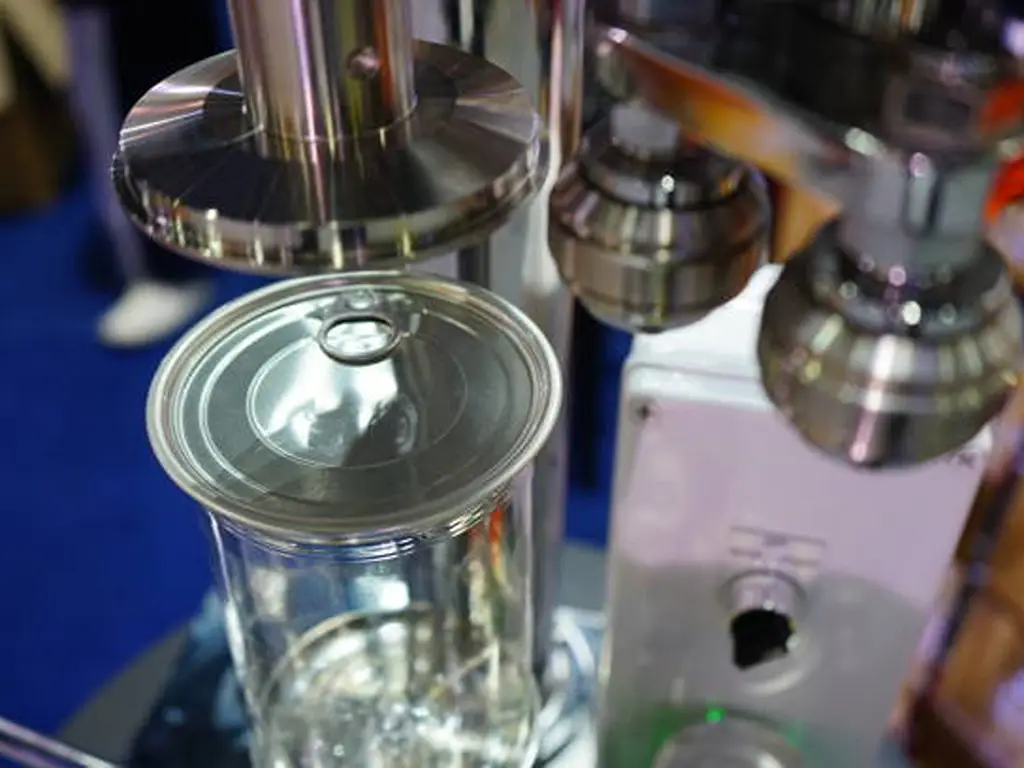
The global top three dominate this tier. Switzerland’s Ferrum Packaging AG pairs 6-head seamers with proprietary Status digital monitoring for oil pressure, flow, and vibration detection (Ferrum, DirectIndustry, 2026). Italy’s CFT Group (est. 1945) offers the widest product range — 3000 Series (up to 12 heads, 84,000 CPH), 2000 Series (mid-speed, up to 36,000 CPH), and ASV vacuum seamers — with Flexyseam electronic servo technology that eliminates wrinkle defects (CFT Group, beveragedaily.com, 2026). The USA’s Pneumatic Scale Angelus (PSA), now part of BW Packaging, maintains the largest global installed base with its 120L/61H/50P series and serial-number-tracked OEM aftermarket support (PSA, industrystock.com, 2026).
Top Can Sealing Machine Manufacturers — Matched to Your Buyer Profile
“Who is the best manufacturer” is the wrong question. The right question is: “Who is the best manufacturer for my buyer profile?” A large beverage plant and a startup kombucha brand evaluate suppliers on entirely different criteria.
For Large-Scale Plants & Project Contractors — Precision and Throughput Come First
If you’re procuring for a facility producing millions of cans annually with a $60K–$200K+ equipment budget, your evaluation hierarchy is: line integration capability > throughput guarantee > brand track record > price.
| Manufacturer | Country | Max Speed | Signature Series | Core Advantage |
|---|---|---|---|---|
| Ferrum Packaging AG | Switzerland | ~15,000 CPH | 6-head + Status system | Swiss precision + digital machine health monitoring |
| CFT Group | Italy | 84,000 CPH | 3000/2000/ASV Series | Widest product range + Flexyseam electronic servo |
| Pneumatic Scale Angelus | USA | Industry benchmark | 120L/61H/50P | Largest global installed base + OEM parts tracking |
Choose CFT if you need the deepest line integration from a single engineering team. Choose Angelus if installed-base reliability and parts availability matter most. Choose Ferrum if budget permits and Swiss build quality is non-negotiable.
Here’s something the top three won’t tell you: none of them make the containers their machines seal. If your line runs PET cans, you’ll need a separate container supplier. That split creates a tolerance-stack risk — the seamer’s chuck profile and your container’s flange geometry come from two different factories, each with their own tolerances. Some manufacturers close this gap by producing both the sealing equipment and the PET containers under one roof. Outstanding Pack (Foshan, China), for example, pre-matches each sealer to its own container specs before shipping — so the tolerance chain is verified before it reaches your floor. If container compatibility keeps you up at night, this integrated approach is worth a look.
For Distributors & Regional Agents — Reliability and Margin Matter
As a distributor reselling 10–50 machines annually, your profit equation isn’t just unit margin — it’s unit margin + spare parts reorder revenue – warranty service cost. A machine that generates five service calls in its first year erases your margin. A machine whose consumable parts (seaming rolls, chucks) customers reorder annually builds a recurring revenue stream.
Taiwan’s three mid-tier manufacturers each offer distinct distributor value. HOR YANG provides the most mature regional agency framework with CE-certified machines across 20+ markets. Chang Shen offers the strongest brand endorsement — when your customer hears “same supplier as Coca-Cola’s Taiwan line,” the sale gets easier. Shin-I provides the broadest product line (can-making + seaming + filling), enabling cross-selling that increases per-customer revenue.
The key due diligence for distributors: ask for the manufacturer’s standard spare parts kit scope and non-standard part markup percentage. A seaming roll that costs the manufacturer $80 to produce but is marked up 400% to distributors will quietly destroy your aftermarket margins. Get this in writing before signing.
For distributors in markets where PET packaging is growing — Southeast Asia, the Middle East, and North America in particular — suppliers that make both sealing machines and containers give you a second revenue stream from the same customer. Instead of selling one machine, you sell a machine plus an ongoing container supply. Outstanding Pack manufactures both can sealing equipment and PET containers (beverage cans, food jars, preforms, caps), so a single customer relationship can span equipment and consumables — a meaningful advantage in markets where buyers want fewer suppliers, not more.
For Small Brands & Wholesale Buyers — Low MOQ and Fast Setup Win
If this is your first can sealing machine — you’re a startup beverage brand, a small food producer, or a wholesaler testing a new product line — your priority stack is: MOQ friendliness > setup simplicity > upfront price > long-term scalability.
The most common mistake first-time buyers make: buying the cheapest machine without checking first-can acceptance rate. Semi-automatic sealers typically waste 3–5 cans during cold-start calibration. If you’re only sealing 100 cans per day, that’s a 3–5% material loss before you’ve produced a single saleable unit. Ask suppliers for their documented cold-start waste figures.
India’s Ramgarhia Packaging Industries offers the lowest price barrier at ~$2K–6K with explicit PET can support — relevant if you’re packaging in plastic rather than metal (Ramgarhia, IndiaMART, 2026). Bubber Machine Tools provides a broader range from semi-auto to fully automatic with vacuum/gas-flush options, backed by six decades of niche specialization (Bubber, IndiaMART, 2026). Germany’s Lanico is the European option for startups that need CE compliance from day one.
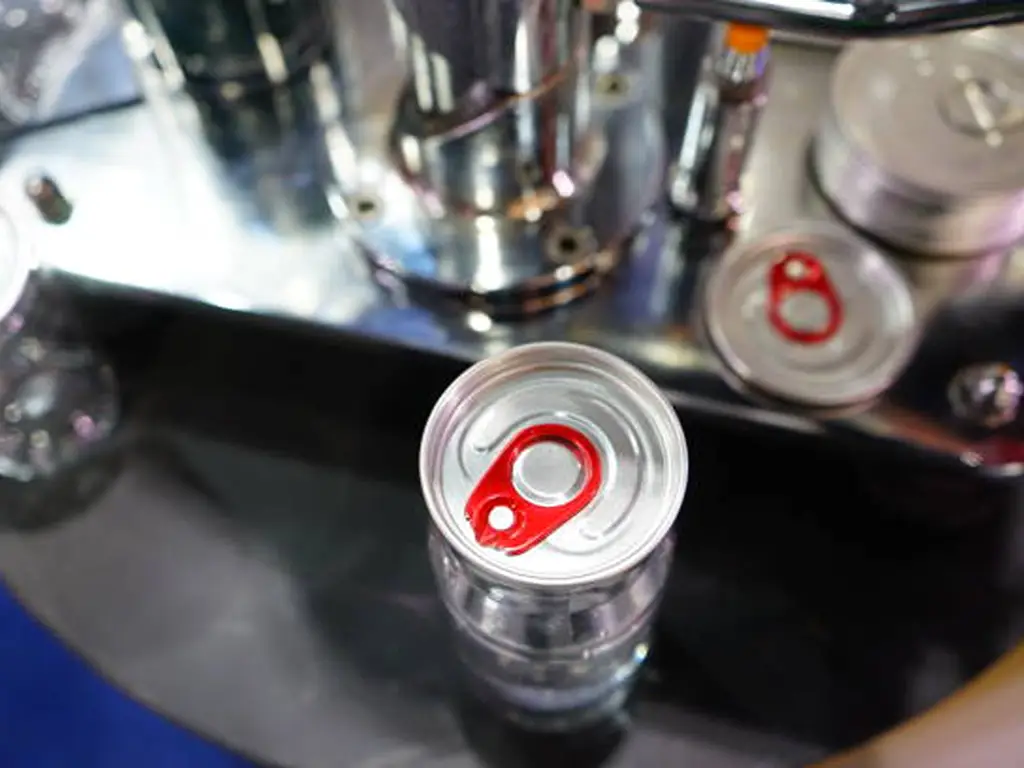
For brands launching in PET plastic cans, a practical shortcut exists: some manufacturers offer both small-batch container customization and entry-level sealing machines under one roof. Outstanding Pack, for instance, accepts container customization MOQs as low as 1,000 units — roughly 50% lower than the industry norm — and provides 48-hour sample turnaround on light-custom orders. For a startup that needs 500 branded PET cans and a compatible sealer, this eliminates the friction of negotiating minimums with two separate suppliers (Outstanding Pack, client baseline, 2026).
How to Evaluate Can Sealing Machine Manufacturers — A Due Diligence Checklist
Whether you’re buying a $3,000 semi-auto sealer or a $150,000 high-speed rotary line, the evaluation framework is the same. Here are the dimensions that separate reliable suppliers from the rest:
| Evaluation Dimension | Key Question to Ask | Green Flag | Red Flag |
|---|---|---|---|
| Certifications | Can you provide verifiable certificate numbers for ISO 9001 / CE / FDA? | Cert numbers verifiable online via issuing body database | Only images of certificates, no traceable numbers |
| On-Time Delivery | What is your documented on-time delivery % over the past 12 months? | ≥ 98% with data to substantiate | Avoids giving a specific number |
| Response Time | What is your average inquiry-to-quote turnaround? | < 24 hours with detailed technical response | > 48 hours or generic template replies |
| Reorder Rate | What percentage of customers place repeat orders? | > 20% (indicates satisfaction) | Does not track this metric |
| Video Factory Verification | Can you provide a real-time video tour of your production floor? | Live video call with timestamp visible | Only pre-recorded footage or stock photos |
| Spare Parts Availability | What is the standard lead time for critical wear parts? | < 2 weeks from order | > 4 weeks or “depends on availability” |
| Warranty Terms | What is covered, for how long, and does it include remote diagnosis? | ≥ 12 months comprehensive + remote support | < 6 months or parts-only |
| Third-Party Testing | Can you provide SGS / Bureau Veritas / TÜV test reports? | Reports available with test date + batch number | Only internal QC reports |
| Client References | Can you connect us with 3 recent clients in our industry? | Provides contactable references | Cites “client confidentiality” for all |
Beyond the checklist, the single most reliable verification tactic — and the one that definitively separates real manufacturers from trading companies — is sending your actual containers for a test run. Ship a batch of your cans to the candidate manufacturer, request a sealing test on video (with timestamp and your container logo visible), and have them return the sealed samples. If they decline or suggest “testing with similar cans,” move on.
The One-Stop Advantage — Why Machine + Container Integration Matters
The default procurement model in the can sealing industry is split-supply: buy the seamer from Company A, buy the cans from Company B. It’s the standard approach — and it has three structural weaknesses that no buying guide addresses.
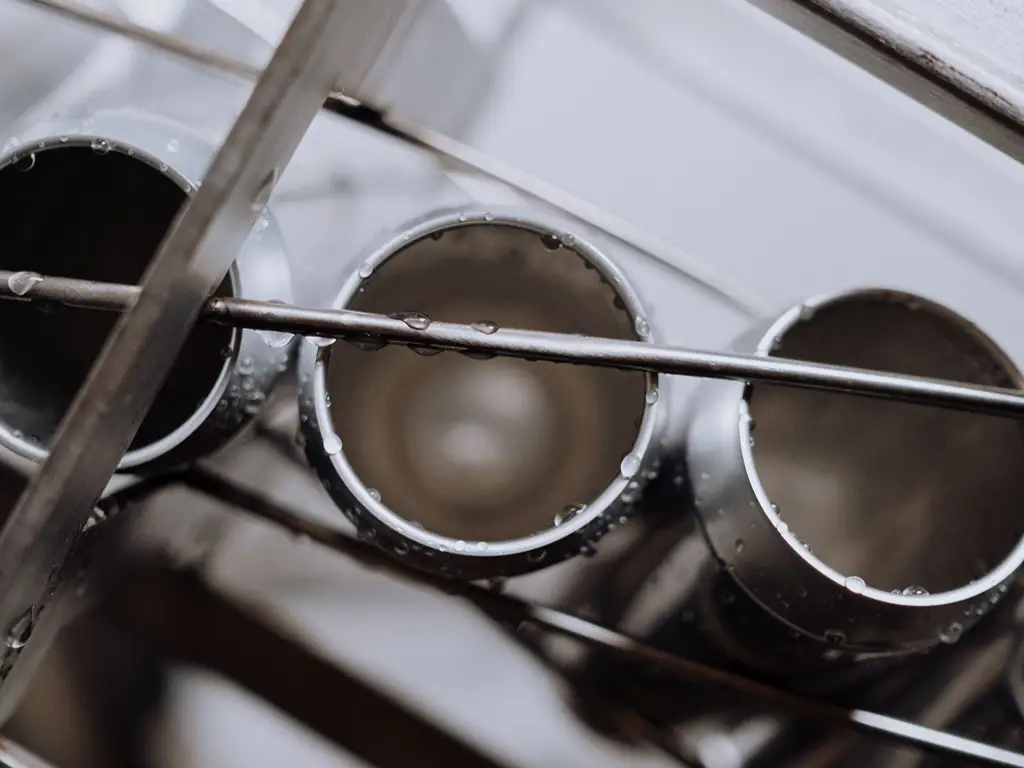
First, compatibility risk. Every seaming roll has a specific groove profile. Every can flange has a specific curl geometry. When these come from different manufacturers, their tolerances can stack the wrong way — a 0.05mm deviation on each side compounds into a 0.1mm mismatch at the seam. Think of it like fitting an aftermarket phone case: the case maker and the phone maker each work within their own tolerance bands, and sometimes the combination just doesn’t click perfectly. The industry-average defect rate from seal issues is 0.5–1.5%. When machine and container suppliers are separate, this rate tends toward the higher end — because no single party owns the full tolerance chain.
Second, diagnostic ping-pong. When seals start failing, the machine supplier examines the seamer and says the cans are out of spec. The container supplier measures the cans and says the seamer needs adjustment. Meanwhile, your production line is down while two suppliers point fingers at each other.
Third, doubled management overhead. Two contracts, two payment schedules, two shipping timelines, two after-sales contacts. For a production manager already juggling raw materials, staffing, and distribution, this administrative friction is non-trivial.
Integrated procurement — sourcing both machine and containers from a single manufacturer — eliminates all three cost points in one structural decision. The manufacturer pre-validates seamer-to-container compatibility before shipment, owns the entire quality chain, and gives you one point of contact for both equipment and consumables.
This model makes particular sense for PET plastic packaging lines, where container dimensions and material behavior are less standardized than metal cans. A manufacturer operating both injection-molding lines (for preforms and containers) and seamer assembly lines can match seaming parameters to its own container specifications at the factory — a pre-shipment integration step that split-supply cannot replicate.
The trade-off is straightforward: if you use standard aluminum cans with an established container supplier you trust, split-supply offers flexibility. If you use PET containers — or if you’re a first-time buyer who doesn’t yet have a trusted container supplier — integrated sourcing reduces variables and startup friction.
Your Can Sealing Machine Sourcing Roadmap — From Inquiry to Installation
You now have the framework. Here’s how to execute it in five steps:
Step 1: Define Your Spec Sheet. Based on your production volume, can type, and budget, determine which machine tier you’re targeting (semi-auto / auto inline / high-speed rotary). Write down your can diameter, height, material, and target throughput — this becomes your RFQ baseline.
Step 2: Shortlist by Buyer Profile. Match your operation to the buyer profiles above. Large plant? Start with Ferrum, CFT, Angelus. Distributor? Evaluate HOR YANG, Chang Shen, Shin-I. Startup? Compare Bubber, Lanico, Ramgarhia. Aim for a shortlist of 3–5.
Step 3: Run the Due Diligence Checklist. Send the checklist questions from Section 3 to every shortlisted manufacturer. Compare answers side by side. Eliminate anyone who can’t provide verifiable certification numbers, documented delivery data, or a live video factory tour.
Step 4: Request a Sample Run with Your Actual Containers. This is the step that separates serious buyers from tire-kickers — and serious suppliers from middlemen. Ship your cans to the manufacturer, request a sealing test video (timestamped, with your branding visible), and have them return the sealed samples for your own inspection. A manufacturer confident in their equipment will happily do this. One that makes excuses won’t.
Step 5: Negotiate Total Cost of Ownership, Not Just Machine Price. Your contract should specify: spare parts kit scope and pricing, warranty duration and coverage (including remote diagnosis), installation and training support, and after-sales response time SLA. The purchase price is the entry ticket — these four items determine what you actually pay over the machine’s first three years.
If your can type is PET and you’re considering the integrated sourcing approach discussed in Section 4, add one more item to Step 2: identify which manufacturers on your shortlist produce both sealing equipment and containers. This narrows your search — but for PET-based operations, the compatibility and single-supplier advantages often outweigh the benefit of a longer candidate list.