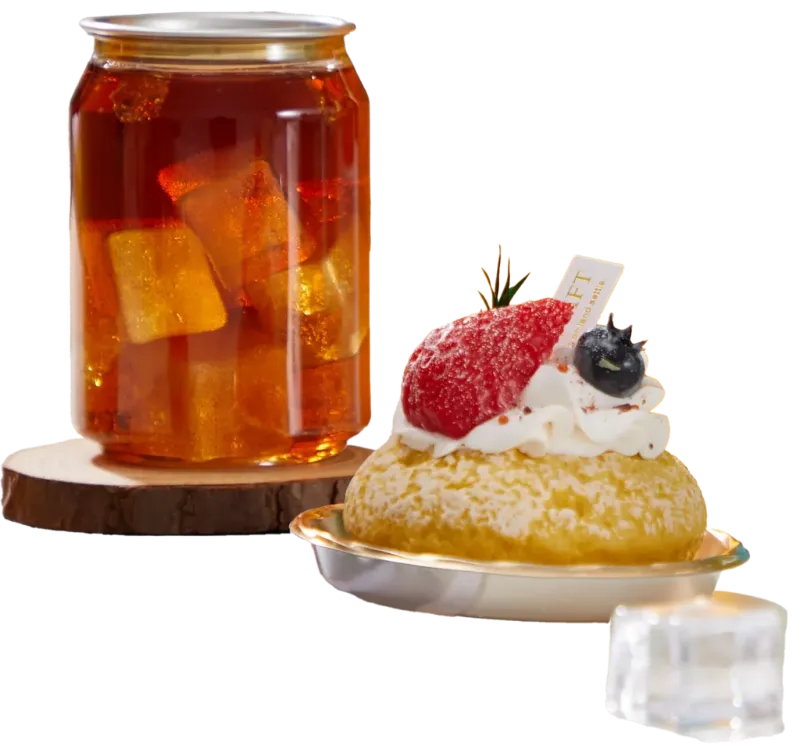
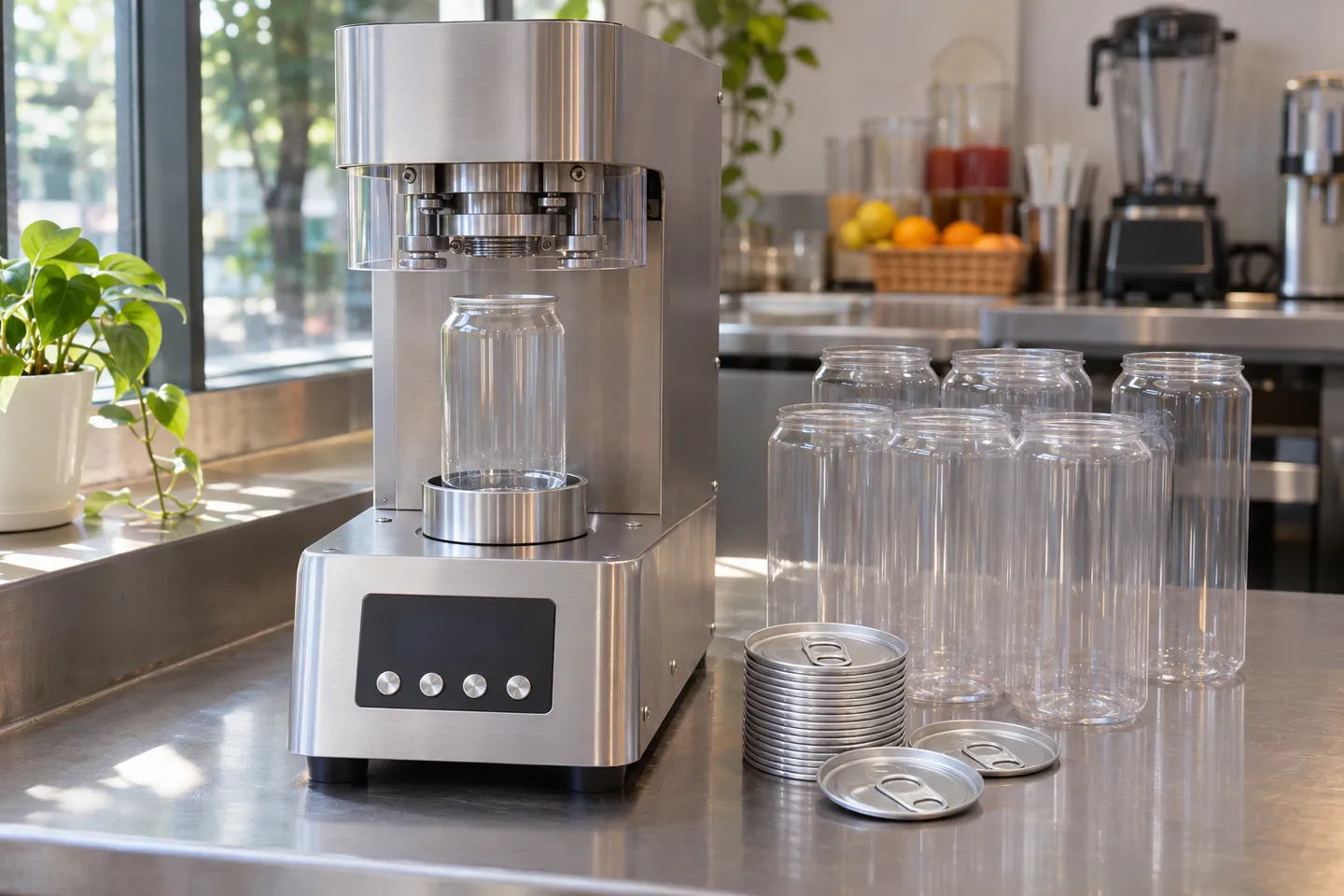
Three hundred clear plastic cans sit in a case by the counter, with a stack of aluminum easy-open lids beside them. A desktop machine the size of a small microwave is waiting to close the two together. That is the whole workflow a PET can sealing machine owns. It crimps an aluminum lid onto a plastic can. The finished drink or snack then looks like a soda can, opens with a pull tab, and survives a shelf, a delivery bag, or a fridge. Juice bars use them, as do milk tea shops, coffee carts and small snack brands. The machines themselves come in at least four classes that differ in far more than price.
This guide stays on one specific device: the desktop machine that seals PET plastic cans with easy-open lids. It walks through what the machine actually does, how the classes differ, and how to match a class to your daily volume. Later sections cover the compatibility details that cause most bad purchases, and what to do when a seal comes out wrong.
What a PET Can Sealing Machine Actually Does
A can sealing machine forms what the food processing industry calls a double seam. The lid’s flange and the can’s flange are rolled and pressed together in two separate operations until they interlock (USDA Food Safety and Inspection Service, 2021). A seamer has four basic working parts, and the same principle that closes steel food cans closes your plastic one. The can spins, rollers press the lid flange over the can flange once to hook it, then a second roller flattens and tightens the seam until it is leak-tight.
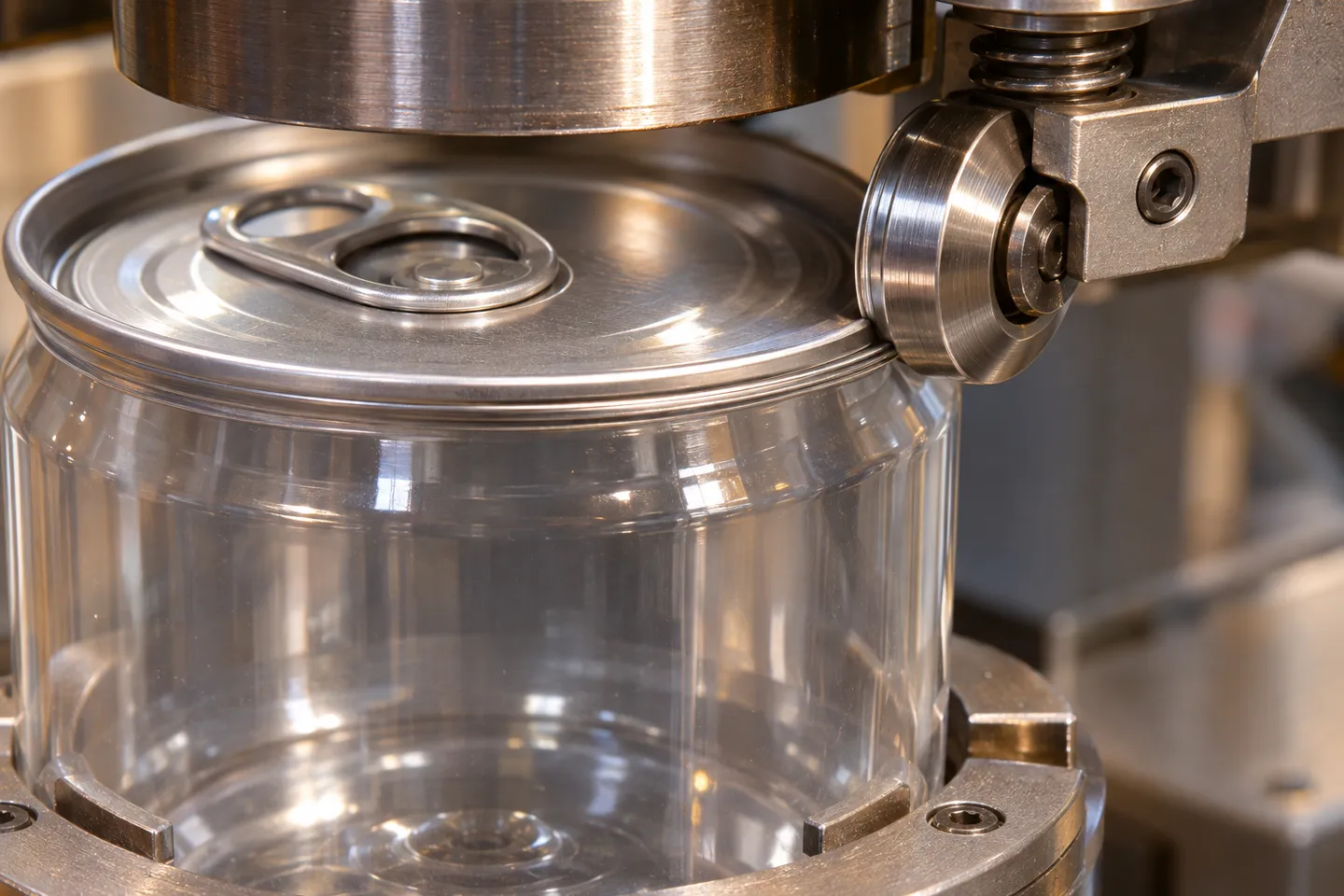
PET brings one complication. Plastic is far less rigid than aluminum or tinplate. The machine therefore needs lighter roller pressure and better support around the can body, or the can walls buckle before the seam forms. Setup knowledge from metal can seaming transfers only partially: the seam geometry is the same, the force settings are not. That is why two machines with identical seam rollers can behave completely differently on plastic.
One clarification before the classes, because search results mix them constantly. This article is about sealing PET cans, where PET means polyethylene terephthalate, the clear plastic, and not pet-food cans. Three other devices get confused with it. Industrial can seamers for tinplate and #10 steel cans are a different category built around far higher rigidity and throughputs. Milk tea cup sealing machines bond plastic film to a cup rim, a different process entirely. And screw-lid jars never touch a seamer at all, because their closure is a threaded cap.
Check what you actually need to close
PET cans with easy-open lids need a can sealing machine. Screw-lid jars need nothing but hands. Plastic cups with film lids need a cup sealer. Tinplate cans need an industrial seamer. Buying across categories is the most common wasted purchase in this niche.
Carbonated drinks deserve one early flag. A standard desktop PET sealer assumes a still product: juice, tea, coffee, milk tea, powders, snacks. Pressurized beverages push against the seam while it forms and leak afterward. That is why handheld PET sealers sold on retail sites carry explicit warnings against carbonated drinks (Amazon, 2026). Gas-handling at the seam belongs to vacuum or nitrogen-dosing inline equipment, which sits well above the desktop class this article covers.
The Four Machine Classes and What Changes Between Them
Four classes dominate the desktop category, and each one answers a different question about your day. Manual sealers, usually hand crank or ratchet designs, need no power at all and typically weigh around 9 kg, light enough to live in a drawer. You supply the rhythm, so output depends entirely on how long your wrist lasts. Button or semi-automatic machines hold the can for you and complete the cycle on a press, removing the skill from the motion while keeping the pace manual. Touch-screen electric machines run on standard household power, and current models draw about 165 W. The display exposes adjustable parameters, and an electronic counter tracks production. Fully automatic desktop units take the can, seat the lid, and finish the seam in roughly 3 seconds of machine cycle time, with a protective cover over the working area. Most weigh 32 to 33 kg and draw 140 to 165 W.
What actually changes between the classes is not sealing quality. A well-adjusted manual machine can form a seam as tight as an automatic one. The classes change three things: rhythm, labor, and consistency over a long shift. Manual output falls as the operator tires. Electric classes hold the same cycle on can number 5 and can number 500, and the counter quietly tells you what the afternoon really produced.
Desktop machine classes at a glance
| Class | Power | Typical weight | Machine cycle | Best fit |
|---|---|---|---|---|
| Manual (crank or ratchet) | None | ~9 kg | Operator-paced | Under 100 cans a day, no-power or mobile setups |
| Button / semi-automatic | Low | ~10-20 kg | 1 press per can | Small shops sealing in batches between orders |
| Touch-screen electric | 110V/220V, ~165 W | ~33 kg | Seconds per can | Shops that want counters, adjustable settings and display control |
| Fully automatic desktop | 110V/220V, ~140-165 W | ~32-33 kg | ~3 s per can | Steady daily production without operator fatigue |
Specifications worth noting across the class: most desktop PET sealers share a 55 mm caliber, which matches the 202# can neck. Their sealing height range of roughly 30-200 mm is wide enough to cover standard beverage can heights. Within one class, look at weight for stability and at wattage only as a sign of motor class, not sealing force.
Straight-line and rotary inline seamers exist above this whole ladder, integrated into filling lines and rated in thousands of cans per hour. They matter when you are running a production plant. For a shop, a cart, or a small brand packing in the back room, everything below stays on the desktop tier.
Matching Machine Class to Your Daily Volume
Do the honest cycle math first
The 3-second figure on a spec sheet is the machine’s cycle, not your throughput. One can every 3 seconds is a theoretical 1,200 per hour. Add can placement, lid seating, and the moment your hand is where the next can should be. Published real-world ratings for retail-class automatic machines then come in near 400 cans per hour (100x100chef, 2026). Plan your purchase on that second number, because that is the one your afternoon will actually deliver.
Translate your sales into a busy-hour requirement and the tier picks itself as a planning framework. Under about 100 cans a day, a manual machine is genuinely enough, and the zero-watt bill is a feature. Between roughly 100 and 500 a day, an electric desktop unit earns its counter space, and the operator difference between classes starts to show in queue time at the register. Above about 500 a day, or any double-shift operation, one automatic unit or two electric stations becomes the realistic answer. Past that ceiling you are shopping for inline equipment, not a bigger desktop machine.
The number to remember: buy against your busy hour, not your best hour.
3 s
machine cycle per can
400-600
real cans per hour, loading included
Equipment cost gives the math a denominator. US retail pricing for desktop automatic PET sealers sits around $499-599 (Packrove, 2026), while factory-direct sourcing quotes per configuration. Payback, when it exists, comes from labor. If sealing in-house replaces an hour of paid labor per day at local wages, a $500 machine returns its cost in weeks. The per-can packaging saving compounds on top. Run that line with your own wage numbers before believing any vendor’s.
Machine class × daily volume × where it breaks
| Class | Daily volume served | Realistic output | Where it breaks |
|---|---|---|---|
| Manual | Under ~100/day | Operator-paced, typically 60-150/hr | The operator’s wrist, not the seam |
| Button / semi-automatic | ~100-300/day | Batch-paced | Queue at peak hours |
| Touch-screen electric | ~100-500/day | Hundreds per hour sustained | Single station ceiling on double shifts |
| Fully automatic desktop | ~300-800/day | ~400-600/hr incl. loading | Carbonated products, and above this sits inline territory |
Know when the answer is not to buy
Four situations argue against any machine. If your volume sits under a few dozen cans a day, cans pre-sealed by your packaging supplier cost less than the equipment and the counter space. If your product line is screw-lid jars, no seamer is involved at all. If your bestseller is carbonated, a standard desktop unit fails its only job, and gas-capable seamers live in a different budget class. And if a co-packer already fills and seals for you at a per-can rate you like, the machine competes with their contract, not with nothing.
Why in-house canning is trending now
Equipment is getting cheaper, and demand is growing on the other side of the counter. The ready-to-drink tea and coffee market was valued at USD 122.8 billion in 2025, with Asia Pacific holding a 43.5% revenue share. Grand View Research projects USD 206.1 billion by 2033 at a 6.8% CAGR (Grand View Research, 2025). Canned formats carry that growth. A sealed clear PET can with a pull tab photographs well and travels well in delivery bags. It also turns a drink shop into a mini bottler whose product sells in fridges after the customer leaves. For a small brand, that shelf presence is the actual return on a $500 machine.
Send us your daily volume and your can-and-lid pair, and we will recommend the class that fits your busy hour.
Compatibility and Specs to Check Before You Buy
Match can, lid and machine as one system
Compatibility fails one dimension at a time, and every dimension has its own naming confusion. Start with the can neck. The dominant desktop caliber is 55 mm, which the industry also calls 202#, and retail listings variously label the same opening 55 mm, 2.2 inches, or about 56 mm. All three describe one compatible size, and a spec sheet that gives only one of the labels is still telling you the same thing. Neck sizes beyond it exist across the 202 to 502 series for larger jars and cans. The caliber printed on the machine must match the neck printed on your can, not the can’s outer diameter.
Then the lid. Aluminum easy-open lids are the pull-tab format that makes a PET can feel like a soda can. Peel-off foil lids serve powders and dry goods where full resealing matters less than tamper evidence. Full-open lids cover a caliber range roughly from 55 to 100 mm and turn the same machines toward snack and food cans. Plastic screw caps sit outside this article’s machine entirely. A seamer rated for one lid format does not automatically form a good seam on another, because flange thickness and rolling behavior differ.
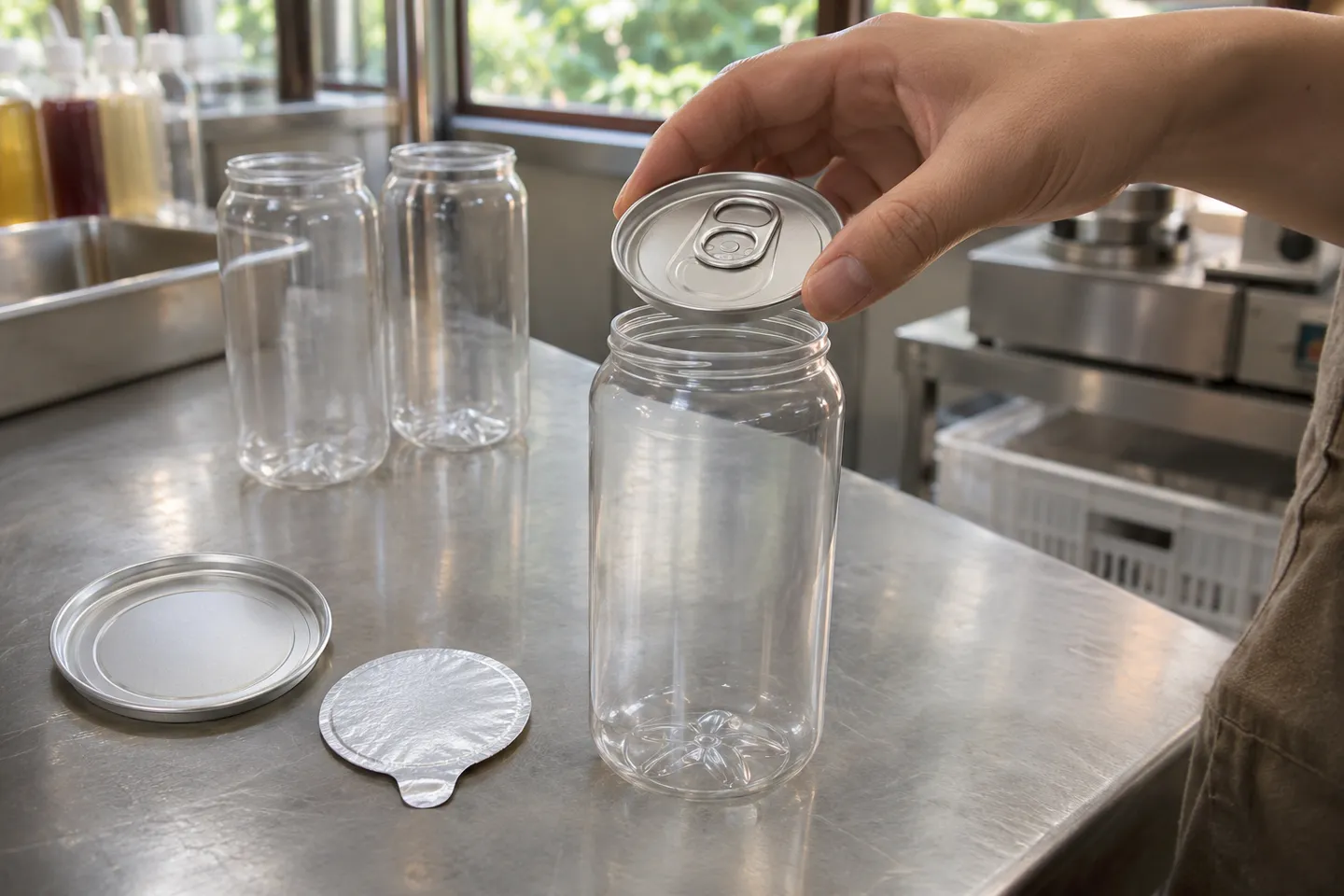
Last, the adaptation mechanism. Two commitments coexist in the market: machines that accept interchangeable chucks sized to each caliber, and machines that self-adjust across a size range with no adapter change. Self-adjusting sounds better until you read what it implies: fewer parts, but less control when your can sits at the edge of its range. Either way, ask one direct question before ordering: if I switch can sizes next quarter, what exactly changes on this machine, and what does that part cost?
One system: can, lid, machine
Can neck
One caliber, three names: 55 mm, 202#, about 56 mm.
Lid format
Easy-open pull tab, peel-off foil, or full-open 55-100 mm; screw caps stay out.
Adaptation
Interchangeable chuck or self-adjusting: ask what changes when the can size changes.
The spec checklist
Run every candidate through the same seven checks, each tied to how a shop actually operates.
The seven checks before you order
- Caliber match: machine caliber equals your can neck size (55 mm / 202# is the common pair).
- Sealing height range: about 30-200 mm covers standard can heights; measure your tallest SKU.
- Power: 110V/220V dual voltage matters for cross-border purchases, ~140-165 W runs on any outlet.
- Weight: 9 kg manual units move around, 32-33 kg automatic units stay put and seal steadier.
- Cycle and counter: ~3 s per can cycle, with an electronic counter so output is measured, not guessed.
- Safety cover: a protective shield over the sealing head keeps splashes out of the seam.
- Display language and settings access: adjustable parameters on the panel, in a language your staff reads.
Two of those checks get skipped most often and cost the most. Height range fails on novelty cans, the tall or shaped formats that look great in photos and stop 40 mm short of the machine’s ceiling. Power region fails on cross-border orders, where a 220 V-only unit arrives in a 110 V kitchen and becomes a display piece.
The 20-can test before the real order
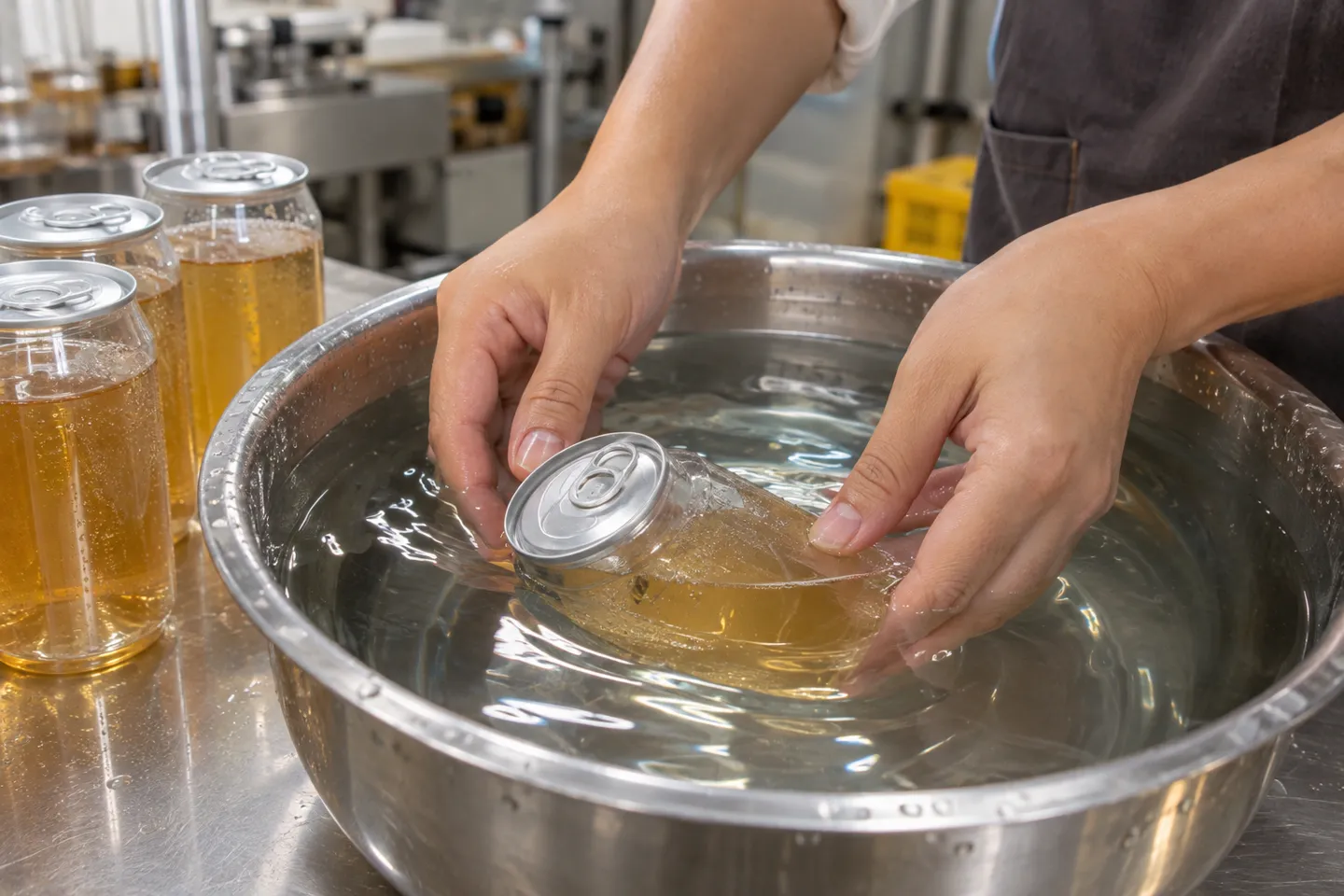
No spec sheet proves a seam. Before committing to volume, seal twenty of your actual cans with your actual lids and check the result the way a factory would. Look for a flat, even seam with no wavy edges, then submerge samples in water under vacuum, or squeeze them, to check for leaks. Twenty cans expose a caliber mismatch, a lid-flange problem, or a height-limit issue that no product page will admit to. The same test becomes your acceptance standard later, when a bulk delivery arrives and you need an objective word for what “sealed properly” means.
Order the lids with the same seriousness. Aluminum easy-open lids are typically stocked and sold at tens of thousands per lot, with a common industry minimum order quantity around 30,000 pieces. Light-custom cans can start near 1,000. Sequence the lid order first, because the lids are the scarcer SKU and the machine is useless without a compatible supply of them.
Seal Failures: Causes, Checks and Fixes
Most sealing problems you will ever meet fall into five patterns, and each has a checkable cause rather than a vague one. Leakers usually trace to seam pressure or a mismatch between lid flange and can neck, not to a broken machine. Wavy or uneven seams point to rotational wobble or a worn roller face. A crushed can mouth means the machine clamped a caliber it was not set for, often after a can change without a chuck change. A pull tab that slides loose means the lid never fully seated before rolling. Foam-over contamination happens when the product sits too high in the can and bubbles reach the seam zone.
Symptoms, causes and the action that fixes them
| Symptom | Most common cause | Action to take |
|---|---|---|
| Leaks in drop or squeeze test | Seam pressure low or flange mismatch | Re-check caliber pairing, re-seat lid, adjust pressure per manual |
| Wavy, uneven seam edge | Roller wear or rotational wobble | Inspect roller face, tighten mount, test on a known-good can |
| Can mouth crushed | Wrong chuck or caliber setting for the can | Match chuck to neck size before the next cycle |
| Pull tab slides open | Lid not seated flat before sealing | Press lid fully home, restart cycle |
| Foam in the seam zone | Overfill, product too foamy | Leave headspace, let foam settle, then seal |
Two self-checks cover most disputes. The visual check: a correct seam reads as a flat, uniform band around the can mouth, with no wrinkles and no shiny pressure marks. The leak check: submerge sealed cans in water and look for stream bubbles, or apply gentle squeeze pressure and watch the rim. Suppliers document outgoing batch quality with the same tests in stricter form, including vacuum or water immersion for leaks and 1.8 m drop tests with product inside, so agreeing on these two checks with your supplier before purchase gives you a shared standard when a shipment disappoints.
Two boundaries sit outside the machine’s control. Carbonated products fail at the seam by physics, not by adjustment, so they need gas-capable equipment rather than tuning. Ocean freight in high heat can also deform PET can bodies before the machine ever touches them. That is why export packing with insulation matters for plastic cans moving through summer shipping lanes. A warped can mouth will not seal on any machine.
When a fault survives both self-checks, the fastest path is a supplier who can diagnose remotely and send operation videos for the fix. That support channel is worth confirming at purchase time, not discovering in your first failure week.
The Sourcing Decision Behind the Machine
The machine only sets the rhythm. Whether that rhythm produces sealed cans or a drawer of rejects depends on the other two SKUs: the can’s neck tolerance and the lid’s flange geometry. Buy those from three different vendors and the dimensional tolerances on each part were never designed to meet. When seams fail, every vendor can truthfully say their part tested fine. Responsibility needs a single address.
That is the case for sourcing cans, lids and the machine from one supplier. The compatibility assumption moves from your spreadsheet to their factory, and the two minimum order quantities stop working against each other. A supplier holding both lines can sequence a 30,000-piece lid lot against a 1,000-can light-custom run. You avoid warehousing a year of lids for one machine. The honest counterpoint: buyers with mature multi-vendor management and their own metrology do fine splitting the order. Most shops reading this are not those buyers, and the six months of growth a new beverage brand is planning rarely arrives on schedule. Buy the class your current volume supports, and let the equipment follow the demand rather than the pitch.
Outstanding builds the cans, the easy-open lids and the sealing machines as one matched line. The neck finish on your can is therefore the same number the chuck on your machine was cut for. We sequence samples in 48 hours and bulk in 3 to 5 days. If you want your can-and-lid pair confirmed against a specific machine before ordering, the can sealing machine lineup is the place to start.
Confirm your cans, lids and machine as one matched line
Samples in 48 hours, bulk production in 3 to 5 days, and a seal checked on the exact pair you will run.
Start Your Match ConfirmationReferences
- USDA Food Safety and Inspection Service. “VTP Reference Material.” 2021. https://www.fsis.usda.gov/sites/default/files/media_file/2021-03/VTP_Reference_Material.pdf
- Grand View Research. “Ready To Drink Tea And Coffee Market Size Report, 2033.” 2025. https://www.grandviewresearch.com/industry-analysis/ready-to-drink-tea-and-ready-to-drink-coffee-market
- Packrove. “Can Sealing Machines for PET and Aluminum Cans.” 2026. https://packrove.com/pages/sealing-machine
- 100x100chef. “Automatic Can Sealer Pro.” 2026. https://100x100chef.com/shop/en/sealing-machines/284-automatic-can-sealer-pro.html
- Amazon. “Manual Can Sealer 55mm Handheld Sealing Tool for PET Cans.” 2026. https://www.amazon.com/Handheld-Sealing-Plastic-Kitchen-Beverage/dp/B0H4ZJ4QPK