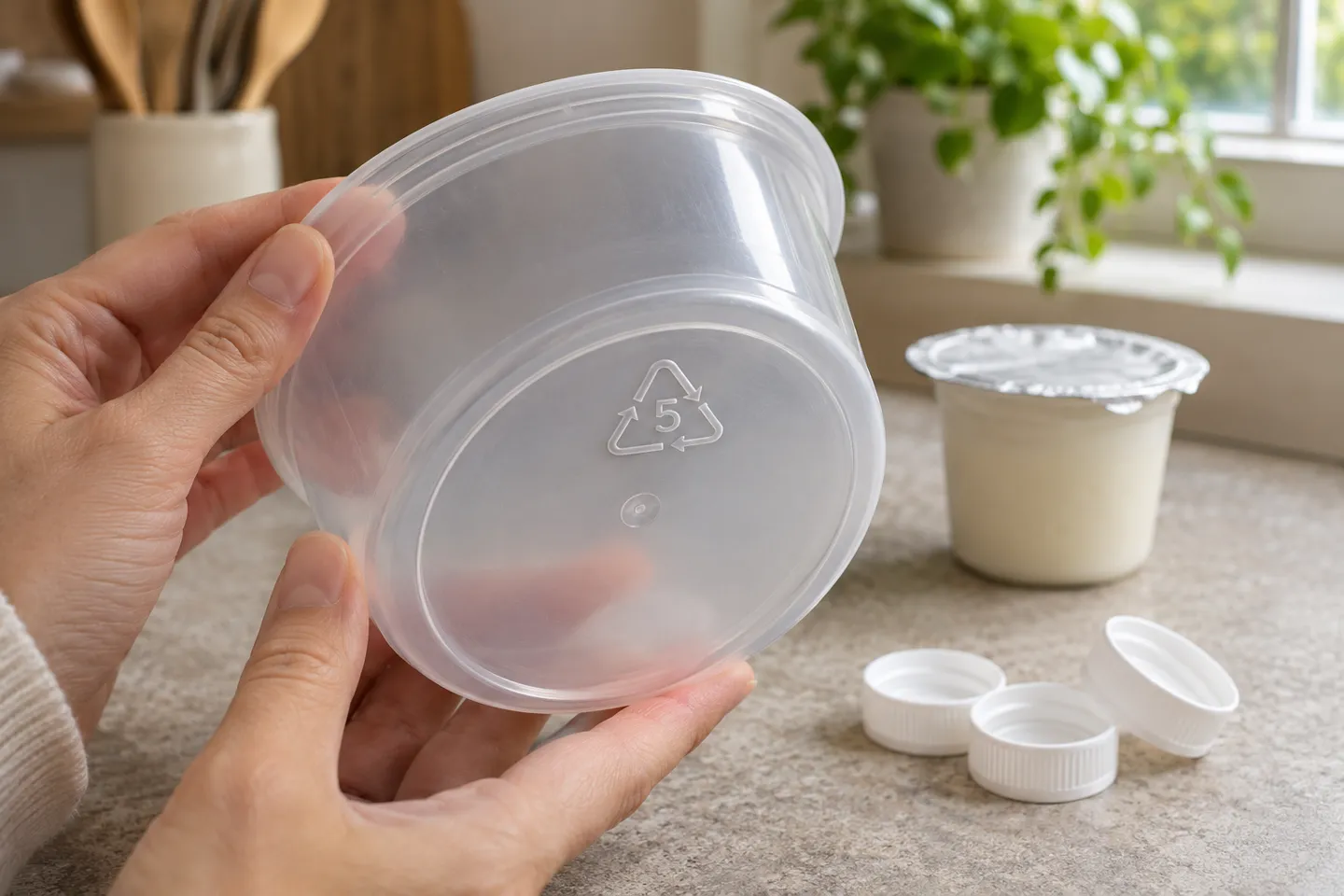
Flip a deli container, a yogurt pot, or a bubble tea cup and check the number molded into the bottom. A 5 inside the recycling triangle means polypropylene, PP for short. Food regulators in the US and the EU allow this resin in food contact, and it passes the BPA-free test that worries most shoppers. Yet research has also measured polypropylene baby bottles releasing up to 16.2 million microplastic particles per liter during ordinary formula preparation (Li et al., Nature Food, 2020). Both facts belong to the same material, and neither cancels the other. The useful question is not whether PP is safe but under what conditions the verdict holds. That answer runs from your microwave all the way to the purchase order you sign with a packaging supplier.
What PP Is and Why Regulators Call It Food-Safe
PP is a polyolefin, a family of plastics built from simple carbon-and-hydrogen chains. That simple chemistry is the main reason it earns its verdict: there is nothing in the base resin that wants to react with your food. It is one of the most produced plastics in the world, and you meet it daily as yogurt pots, bottle caps, deli cups, medicine bottles, and microwaveable trays.
In the United States, the legal basis is 21 CFR 177.1520, the FDA regulation that lists olefin polymers, including polypropylene, as safe for articles that contact food (U.S. eCFR, 2026). In the European Union, plastic food contact is governed by Regulation (EU) 10/2011 (EUR-Lex, 2011). It sets an authorized substance list and an overall migration limit of 10 mg per square decimeter of food-contact surface. Notice what both frameworks have in common: they grant approval for use under defined conditions. The regulation is a contract, not a blanket stamp.
Then there is the BPA question, because most shoppers meet plastic safety through that label. PP contains no BPA by design; the chemical belongs to a different resin family, polycarbonate, and to epoxy can linings (Healthline, 2020). Medical references consistently rank PP among the safer choices for food storage (WebMD). But read the fine print of what BPA-free actually rules out: one chemical family, nothing else. It says nothing about what happens when the material is heated, filled with hot fat, or scratched for a year. That is where the verdict needs conditions.
When Does PP Stop Being Safe? Heat, Wear, and Microplastics
The regulatory verdict assumes normal use. Push the material outside those assumptions and the answer starts to change. Three condition groups do most of the damage: heat, what you put inside, and how worn the container is.
Heat: The Fastest Way to Change the Math
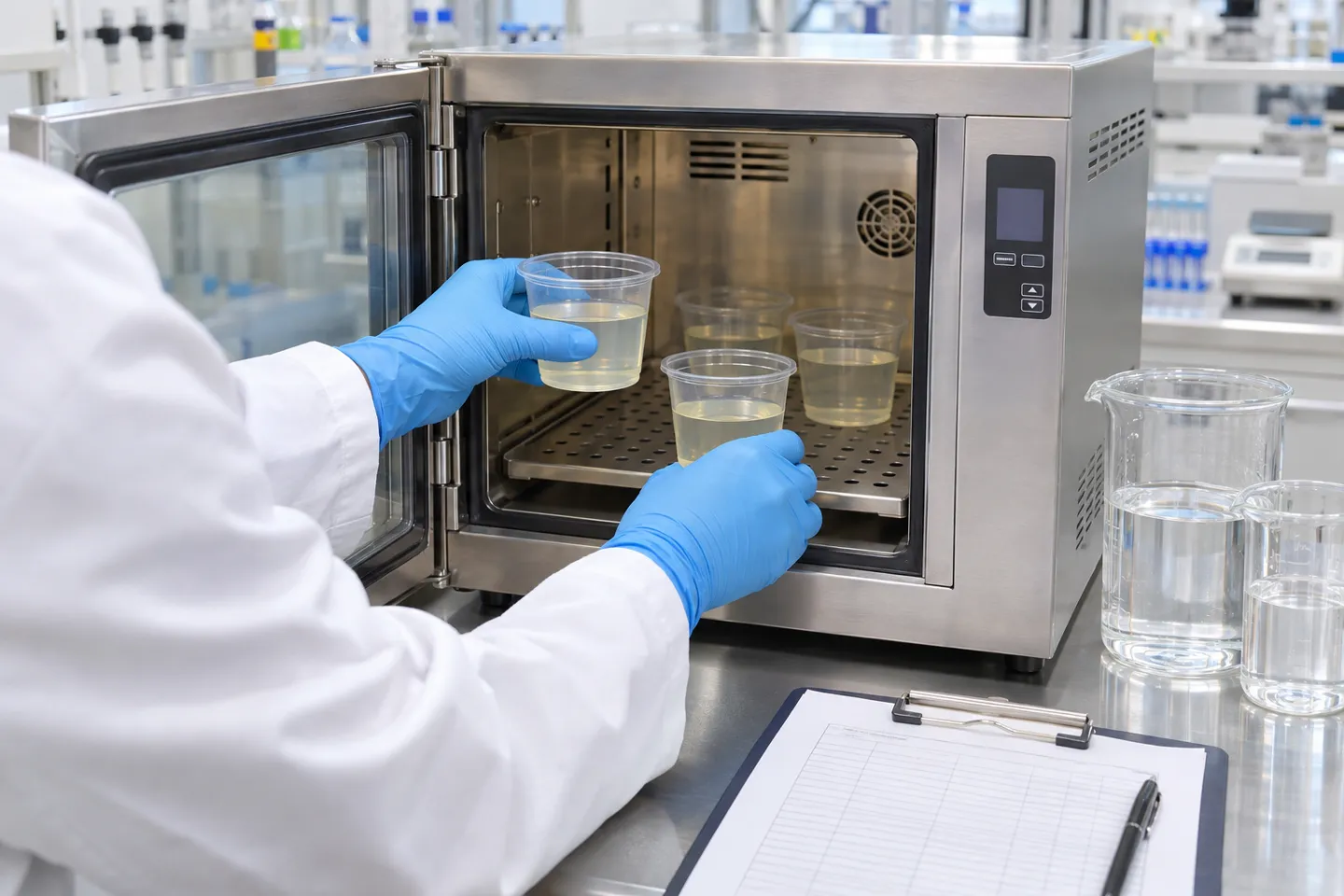
A 2023 University of Nebraska study tested polypropylene baby-food containers under real kitchen conditions (Hussain et al., Environmental Science & Technology, 2023). Three minutes in a 1,000-watt microwave released more than 2 billion nanoplastic particles and about 4 million microplastic particles per square centimeter of container. The same experiment used a 3% acetic acid solution to simulate dairy and other acidic foods, and the acidic liquid drew out more particles than plain water. Storage matters too: containers held at refrigerator or room temperature for six months also released particles, just at far lower levels.
Heat rules that hold in practice: microwave only when the container is explicitly labeled for it; keep oily and acidic foods out of hot plastic, they pull more particles; and treat the microwave-safe symbol as a no-deforming guarantee, not a zero-release guarantee.
The microwave-safe symbol deserves a hard look. It certifies that the container will survive the heating without warping. It does not certify that nothing leaves the plastic during those three minutes.
What one study measured
Source: Hussain et al., ES&T, 2023
Babies and Bottles: The Most Sensitive Case
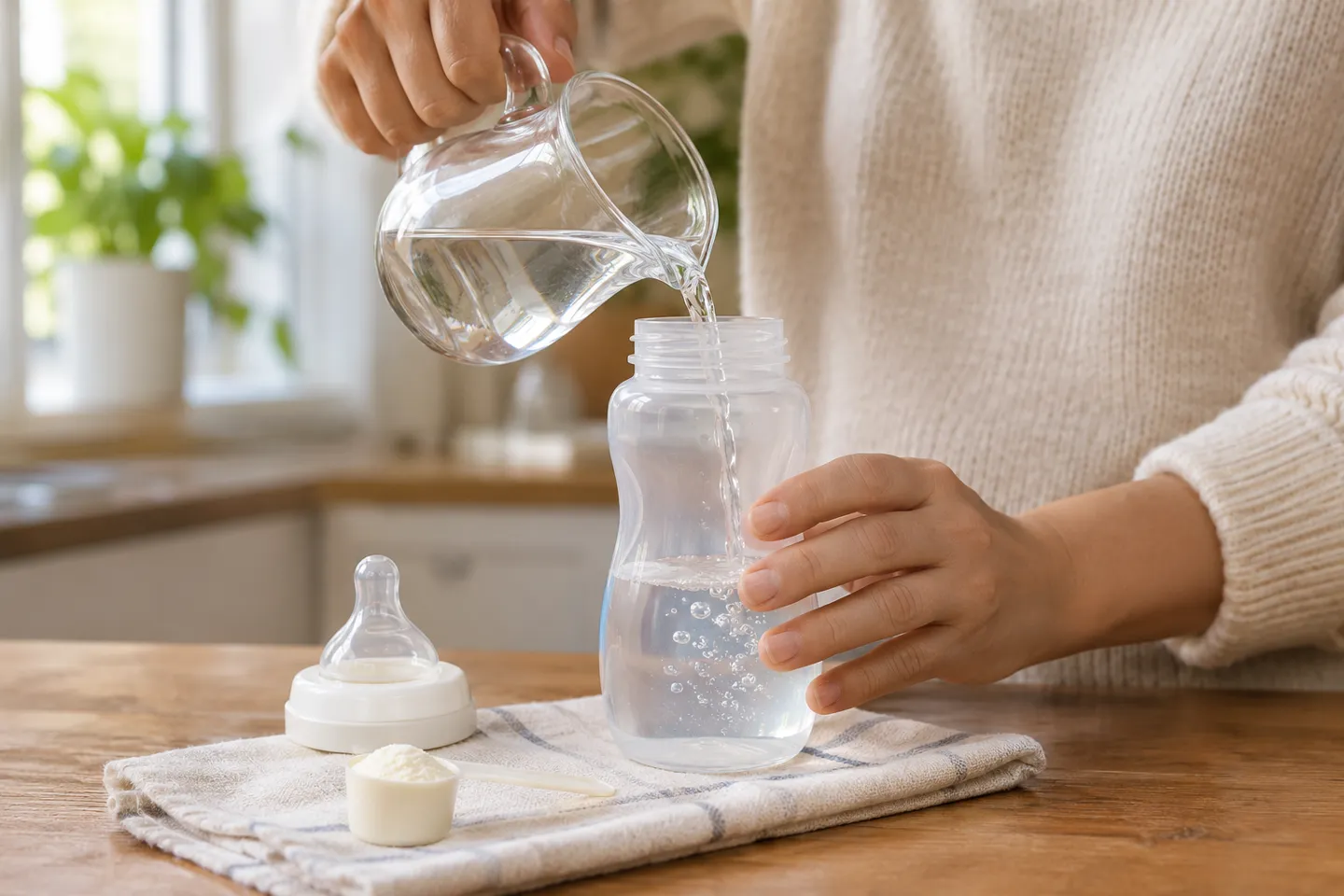
Infant feeding is where the conditions get the most scrutiny, and the numbers are worth knowing exactly. A 2020 study in Nature Food prepared formula in polypropylene bottles, following the standard sterilization and 95°C water instructions printed on the packaging (Li et al., Nature Food, 2020). Release measured as high as 16.2 million microplastic particles per liter. Following those exposure numbers through real-world feeding patterns, the team estimated bottle-fed infants average around 1.6 million particles per day. Polypropylene makes up roughly 82% of the world’s baby bottle market, so this is not a niche exposure (The Guardian, 2020).
What do you do with that information? The study team’s own lower-release protocol costs almost nothing. Rinse the sterilized bottle three times with cool sterile water before filling. Prepare the formula in a non-plastic container, then transfer it once it has cooled. And keep the risk in proportion. The WHO’s review of microplastics in drinking water found no reliable evidence of risk at current exposure levels (WHO, 2019). At the same time it flagged the evidence base as too thin to close the question. Both the caution and the reassurance are honest readings of the same data.
Wear, Scratches, and When to Retire a Container
Heat is not the only trigger. Abrasion is. Every scratch and scuff adds surface area and loosens the material’s edge. That is why chemists who work with these plastics repeat the same retirement advice: keep a container as long as it stays intact, replace it once visible wear sets in. Release follows damage, not the calendar age of the cup.
That gives you a checklist you can actually apply, no lab required. Any single sign is enough. None of them means the container is poisoned tomorrow; all of them mean the conditions behind the original verdict have quietly expired.
Retire the container when any one of these shows up
- Deep scratches that catch a fingernail
- A cloudy or chalky surface that no longer wipes clear
- Warping from a past overheat
- A lingering smell that washing will not remove
- A lid that has stopped sealing tight
Matching the Material to the Job: PP, PET, and PLA in Real Service
For a household, the conditions above decide whether to microwave a leftover box. For anyone running a beverage or food business, the same conditions become a materials decision: which resin goes with which drink, which lid, and which machine. The verdict is per-job, not per-plastic.
Hot Drinks: Where PP Earns Its Keep ⭐
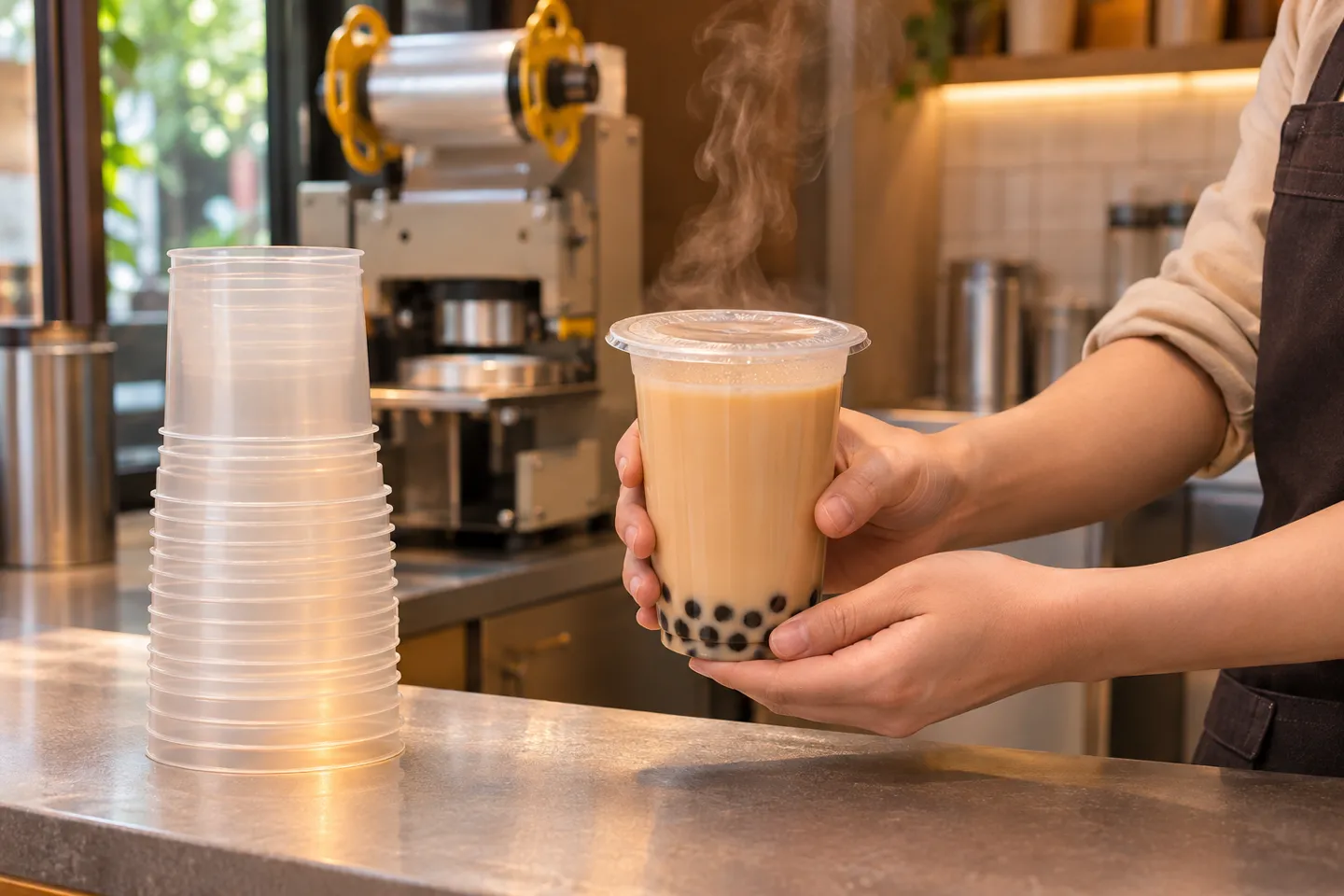
Hot tea, coffee, and hot-filled foods are PP’s home turf. Its service range runs to about 100°C, it survives hot fill without deforming, and it flexes instead of cracking when a customer squeezes a cup one-handed. Among the common resins it is the default for anything served hot, which is why soup deli containers, hot drink cups, and microwaveable trays keep converging on it. The boundary to respect: sustained heavy load above its service range, and direct contact with very oily or acidic contents at high temperature.
Cold Drinks and Clarity: Where PET Wins
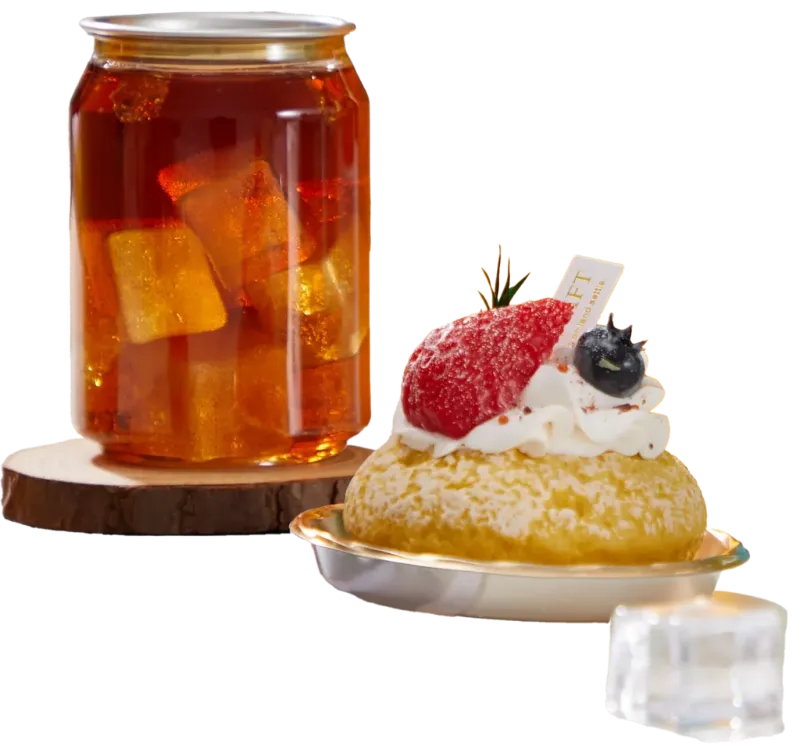
Cold service flips the ranking. PET is the clear, rigid, glass-like resin that makes fruit teas and layered coffee look premium on a shelf, and it stays stiff in a fridge full of condensation. Its ceiling is the dealbreaker for heat: standard PET tops out at 60-65°C, so no hot fill and no microwave, ever. It also turns brittle in a freezer, which matters for frozen menus. Eco variants exist on both sides. rPET closes the loop on PET. PLA is plant-based and compostable, but it deforms near 60°C and needs industrial composting to break down, so it serves cold drinks with a green story, not hot ones.
The Sealing Machine Decides: Film, Cup, and Temperature
One bubble tea shop owner described the failure mode in detail on a shop-owner forum: they picked PET cups for the clarity, then spent weeks fighting the sealing machine. The seals pulled off too easily, the film jammed and snapped, and no temperature setting fixed it. The replies converged on one diagnosis: the PP sealing film did not match the PET cups. PP cups with PP film sealed clean on the first try at a working temperature around 180°C (r/bubbletea shop owner thread, 2022). The shop’s downtime ended the day the resin pairing did.
The rule hiding in that story: the sealing film must be the same resin family as the cup, and the machine’s temperature range must cover that resin’s sealing window. Before a production run, run a five-cup seal test at the film maker’s recommended setting and pull each seal by hand. If the peel is clean and the seam holds, the pairing works; if it lifts at a corner, adjust temperature before you blame the film.
Material × Application: What Works, What Fails
| Material | Hot drinks | Cold drinks | Oily/acidic food | Microwave | Sealing machine | Failure boundary |
|---|---|---|---|---|---|---|
| PP | Service to ~100°C; flexes, semi-clear | OK, cheapest per unit | Good chemical resistance | Only when labeled | PP film, ~180°C, best pairing | Softens under sustained load above service range; retires on visible wear |
| PET | No (60-65°C ceiling) | Crystal clear and rigid (premium look) | OK cold, keep heat away | No | PET film, tricky pairing | Heat deformation; brittle in freezer |
| PLA | No (~60°C limit) | Acceptable clarity | Limited data | No | Specialty film | Deforms near 60°C; needs industrial composting |
| Paper (lined) | OK with lining | OK | Coating limits reuse | No | Not applicable | Lining quality decides; soggy boundary |
Read the table by your own menu, not top to bottom. A hot-heavy menu lands on PP. A cold-premium menu lands on PET. A green-story cold menu can justify PLA. Copolymer PP, one step down the spec sheet, buys better cold behavior at nearly the same price, which matters if your cups ride freezers.
How Food-Grade Is Actually Verified
Here is the layer the health articles skip: everything above describes the material in principle. What lands in your shop is a specific batch from a specific factory, and the phrase food-grade is only as good as the documents behind it. Consumers cannot verify any of this; that is exactly why they ask you, the one holding the cup. Verification comes down to three documents you can demand from any supplier.
Every quote we send ships with its compliance declaration, third-party migration report, and batch records attached, so you can verify before you buy.
Request a documented quoteFirst, a compliance declaration that cites a standard. For the US market that means a statement of compliance with FDA 21 CFR 177.1520; for Europe, a declaration of compliance with Regulation (EU) 10/2011. The declaration should state the conditions of use it covers, because both regulations attach approval to conditions: high-temperature fill, fatty foods, and acidic foods each have their own test clauses. If your product is hot and oily, a declaration written for cold water bottles proves nothing for your case.
Second, a third-party migration test report. This is the lab work that measures what actually leaves the plastic into food simulants (EUR-Lex, 2011). The pass mark is the EU framework’s overall migration limit of 10 mg per square decimeter. Two details decide whether the report means anything. The test conditions, temperature, duration, and simulant type, must match how your product is really used. And the batch number on the report must match the goods you receive. A beautiful report for a different batch is decoration.
Third, batch-level testing records. A one-time certificate proves a moment in the past; food safety is a process. The reference scale in this industry runs from annual to quarterly: one established manufacturer sends batch samples to third-party labs every quarter and shares the reports with customers. Ask any supplier two questions: how often do you test, and can I see the last report. The answers separate process from paperwork.
Food-grade verification checklist
- 1Compliance declaration citing FDA 21 CFR 177.1520 or EU 10/2011, with conditions matching your use case.
- 2Third-party migration test report: test conditions matching your product, batch number matching your goods.
- 3Batch-level testing records: quarterly cadence as the reference standard.
- 4Factory check: 100% virgin resin policy, clean workshop grade, batch traceability.
Missing any document = treat the claim as unverified.
One factory-side check closes the loop. Resin policy comes first: virgin material with documented sourcing versus recycled content of unknown origin changes the migration math from the ground up. Clean workshop grade and batch traceability come next, because the same base resin handled in a dusty workshop is not the same product. A supplier confident in all of this puts it in writing without being asked twice.
Food-grade is not a label you trust; it is paperwork you can demand.
Demand all three. Missing one, safe is only a promise.
Turning Safety into a Business Asset
Read the last three sections again from the counter of your own shop and the picture changes shape. The customer asking whether the cup is safe is not making conversation; they are deciding whether to come back. You cannot show them a study. You can show them what stands behind your cup, and almost none of your competitors can.
The cost math works the same direction. The shop that spent weeks fighting a sealing machine was losing inventory, time, and film to a resin mismatch worth a five-minute test. Choosing the right material for the job, PP where heat and sealing live, PET where clarity sells, is not a purchasing nicety. It is the difference between a line that runs and a line that jams.
Usage discipline belongs on the same ledger. The retirement checklist and the no-heat rules from earlier are not just consumer advice; they are staff training. A cup that survives its service conditions preserves the compliance story you are telling. A cup that gets microwaved against spec does not, whatever its certificate says.
So run your sourcing the way you would want it audited: demand the three documents, check the batch numbers, and put the heat rules in your staff handbook. Then answer the customer’s question with the short version: the material is regulator-approved for food contact, your usage follows the conditions, and the supplier’s test reports exist. Very few shops can say all three sentences, which is exactly why saying them is worth money.
That is the standard we hold ourselves to at Outstanding. Our cups, jars, and bottles are made from 100% virgin resin, with FDA and EU 10/2011 compliance on file inside an ISO 9001 quality system. The SGS, RoHS, REACH, and CE certificates are all listed on our certification overview. We send batch samples to third-party labs every quarter and hold a 99.8% pass rate. When your customer asks whether the cup is safe, your answer is a document, not a promise.
Get the Documents Behind Your Cups
Tell us your product and target market; we reply with the compliance declaration, migration report, and batch records from this article attached.
Request compliance documentsReferences
- U.S. Government Publishing Office (eCFR). “21 CFR 177.1520, Olefin polymers.” Current edition, accessed 2026. https://www.ecfr.gov/current/title-21/chapter-I/subchapter-B/part-177/subpart-B/section-177.1520
- Li, D. et al. “Microplastic release from the degradation of polypropylene feeding bottles during infant use.” Nature Food, 2020. https://www.nature.com/articles/s43016-020-00171-y
- The Guardian. “Bottle-fed babies swallow millions of microplastics a day, study finds.” 2020. https://www.theguardian.com/environment/2020/oct/19/bottle-fed-babies-swallow-millions-microplastics-day-study
- Hussain, K.A. et al. “Assessing the Release of Microplastics and Nanoplastics from Plastic Containers and Reusable Food Pouches before and after Microwave Heating.” Environmental Science & Technology, 2023. https://pubmed.ncbi.nlm.nih.gov/37343248/
- University of Nebraska-Lincoln. “Nebraska study finds billions of nanoplastics released when microwaving containers.” 2023. https://news.unl.edu/article/nebraska-study-finds-billions-of-nanoplastics-released-when-microwaving
- World Health Organization. “Microplastics in drinking-water.” 2019. https://www.who.int/publications/i/item/9789241516198
- EUR-Lex. “Commission Regulation (EU) No 10/2011 on plastic materials and articles intended to come into contact with food.” 2011. https://eur-lex.europa.eu/eli/reg/2011/10/oj/eng
- Healthline. “Is Polypropylene Safe and BPA Free?” 2020. https://www.healthline.com/health/is-polypropylene-safe
- WebMD. “What to Know About the Toxicity of Polypropylene.” https://www.webmd.com/a-to-z-guides/what-to-know-about-the-toxicity-of-polypropylene
- Palmetto Industries. “Polypropylene Melting Point & PP Softening Temperature Explained.” 2025. https://www.palmetto-industries.com/polypropylene-melting-point/
- Reddit r/bubbletea. “Boba Shop Owners! – PP or PET cups?” 2022. https://www.reddit.com/r/bubbletea/comments/xceyox/boba_shop_owners_pp_or_pet_cups/