
You’re standing in front of two bins — recycling and trash — holding an empty plastic cup. The cup has a little triangle on the bottom with a number inside. You hesitate. Does this go in recycling? Is a plastic cup even recyclable?
You’re not alone in that moment of confusion. A University of Wisconsin–Madison waste audit published in early 2026 found that even on a college campus with clear signage, people put plastic cups in the wrong bin more than half the time for certain types (UW–Madison Nelson Institute, 2026). And even when they get it right, the cup’s chances of actually being recycled are far lower than most people assume.
This guide walks through what plastic cups are made of, which types can be recycled and which can’t, why the recycling system fails most cups, and — if you’re buying cups for a business — how to choose ones that stand the best chance of completing the recycling loop.
What Are Plastic Cups Made Of? — Understanding Materials and Recycling Codes
Before answering whether plastic cups are recyclable, you need to know what they’re made of. Not all plastic cups are the same material, and their recycling fates diverge dramatically based on that difference.
| Material | Resin Code | Appearance | Common Uses | Recycling Outlook |
|---|---|---|---|---|
| PET (Polyethylene Terephthalate) | #1 | Clear, rigid, glass-like | Cold drink cups, smoothie cups, water bottles | Best — most widely accepted |
| PP (Polypropylene) | #5 | Semi-clear, slightly cloudy, flexible | Hot/cold takeaway cups, fast-food cups, yogurt tubs | Growing — infrastructure catching up |
| PS (Polystyrene) | #6 | Clear & brittle OR foamed (Styrofoam) | Red Solo cups, foam coffee cups, takeout containers | Poor — rarely accepted curbside |
| PLA (Polylactic Acid) | #7 / “Other” | Looks like clear PET but softer | “Compostable” cold cups, eco-branded takeaway cups | Not recyclable — requires industrial composting |
| rPET (Recycled PET) | #1 | Same as PET, may have slight tint | Premium eco-branded cold cups | Yes — re-enters PET recycling stream |
The resin code — that little triangle with a number — only tells you what the plastic is, not whether your local recycling program accepts it. This distinction is the root of most recycling confusion. The resin identification system was created by the plastics industry in 1988, and the chasing-arrows symbol was deliberately designed to look like the universal recycling symbol. Many coded plastics have never been practically recyclable.
The resin code identifies the material, not its recyclability. A #1 on the bottom tells you it’s PET — it doesn’t tell you whether your local facility processes it. Always check local guidelines, not just the number.
Are Plastic Cups Recyclable? — The Honest Answer
The answer depends on which version of “recyclable” you’re asking about. There are three, and they produce very different answers.
The Technical Answer: Yes, Most Plastic Cups Can Be Recycled
From a materials-science perspective, thermoplastics like PET, PP, and even PS can be melted down and remolded into new products. PET melts at around 260–280°C, PP at 160–170°C. Both are well within industrial processing ranges. In a laboratory, you can take a PET cup, grind it into flakes, wash it, melt it, and extrude it into new plastic pellets.
The problem isn’t chemistry. It’s everything that happens between the recycling bin and the factory.
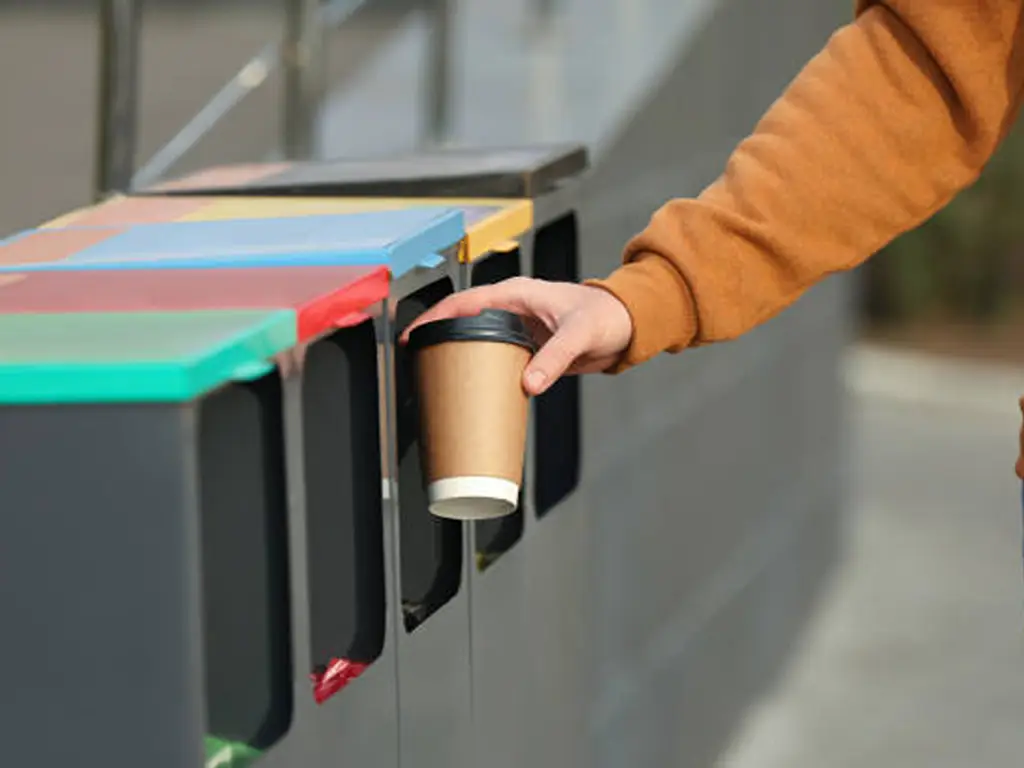
The Practical Answer: Rarely — and Here’s the Data
The numbers tell a stark story. The United States recycles only about 5% of all plastic waste generated annually, according to the most recent estimates from the Department of Energy’s National Renewable Energy Laboratory and CleanHub’s 2024 analysis. That’s down from roughly 9% in 2018, largely because export markets collapsed after China stopped accepting foreign plastic waste.
For plastic cups specifically, the rate is even lower. Estimates put it below 2%. A May 2026 investigation by environmental group Beyond Plastics glued Bluetooth trackers onto 53 Starbucks polypropylene cups and dropped them into in-store recycling bins across nine states. Of the 36 trackers that returned usable data: 16 ended up in landfills, 9 at incinerators, 8 at waste-transfer stations (typically en route to landfills), and 3 reached materials recovery facilities that sort and bale plastics but don’t actually recycle them. (Beyond Plastics, 2026).
Greenpeace has separately estimated that U.S. recycling facilities combined have the capacity to reprocess only about 2% of the polypropylene containers discarded each year. The infrastructure simply doesn’t exist at the scale needed.
The Local Answer: It Depends Entirely on Where You Are
Recycling rules vary dramatically by municipality, and they’re changing fast. In early 2026, Waste Management (WM), the largest U.S. waste hauler, announced that all of its single-stream recycling facilities can now accept, sort, and market both plastic and paper to-go cups. That one move gave over 60% of U.S. households theoretical access to PP cup recycling.
But “theoretical access” isn’t the same as actual recycling. The Beyond Plastics investigation made that painfully clear. Meanwhile, Oregon’s statewide recycling list legally excludes single-use polypropylene cups. Some Colorado municipalities print explicit “NO plastic cups are recyclable” on their guidelines. Miami-Dade County, by contrast, added PP cups to its accepted list in February 2026.
If your local recycling guidelines don’t explicitly say plastic cups are accepted, assume they’re not. Search “[your city] recycling guidelines” and look for the specific accepted-items list — not just a generic “plastics #1–#7” statement.
Plastic Cup Types — Which Are Recyclable and Which Aren’t
To judge whether a plastic cup is truly recyclable, look at three dimensions simultaneously: curbside acceptance, actual recycling rate, and end-market demand. Here’s how each cup type scores.
PET (#1) Cups — The Most Recyclable Choice
If you have to use a disposable plastic cup, clear PET is your best option. PET cups are accepted in most municipal recycling programs, and the UW–Madison waste audit found they were correctly placed in recycling bins 67% of the time — the highest accuracy of any cup type studied.
PET has the most mature recycling infrastructure of any plastic. The material is identical to what water and soda bottles are made from, so it rides on decades of investment in bottle-to-bottle recycling systems. Food-grade recycled PET (rPET) has a well-established market, with the FDA maintaining clear regulatory pathways for post-consumer PET in food-contact applications under 21 CFR 174.5.
Bottom line: If the cup is clear, rigid, and marked #1, it’s the closest thing to a reliably recyclable plastic cup.
Starbucks cups tracked by Beyond Plastics reached a recycling facility. 16 went to landfills. 9 to incinerators. None were recycled — despite being labeled “widely recyclable.”
PP (#5) Cups — Recyclable on Paper, Struggling in Practice
Polypropylene cups sit in a complicated middle ground. The good news: WM now accepts them nationwide, How2Recycle® has granted PP cups its “Widely Recyclable” designation (meaning ≥60% of U.S. households have access to a program that takes them), and major brands like Amcor are pushing PP cup recyclability forward.
The bad news: consumer behavior and physical infrastructure haven’t caught up. The UW–Madison study found PP cups were correctly recycled only 36% of the time. The Beyond Plastics tracking data showed zero actual recycling outcomes. PP is lighter than PET and harder for optical sorters to distinguish from other plastics. It only takes about 5% PET contamination in a PP bale to make the whole batch unusable for most manufacturers.
Bottom line: PP cups are moving in the right direction, but as of 2026, most still end up in landfills or incinerators regardless of which bin they’re placed in.
PS (#6) Cups — Technically Recyclable, Practically Not
Polystyrene cups face a fundamental economic problem — both the clear rigid kind and the foamed “Styrofoam” type. Foamed PS is 98% air, which makes it expensive to transport and store relative to the tiny amount of material recovered. Clear rigid PS looks similar to PET but is more brittle. When mixed into a PET recycling stream, it contaminates the batch.
The UW–Madison study recorded a 40% correct recycling rate for PS cups. That’s better than PP, but most cups still ended up in the wrong bin. And even correctly sorted PS has almost no end-market demand. Most U.S. MRFs don’t have a buyer for baled PS, so they landfill it regardless.
Bottom line: If you see a #6 on a cup, it belongs in the trash in virtually all U.S. municipalities — whether it’s a red Solo cup or a clear rigid one.
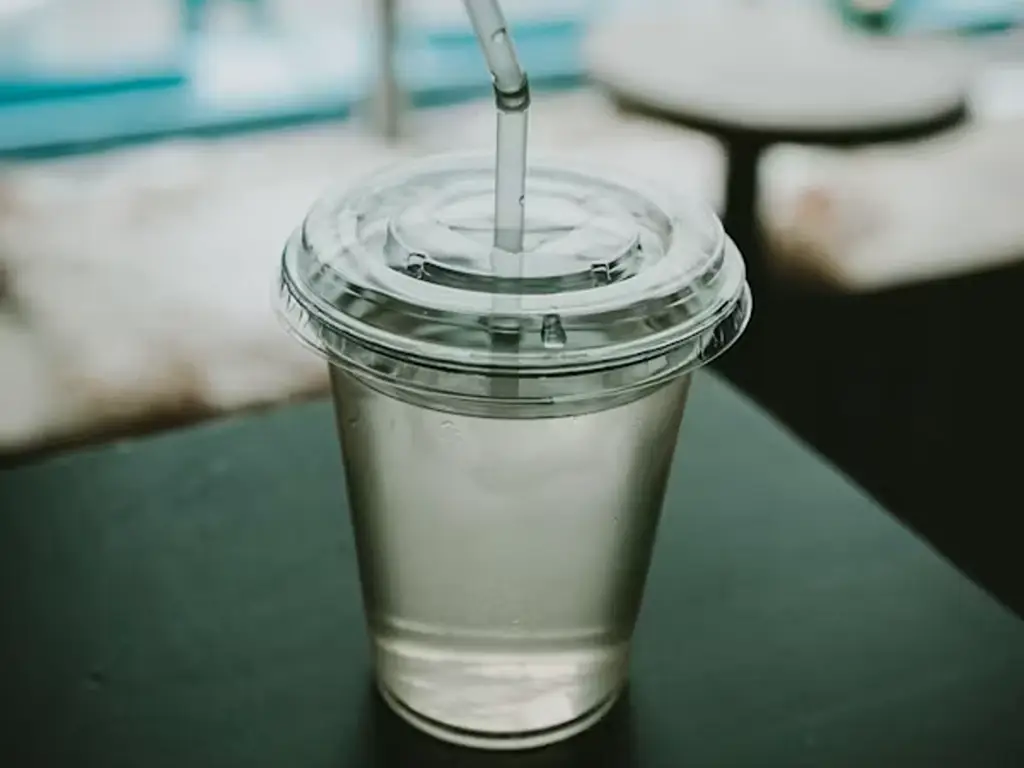
PLA (Bioplastic) Cups — The Compostable Illusion
PLA cups often carry green branding and the word “compostable,” creating what researchers call an “eco-halo” effect. The reality is more complicated. PLA requires industrial composting facilities operating at 55–60°C with controlled humidity. Those conditions exist at fewer than 5% of U.S. composting sites. In a home compost pile, PLA cups can take years to break down. In a recycling bin, they’re worse than useless: PLA has a density similar to PET (about 1.24 g/cm³) and cannot be distinguished by standard optical sorters. PLA cups that sneak into PET recycling streams can ruin entire batches.
Bottom line: Unless your municipality explicitly operates a PLA collection program, PLA cups go in the trash.
rPET Cups — The Circular Economy Option
Cups made from recycled PET (rPET) represent a genuine bright spot. They use material that has already completed one lifecycle — often from recycled bottles — and after use, they can re-enter the same PET recycling stream. The UK’s Plastic Packaging Tax charges £217.85 per tonne on plastic packaging with less than 30% recycled content, which has accelerated rPET adoption in Europe. Brands like Go-Pak have launched 100% rPET cold cup ranges that earned top green ratings under the UK’s Recyclability Assessment Methodology.
Bottom line: rPET cups close the loop. If you’re buying cups and want to maximize recyclability, rPET is the gold standard.
Why Most Plastic Cups Don’t Get Recycled — The Infrastructure Reality
First, sorting technology has hard limits. Most materials recovery facilities use near-infrared (NIR) optical sorters that identify plastics by how they reflect light. But carbon-black pigments — used in some black plastic cups and trays — absorb all infrared light, making those items invisible to the sorter. Small items under roughly two inches also fall through the standard screening grates and land in the residual waste stream destined for landfill.
Second, the economics often don’t work. Virgin PET resin costs roughly $800–1,000 per metric ton. Recycled PET flake can cost $1,000–1,200 per ton by the time it’s collected, sorted, washed, and processed. When oil prices are low, virgin plastic is cheaper, and recyclers lose their buyers. For polystyrene, the economics are even worse: the material is so lightweight that transporting a truckload of foam cups moves mostly air, generating almost no revenue at the MRF.
Third, consumer behavior undermines the system. “Wish-cycling” — tossing questionable items into the recycling bin hoping they’ll be recycled — is widespread. A greasy cup with three ounces of leftover smoothie contaminates the paper and cardboard around it. A PLA cup tossed in with PET bottles can cause a whole bale to be rejected. The UW–Madison study confirmed what waste managers have long known: even well-intentioned people make systematic sorting errors, and those errors cascade.
The 2018 Chinese “National Sword” policy banned imports of most foreign plastic waste and exposed how dependent Western recycling systems had become on exporting their problem. U.S. plastic scrap exports dropped by more than 50%. Domestic processing capacity, never built to handle the volume, was overwhelmed. Nearly a decade later, the infrastructure gap remains.
How to Choose Recyclable Plastic Cups — A Practical Checklist
If you’re buying cups — for a café, a restaurant, an event, or your own brand — here’s a three-step framework for making choices that actually support recycling outcomes, not just recycling claims.
Check #1: Material — Pick PET or rPET Whenever Possible
Material choice is your single most powerful lever. The priority order is clear: rPET > virgin PET > PP (only if you’ve verified local acceptance) > avoid PS and PLA entirely.
Look at the bottom of the cup. Clear, rigid cups marked #1 are PET. Semi-cloudy, slightly flexible cups marked #5 are PP. If the supplier can’t tell you the material composition, or uses vague terms like “eco-plastic” without a resin code, walk away. Transparency about materials is the first signal of a serious supplier.
Check #2: Certification — Look for Recognized Recyclability Labels
The chasing-arrows symbol with a number is a material identifier, not a recyclability claim. For actual recyclability verification, look for these labels:
- How2Recycle® “Widely Recyclable” — means ≥60% of U.S. households have access to a program accepting the item. This is currently the most meaningful consumer-facing recyclability label in North America.
- APR Design Guide compliance — the Association of Plastic Recyclers publishes detailed design guidelines covering material choice, closures, labels, and adhesives. A cup designed to APR standards has been engineered for recyclability from the start.
- UK RAM green rating — the UK’s Recyclability Assessment Methodology provides a rigorous five-tier recyclability rating. A green rating means the packaging is recyclable in practice at scale.
A cup that carries none of these but still claims to be “recyclable” is making a marketing statement, not a verified one.
Check #3: Infrastructure — Verify Local Acceptance Before You Buy
The best-designed cup in the world won’t get recycled if your local MRF doesn’t process that material. Before placing a bulk order:
- Search “[your city/county] recycling accepted items” and read the official list — not a summary, not a third-party blog.
- Look specifically for “plastic cups,” “#5 plastics,” or “polypropylene” in the accepted column.
- If the information is unclear or dated, call your hauler directly. For business buyers, this step is not optional. It’s due diligence.
A professional cup supplier should be able to tell you which regions their products are accepted in and provide documentation to back that up. If they can’t, that’s a red flag.
Sourcing cups for your business? Verify recyclability before you order.
Get Certified Cup SamplesWhat to Look for in a Quality Plastic Cup Supplier
Once you know what makes a cup recyclable, the next question is: who do you buy from? A cup’s recyclability isn’t just about the material code on the bottom. It’s about the supplier’s practices upstream. Here are four dimensions to evaluate.
(1) Material transparency. A credible supplier tells you exactly what’s in the product — not just “PET,” but whose PET. Top-tier manufacturers use branded virgin resin from suppliers like CRCCHEM, with documented purity specifications and batch traceability. Material sourced from unknown or blended origins introduces quality variability that can affect everything from food safety compliance to color consistency across production runs. Ask for a material origin certificate. If the answer is vague, treat it as a no.
(2) Certification coverage. Food-contact plastic packaging should carry at minimum FDA 21 CFR compliance or EU 10/2011 certification. These are the baseline international standards. Beyond that, look for ISO 9001 (quality management), FSSC 22000 (food safety systems), and product-specific certifications like SGS test reports. A supplier who invests in quarterly third-party testing — not just annual — is signaling that quality control is operational reality, not marketing language.
(3) Customization range and MOQ flexibility. Can the supplier handle your actual needs? A good cup supplier should offer a capacity range from 150ML–5L, multiple closure options, and support for logo printing via silk-screen or labeling. Equally important: minimum order quantities that match your scale. Light customization starting from 1,000 units with 48-hour sample turnaround is a strong signal of production agility. If the supplier’s MOQ is higher than your annual volume, you’re not their real customer. You’re their overflow.
(4) Quality control and delivery track record. Ask for recent batch inspection reports. A 99%+ yield rate with documented dimensional tolerance checks, seal integrity testing, and drop testing is the standard for serious manufacturers. Sample lead time of 48 hours is best-in-class. Bulk order turnaround of 3–5 days for light customization tells you whether the supplier’s operational rhythm matches your business cadence.
These aren’t abstract criteria. A supplier that is transparent about materials, carries international food-safety certifications, offers flexible customization from low MOQs, and backs claims with quarterly third-party lab reports — like Outstanding Packaging, a one-stop PET packaging manufacturer that uses 100% CRCCHEM virgin material and maintains FDA, EU, ISO 9001, and FSSC 22000 certifications — gives you something more valuable than a cup. It gives you a verifiable answer when a customer or regulator asks: “Are these cups actually recyclable?” You’ll be able to show them the paperwork.
The recycling symbol on a plastic cup promises a circular journey. The data says that journey almost never happens. Choosing cups thoughtfully — by material, by certification, and by supplier — is the most practical step any business can take to close the gap between the promise and the reality.
Free samples, 48-hour turnaround, FDA/EU certified materials
Request Samples & QuoteReferences
- UW–Madison Nelson Institute. “Types of Single-Use Plastic Cups Influence Recycling Accuracy.” 2026. nelson.wisc.edu
- Beyond Plastics. “REPORT: Tracking Starbucks’ Deceptive Recyclability Claims.” 2026. beyondplastics.org
- American Recycler. “Plastic to-go cups now widely recyclable.” 2026. americanrecycler.com
- WM. “Recycling 101 — What Is Recycling & What to Recycle.” wm.com
- The Guardian. “Starbucks does not recycle plastic cups it claims are ‘widely recyclable’, report says.” 2026. theguardian.com
- CleanHub. “Plastic Perspectives Report.” 2024. (via Earth911: earth911.com)