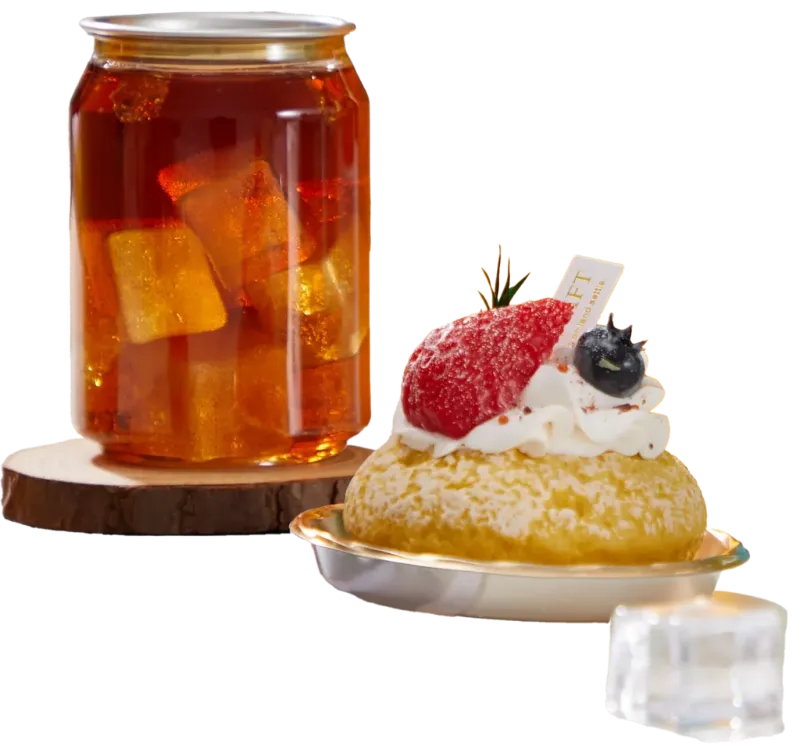
A tall milk tea goes lukewarm while the pearls sit untouched at the bottom of the cup, because the straw that came with it lets nothing solid through.
It is a sizing problem, and it starts with three measurements most buyers never check.
What Makes a Boba Straw Different
Boba, bubble tea and pearl milk tea are regional names for the same drink, so the straws follow the same job: pull a solid topping up through liquid. A standard drinking straw measures 6 mm in diameter, which suits water, juice and soda, while catalogs classify boba straws at 13 mm, the widest standard class (WebstaurantStore, 2026). Suppliers who specialize in the topping sell their shop-grade straw as a 12 mm bore (BossenStore, 2026), which is why real-world listings land anywhere from 10 to 13 mm.
Length is the second number that matters. Wholesale ranges commonly run 21, 23 and 29 cm so one shop can cover several cup heights from a single SKU family (BossenStore, 2026). For conversion: 10 mm is about 0.4 inches and 12.7 mm is exactly half an inch, so a straw marked 1/2″ is a 12.7 mm tube.
Regular Straw vs Boba Straw
| Spec | Regular straw | Boba straw |
|---|---|---|
| Diameter | 6 mm standard | 10-13 mm commercial range |
| Class | cocktail to jumbo | giant to boba |
| Job | sipping liquids | pulling solids up with the liquid |
Everything else about sizing, from materials to tips, exists to serve that one job: moving a solid pearl and its liquid together.
Straw Materials and Where Each One Fits
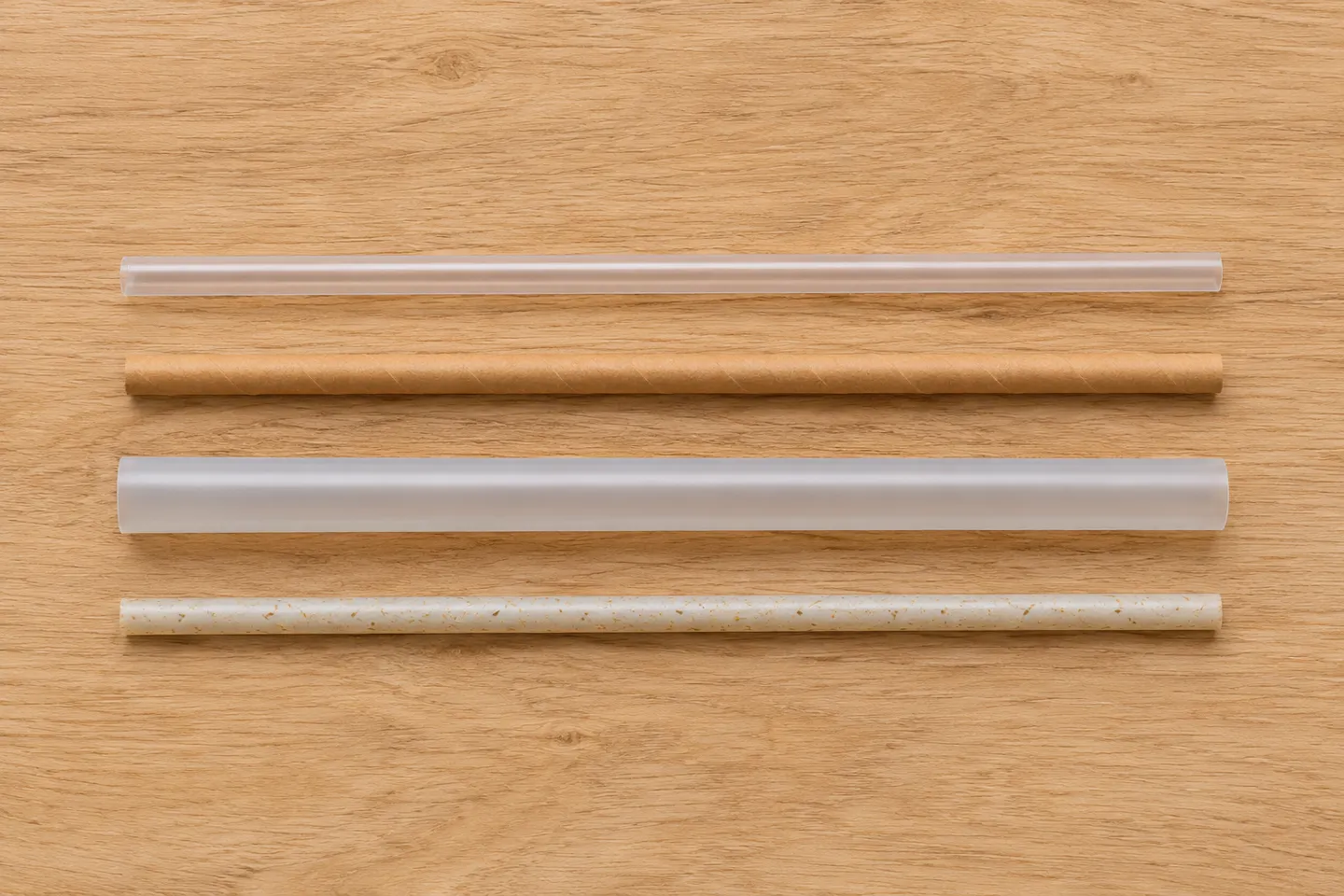
Polypropylene (PP) is the cheap workhorse. It handles cold and room-temperature drinks without complaint and survives shipping. Its weakness is regulatory, not physical. As a conventional plastic straw it falls under the EU restriction that took effect in July 2021 (EUR-Lex, 2021), and similar local bans operate across US states and cities (WebstaurantStore, 2026).
Paper is the familiar eco swap. Sipping feel is neutral and printing looks good. Its known limitation shows up in wide bores over long sitting times, which is exactly the boba use case, so paper earns its keep on short-interval drinks rather than slow sippers.
PLA is the plant-based bioplastic that looks and feels like plastic. The catch is heat: PLA begins to soften around 60 °C, its glass transition sits near 50-60 °C, so hot drinks are off the table (Li et al., 2023). It also only delivers its composting promise under industrial composting conditions, and has no environmental benefit when thrown out with regular trash (WebstaurantStore, 2026).
Plant-fiber straws, made from sugarcane bagasse or similar, are the newer generation built to resist soaking, and listings now advertise multi-hour rigidity as a selling point. Reusable steel, glass and silicone straws serve the personal cup market, but they sit outside the commercial disposable spec this guide covers.
Match the Diameter to the Topping, Not the Drink
Diameter is the one specification most shops get wrong, because the numbers they find online seem to disagree. They disagree for two fixable reasons: some listings quote the inner diameter while others quote the outer, and pearl recipes differ between regions. Fix both and the choice becomes mechanical.
Start From the Pearl
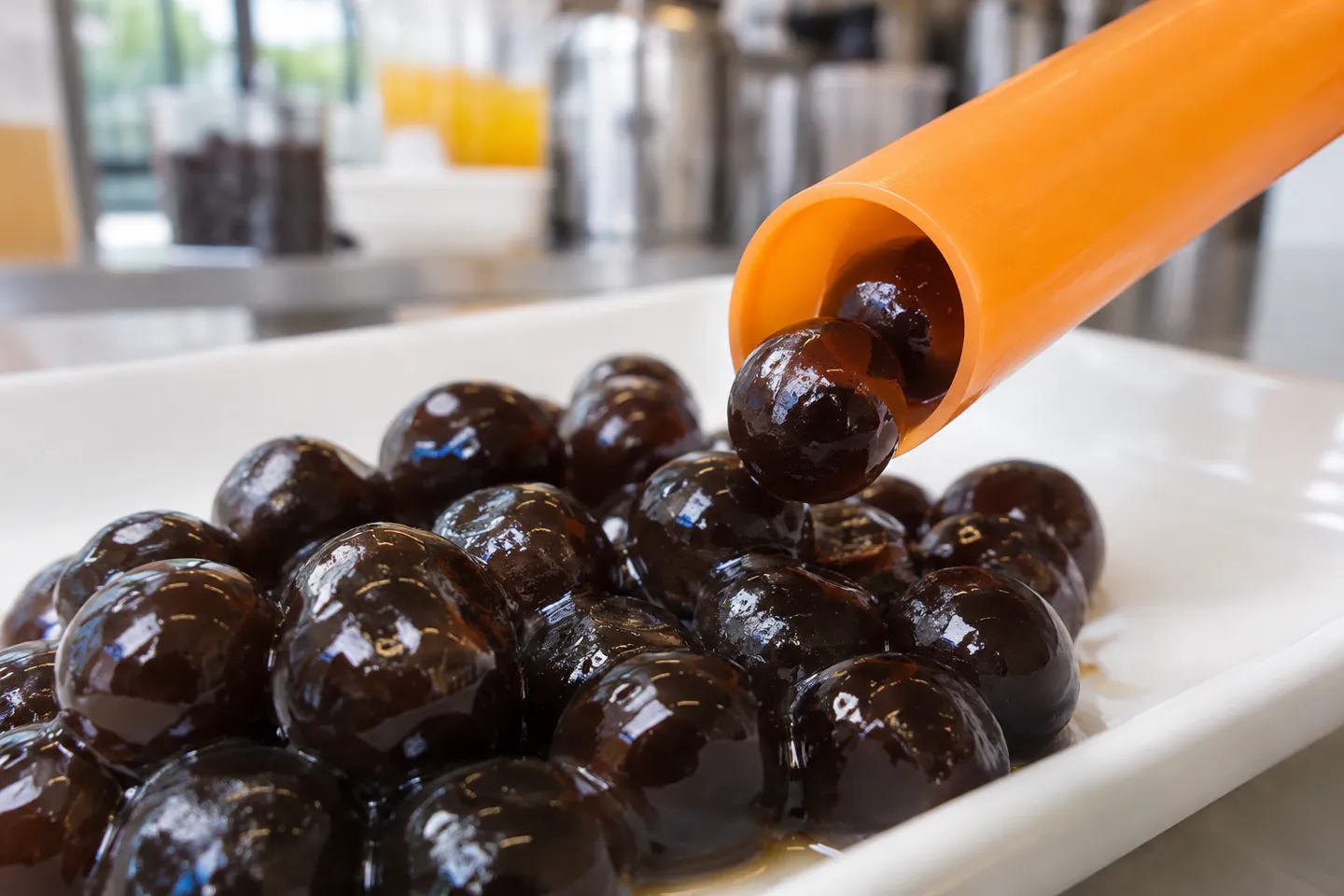
Tapioca pearls grow when they cook. Bossen’s large pearls measure about 8.5 mm raw and expand to roughly 10 mm once cooked (WebstaurantStore, 2026). Pearl suppliers grade the same topping on a full scale from 4-5 mm minis up to 9.5-10 mm standard shop pearls, with 9.5-10 mm named as the usual bubble tea grade (YenChuan, 2024).
That gives you the working formula:
Bore diameter = your largest cooked topping + about 2 mm of clearance.
The clearance keeps the pearl moving with liquid instead of plugging the tube.
A 10 mm cooked pearl plus clearance lands on a 12 mm bore, which is exactly the straw the topping specialist sells as its shop default (BossenStore, 2026). The same arithmetic holds for anything you add: taro balls, grass jelly cubes and pudding chunks are irregular solids, so measure the biggest piece you serve, not the average.
Inner or Outer Diameter: Ask Which One Is Quoted
One listing quotes 0.4 inches, another quotes half an inch, and both can describe the same straw. The outer diameter is the inner diameter plus twice the wall thickness, so the same tube can honestly carry two numbers. Before ordering, confirm which one the supplier means, because your lid holes and sealing specs care about the outer diameter while your pearls care about the inner one.
The Diameter Ladder
Topping-to-Bore Reference
| Topping | Typical cooked size | Minimum bore | Shop practice |
|---|---|---|---|
| Popping boba and minis | 4-7 mm | 8-9 mm | one slim option covers the light drinks |
| Standard tapioca | 9.5-10 mm | 12 mm | the default SKU for most milk tea menus |
| Large pearls and chunky add-ins | 10-12 mm | 13-14 mm | stocked where the menu pushes jumbo pearls |
| Mixed toppings | take the largest solid | largest solid + 2 mm | one straw sized to the biggest piece on the menu |
Resist the urge to buy the widest straw as a default. An oversized bore in a light drink pulls liquid too fast, which reads as splash and choke, not generosity. Size to the topping you actually serve.
Length, Tip Style, and the Cup-Lid-Seal System
Diameter gets the pearl into the straw. Length and tip style decide whether the straw works with the cup, the lid and the seal it travels with. These three specs interlock, which is why a straw ordered in isolation can still fail on the counter.
Length Follows the Cup
The working rule: the straw should reach near the bottom of the cup with a few centimeters left exposed for comfortable sipping. Suppliers already grade lengths to match common service sizes, which is why the wholesale ladder runs 21 cm for standard cups, 23 cm for large ones and 29 cm for tall or dessert formats (BossenStore, 2026). Pick the rung by your tallest mainstream cup, not your widest menu.
Tip Style Follows the Seal
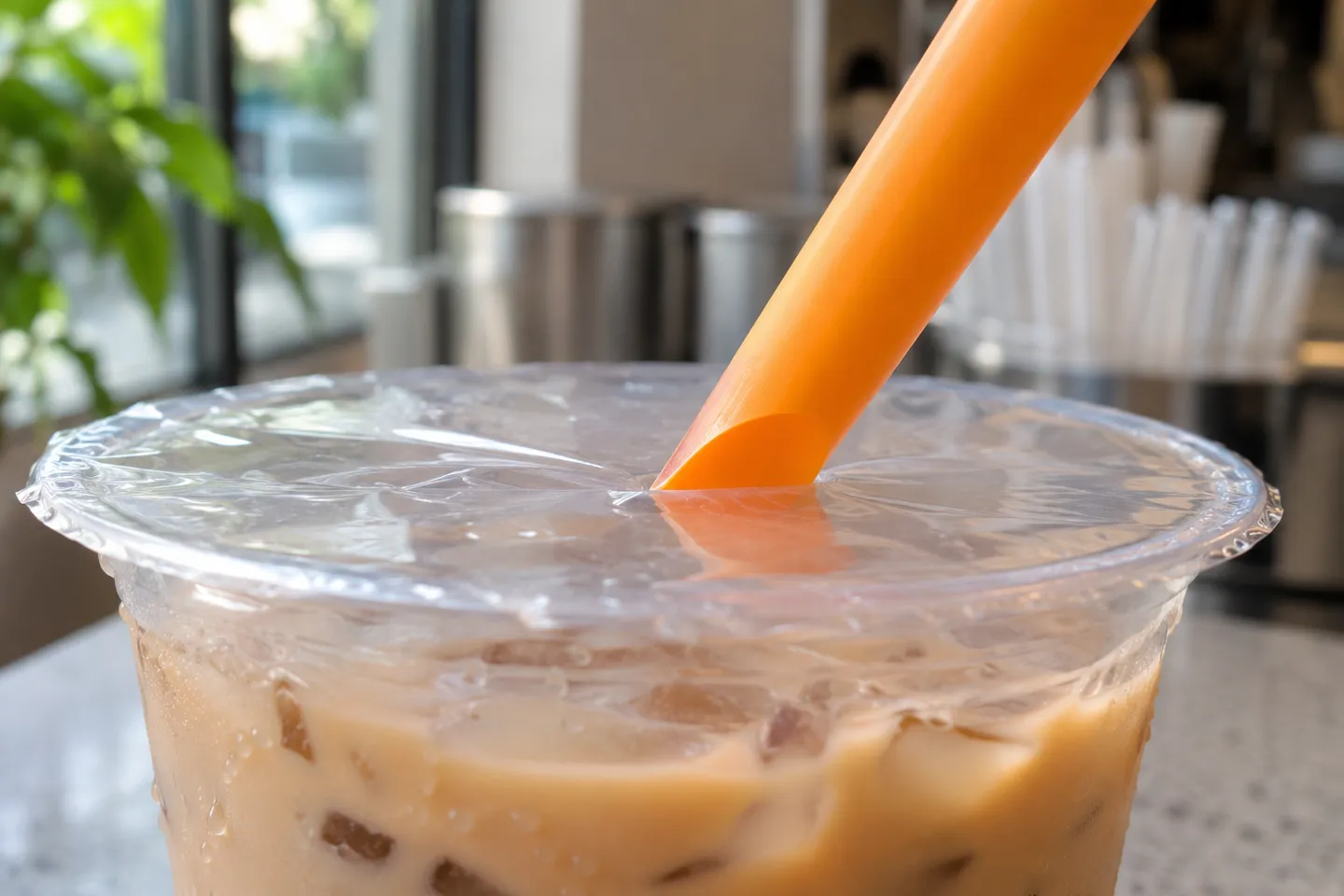
Sealed cups changed the straw’s job. On film-sealed drinks the straw has to cut its own opening, so those SKUs carry an angled, sharpened tip; flat-tipped straws are for cups with pre-cut lid holes or open sips. Drinkers now comment on how cleanly the straw pierces the film, which tells you the tip is a spec, not a detail. Spoon-ended variants exist for dessert cups but cover a narrow niche.
The Fit Matrix
Cup, Lid and Straw Fit Matrix
| Service scene | Cup volume | Straw length | Bore | Tip | Lid or seal | Failure edge |
|---|---|---|---|---|---|---|
| Cold milk tea, film sealed | 500 ml | 21 cm | 12 mm | angled | sealing film | film that tears ragged or refuses to pierce |
| Cold milk tea, film sealed | 700 ml | 23 cm | 12 mm | angled | sealing film | straw bottom grinding the cup base |
| Flat lid with straw slot | 500-700 ml | 23 cm | 12 mm | flat | pre-cut lid hole | overflow when the straw shoves through a tight hole |
| Screw-cap cup | 500-700 ml | 23 cm | 12 mm | flat | open lid seat | no fit issues but check cap bore |
| Dessert or sundae cup | 300-400 ml | 15-18 cm | 12-13 mm | spoon or flat | open top | straw too long tilts the serving |
| Tasting or mini cup | under 300 ml | 15 cm class | 10 mm | flat | open top | full-size straw dwarfs the serve |
One warning deserves its own card, because it is the failure drinkers notice first:
A straw pushed hard into a tight lid hole lifts the whole drink and spills over the rim. Before committing to a lid and straw pair, hold the actual straw against the actual lid and check the clearance by hand. If the hole fights the straw, the pair is wrong at any price.
If your cups, lids and sealing films are already set, we will match the straw bore, length and tip to them in one order.
Match My Straw SetWhere Straws Fail: Soggy Paper, Warped PLA, Mismatched Holes
Every failure below has cost a shop real orders, and each one is testable before launch rather than after complaints.
Paper in a wide bore is the classic. Wide tubes soak more fiber surface per sip. A slow-sipping customer holds the straw far past its comfortable window, and the sip ends with a collapsing tube and a spoon fishing session. Market response tells the same story: the newest plant-fiber listings now lead with multi-hour no-sog claims, which is positioning against this exact failure. A useful check is to time your own longest serving interval, then test the straw past it.
PLA fails on heat, not time. Softening starts near 60 °C, and the glass transition zone of 50-60 °C sits below the serving temperature of hot milk teas and coffees (Li et al., 2023). Check your hottest menu item against the material limit before you switch any line to PLA.
Tip and seal mismatches announce themselves at the counter. A flat tip against sealing film, or an angled tip on a film that grabs instead of cuts, produces shredded edges and fumbled openings. Pierce twenty straws from your first batch against your actual film. Twenty is a benchmark we recommend, not an industry standard, and it costs one lunch break.
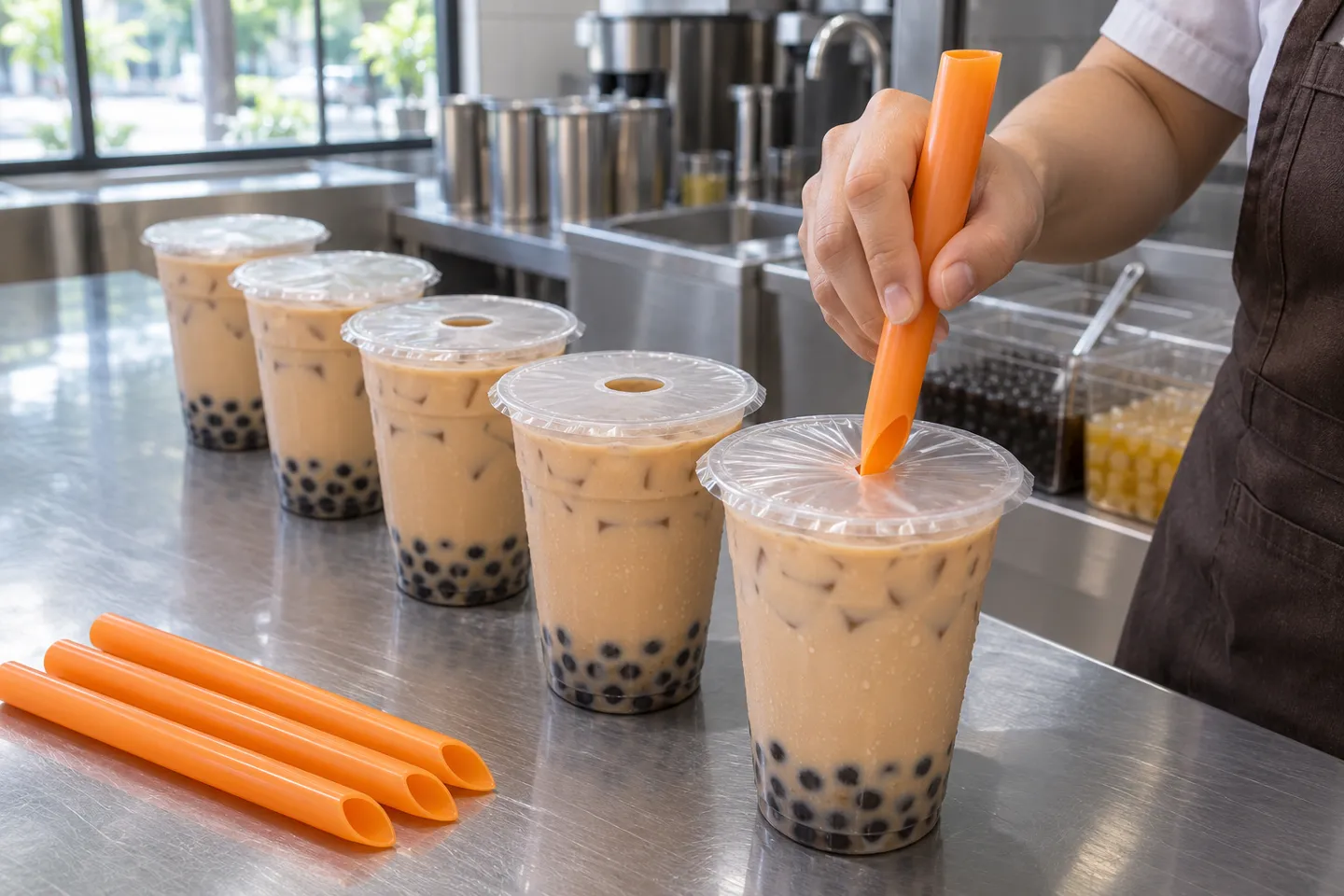
The same first-batch discipline covers the other two silent failures: measure lid holes against straw outer diameter before the order, and keep summer stock out of hot trucks and sunlit storage, because PLA sits close to its softening zone at warehouse temperatures in peak season.
Pre-launch checklist
Buying Straws the Way You Buy Cups
The economics of a straw are trivial, which is why buying it like a cheap add-on keeps costing shops. The real ledger runs the other way: diameter is locked by your toppings, length by your cups, tip by your sealing method. Three interlocked specs mean a straw that fails never fails alone. And when the mismatch comes from splitting the order across suppliers, no one owns the fault.
Treat the set as one purchase decision:
Anchor on your highest-volume cup and its topping, so the default SKU fits the drink you sell most.
Source straw, lid and seal against that anchor as one set, so bore, length and tip stay compatible.
Re-test the whole set when you change any component, especially when a plastic ban pushes you to paper or PLA, because the new material changes heat and soak behavior too.
Stock deep on the default spec and shallow on specialty toppings, since the default carries volume and the specialty carries menu breadth.
The timing argument is stronger than ever. The EU restriction on conventional plastic straws has applied since 3 July 2021 under Directive (EU) 2019/904 (EUR-Lex, 2021). Similar rules keep spreading across US states and cities (WebstaurantStore, 2026). Every forced material change reopens the whole spec, which makes this window the cheapest moment to re-fit the system instead of patching it. Packaging form matters too: individually wrapped straws cost more per unit but answer the hygiene expectations of counter service and delivery, while bulk suits sealed back-of-house workflows.
This is the same logic we build our own range around. At OUTSTANDING, cups, lids, sealing machines and straws sit in one accessories system, so the bore, length and tip you order are matched against the cup and seal you already run. Our straw range covers PLA, paper and PP options in shop quantities, and the accessories line lets you source the rest of the set from the same tooling. On light custom runs, samples leave our line in 48 hours and mass production ships in 3 to 5 days from a 1,000-piece minimum. When a topping change forces a diameter change, you adjust one line item inside a set that already fits, not three specs across three suppliers.
OUTSTANDING keeps cups, lids, sealing machines and straws under one roof, so your next size change stays a one-supplier conversation. If you want to see how the sets come together, the full catalog is online.
Get Straws Sized to Your Line
Send your cup sizes, toppings and sealing method, and we will reply with bore, length and tip for every drink you run.
Request a Size-Matched QuoteReferences
- WebstaurantStore. “Types of Drinking Straws.” 2026. https://www.webstaurantstore.com/guide/594/types-of-drinking-straws.html
- BossenStore. “Wholesale Boba Tea Straws.” 2026. https://www.bossenstore.com/collections/straws
- Li, R. et al. “A Biodegradable Stereo-Complexed Poly (Lactic Acid) Drinking Straw of High Heat Resistance and Performance.” 2023. https://pmc.ncbi.nlm.nih.gov/articles/PMC10056377/
- YenChuan. “Know Your Toppings: Tapioca Pearls.” 2024. https://store.yenchuan.co/blog/know-your-toppings-tapioca-pearls/
- EUR-Lex. “Single-use plastics: fighting the impact on the environment.” 2021. https://eur-lex.europa.eu/EN/legal-content/summary/single-use-plastics-fighting-the-impact-on-the-environment.html
- WebstaurantStore. “Bossen Large Tapioca Boba Pearls 6.6 lb.” 2026. https://www.webstaurantstore.com/bossen-6-6-lb-large-tapioca-boba-pearls-case/535TAPIOCALG.html